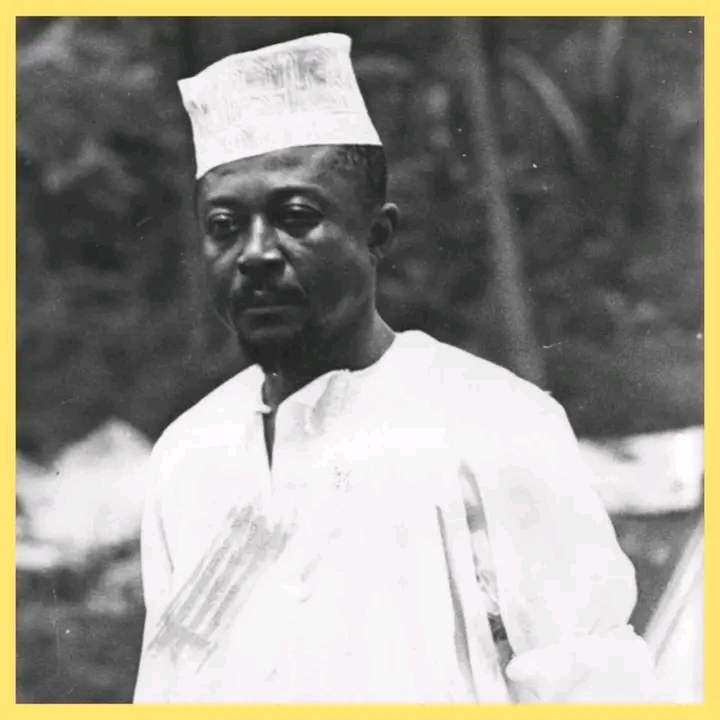

“African President Who Lowered The Voting Age To 14 And Put Teenagers In Charge Of Local Government”
Ali Soilih was a former president of the Comoros who lowered the voting age to 14 and put teenagers in charge of ministries and local government.
Born on January 7, 1937, in Majunga, Madagascar, to Comorian parents, Soilih studied agriculture in Madagascar and France before returning to the Comoros.
In 1970, he became the leader of a political faction called Umma Mranda (The People’s Movement). Soilih wanted to replace the traditional political system with a socialist society in which young people played a greater role.
On July 6, 1975, the Comoros declared independence from France. Ahmed Abdallah, a wealthy businessman and political leader, became the country’s first president after independence. However, less than a month later, on August 3, 1975, mercenaries led by French soldier of fortune Bob Denard, who had been hired by Ali Soilih, helped overthrow Abdallah. The coup brought Said Mohamed Jaffar to power, while Soilih later took control of the government and became president in January 1976.
Once in power, the 39-year-old Soilih launched a radical programme of social change, often described as a cultural revolution. Believing that young people would be more willing to embrace his reforms, he lowered the voting age to 14 and replaced many experienced civil servants with younger people. Teenagers and young adults were given responsibilities in ministries, local government and other public institutions.
He banned the Grand Mariage (Great Marriage), a custom in which older men spent their life savings hosting massive village feasts to gain political status. He forced women to remove their Islamic veils (lesso), closed down traditional Islamic courts and publicly burned all French colonial administrative archives.
To enforce these laws, Soilih formed a red-beret youth militia called the Moissy. Armed with rifles, these aggressive teenagers terrorised the islands. They broke into homes, arrested people secretly performing traditional marriages and publicly beat up village elders who questioned Soilih’s authority.
However, the revolution faced serious economic difficulties. France retaliated against Soilih’s anti-colonial stance by cutting off all financial aid, plunging the islands into immediate poverty and famine. Isolated internationally, Ali Soilih became increasingly paranoid and locked himself away in his palace, heavily abusing alcohol and cannabis while relying on a personal witch doctor.

When the witch doctor prophesied that a white man with a black dog would overthrow him, Soilih panicked. He ordered the Moissy to systematically slaughter every black dog on the islands.
Soilih’s downfall came in May 1978, when Bob Denard returned to the Comoros with a group of mercenaries. This time, Denard, whom Soilih had previously hired, was paid by Comorian exiles to remove him from power. On May 13, Denard’s forces overthrew the government, ending Soilih’s rule.
Soilih was placed under house arrest. On May 29, 1978, he died at the age of 41. The authorities claimed that he had been shot while attempting to escape.