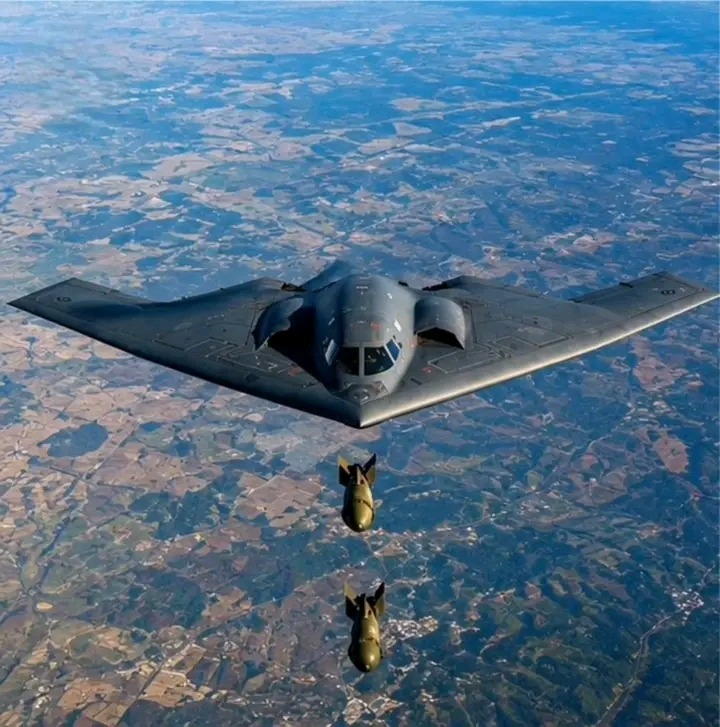

AMERICA IS PULLING ITS BOMBERS OUT OF BRITAIN: THE REASON IS BIGGER THAN YOU THINK
The U.S. Air Force has reportedly pulled its heavy bombers, including the B-1, B-2 Spirit and B-52, out of RAF Fairford in Britain, sending them back to bases in the United States.
And honestly, when America starts packing up its beautiful long-range flying machines and sending them across the Atlantic, you have to ask:
WHAT CHANGED?
The B-2 Spirit is not exactly a delivery van. It is one of America’s most advanced stealth strategic bombers, built to fly thousands of miles, penetrate sophisticated air defenses and deliver a very serious message without knocking on the door first.
For decades, Britain has been one of Washington’s most important military platforms outside the United States.
But now the relationship appears to be getting a little… complicated.
And somewhere in Washington, the Department of Defense or War, as they now call it, is basically saying: “Yeah… maybe Britain isn’t quite as safe for our precious birds as it used to be.”
There are two major factors behind this, but the first and most important concern is IRAN . The Iranian factor sits at the very center of this entire withdrawal.
Iran has dramatically strengthened its military and missile capabilities, including advanced long-range and hypersonic weapons. The United States has learned the hard way that Iran is no longer a country Washington can simply intimidate, contain, or dictate terms to.
If America’s most expensive strategic aircraft can potentially be threatened while sitting on European soil, then keeping them permanently forward-deployed becomes a very different calculation.
But there is another issue. BRITAIN ITSELF.
The old “special relationship” between Washington and London is facing growing strategic strain as the world changes. Britain has spent decades following America into wars and military campaigns far from home.

Iraq. Afghanistan. Libya. Syria. Name it…
British soldiers paid the price, while Britain repeatedly had to explain why its young men and women were fighting and dying wars that often served strategic interests far beyond Britain’s own borders.
So perhaps London is finally seeing the new dawn, looking across at Washington and saying: “Hold on a minute, mate. We’ve already lost enough people following you around the world. We don’t want another 30-year subscription to being America’s military pawn and bishh.”
It’s being said quietly, but the message is loud.
Old alliances are shifting. New powers are rising. And America is pulling out.