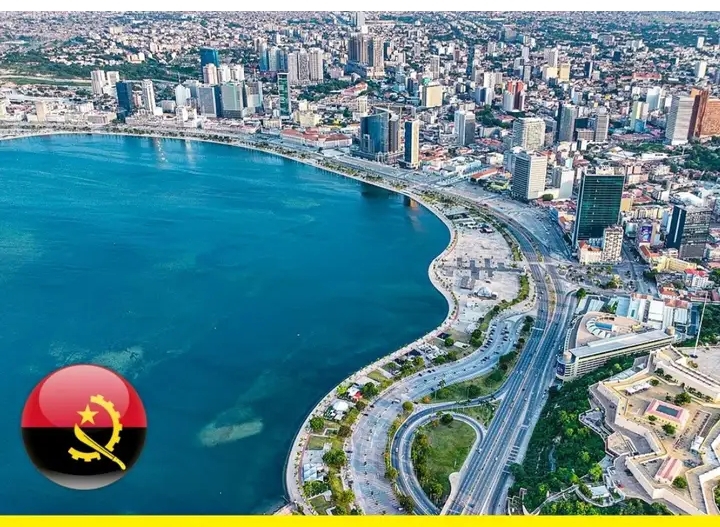

Angola’s capital is on track to overtake Lagos as sub-Saharan Africa’s most populous city by mid-century, according to a major new World Bank report.
In Sub-Saharan Africa’s Urban Awakening: Catalyzing Economic Growth and Job Creation, released in late October 2026, the World Bank projects Luanda’s population will surge 78% from 11.4 million in 2025 to 20.3 million in 2050. That growth would push it past Lagos, which is forecast to expand more than 25%, from 12.8 million to 16.2 million over the same period.
The projections, developed with the European Commission’s Joint Research Centre using data from researchers including Schiavina et al., highlight the scale of urban transformation across the region. Sub-Saharan Africa’s urban population is expected to rise from roughly 913 million in 2025 to about 1.7 billion by 2050 an addition of 748 million people.
By 2050, the top tier of cities is projected to include Luanda (20.3 million), Lagos (16.2 million), and Kinshasa (around 13.2 million), with several others exceeding 10 million. Bamako and Mogadishu are expected to enter the top 15.
The report frames this expansion as both a major opportunity and a significant challenge. Cities already generate higher household spending than rural areas for similarly educated people, and the premium increases with city size.
Yet sub-Saharan African cities currently produce nearly 50% less economic activity (measured via nighttime lights) than the best-performing cities of comparable size globally.
The World Bank stresses that realizing the jobs potential roughly 15 million young people enter the region’s labor markets each year depends on better planning, infrastructure, transport, affordable housing near job clusters, and stronger urban governance and financing