
BM8 MONGU INTERCEPTION — A TOTALITARIAN DRIFT!
By Elias Kamanga
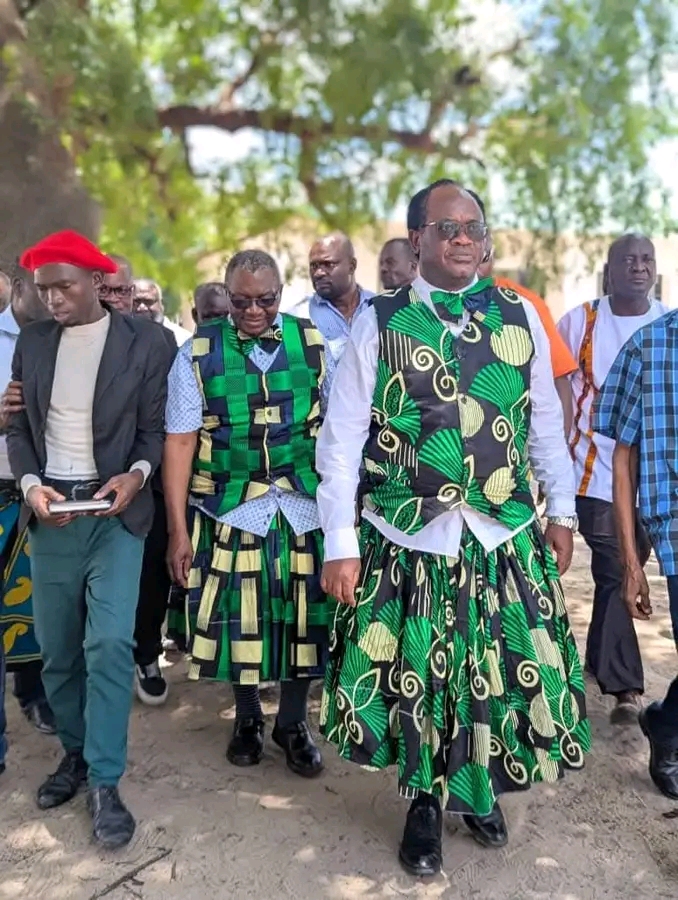
The reported interception of Brian Mundubile, President of the Tonse Alliance and his entourage, by the Zambia Police Service on his way back to Lusaka from Mongu, following a successful engagement with the Litunga, smacks of outright totalitarianism.
This conduct raises profound concerns about the selective, overzealous, and politically skewed application of the Public Order Act (POA), particularly in an election year when democratic space should be expanding, not shrinking.
It is deeply troubling that political leaders are now being questioned, or even detained, for holding indoor meetings. The POA was never intended to criminalise private engagements. Its purpose was to regulate public assemblies that might disturb public order.
Extending police oversight to indoor political meetings amounts to a dangerous expansion of executive power and a direct assault on freedoms of association and political organisation.
Even more disturbing is the timing and context of this interception. One is compelled to ask whether Mr Mundubile’s treatment is linked to the warm reception he reportedly received in Western Province, including a five-hour courtesy meeting with the Litunga, Lubosi Imwiko II.
This brings into focus an even more sensitive issue: the treatment of a guest of the Litunga.
Under long-standing cultural norms and protocols, individuals granted audience with the Litunga under the auspices of the Barotse Royal Establishment enjoy recognised courtesies and privileges.
The decision by the police to pursue, intercept, and question such a guest immediately after a royal engagement reflects a troubling disregard for Zambia’s customary institutions and the delicate relationship between the state and traditional authorities.

Critically, what law was allegedly broken?
A courtesy meeting with a traditional leader held indoors and without any public procession does not, by any reasonable interpretation, constitute an offence under the POA. If such meetings are now being reclassified as unlawful assemblies, then the Act is being stretched beyond recognition.
The broader implications are alarming. For what appears to be the first time in Zambia’s democratic history, routine Political Party structures like Districts, Constituencies, and Wards are effectively being told to seek police permits to hold their regular internal monthly or weekly meetings.
This is not law enforcement; it is administrative suffocation of political competition.
In an election year, political mobilisation should be facilitated, not frustrated. Democracy demands that political leaders freely engage their members, organise their structures, and communicate their messages without fear of harassment or intimidation.
The current posture of the police suggests an institution overly eager to enforce the POA not in the genuine interest of public order but in a manner that risks undermining political pluralism and eroding public confidence in the neutrality of law enforcement.
If left unchecked, this conduct sets a dangerous precedent, one in which the Police become arbiters of political acceptability rather than impartial enforcers of the law.
SE