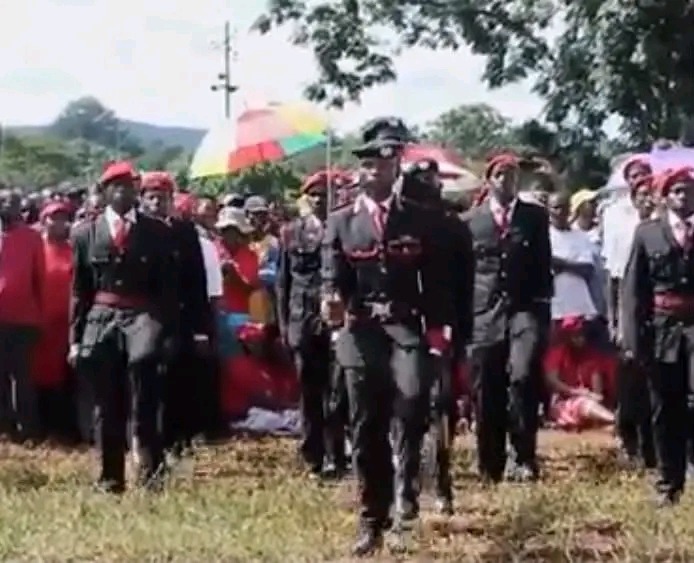

Chamisa Floats Revival of Controversial Vanguard Militia, Sparking Fierce Online Debate Over Security and Political Violence
HARARE — Opposition figure Nelson Chamisa has reignited long-standing controversies surrounding political youth groups in Zimbabwe by publicly floating the idea of resurrecting the Vanguard, a disbanded militia-style outfit once fiercely loyal to him.
In a post on X on Wednesday, Chamisa wrote: “The Citizens require a rapid response team. Should we bring back VANGUARD??”
The message, which quickly drew hundreds of likes and nearly 200 replies, comes as Chamisa builds what he describes as a new citizens’ movement under the banner of Agenda 2026 after resigning from the Citizens Coalition for Change (CCC) in early 2024.
The Vanguard, formally known as the Order of the Vanguard, was a youth structure within the Movement for Democratic Change-Tsvangirai (MDC-T).
It gained notoriety in the late 2010s for its military-style uniforms, parade drills and reported role in intra-party enforcement.
Critics compared it to Zanu-PF’s Chipangano and Green Bombers groups, accusing it of harassment, physical assaults and intimidation directed at internal rivals.
Notable incidents linked to the group included the roughing-up of former deputy prime minister Thokozani Khupe and other senior figures who challenged Chamisa’s leadership after the death of Morgan Tsvangirai in 2018.
Journalists and dissenting party members also reported being targeted.
The MDC-T formally disbanded the Vanguard in May 2018 amid mounting criticism, though some accounts suggested elements continued operating underground.
Replies to Chamisa’s latest post revealed a sharp split among users.
Supporters responded with enthusiastic endorsement.
“Absolutely yes Comrade President,” wrote one follower, while others framed the idea as necessary self-defence or a form of “security and intelligence” for citizens facing political threats.
Opponents and sceptics reacted with rejection, sarcasm or warnings.
Several posts in Shona urged restraint or dismissed the proposal outright, with comments such as “Imbomirai” (stop) and “Haiwawo” (no way).
Zanu-PF-aligned accounts accused Chamisa of preparing for disruption rather than constructive politics.
One user asked pointedly what the team would respond to, while others mocked the suggestion or questioned trust in any new structures.
The discussion reflects broader tensions in Zimbabwean politics, where opposition figures have long complained of state-aligned violence, arbitrary arrests and restricted space for organising, while ruling party voices portray opposition youth groups as potential sources of instability.
Chamisa has positioned Agenda 2026 as a quiet, deliberate citizens-focused project emphasising governance reform, ethical leadership and grassroots organisation rather than immediate mass mobilisation.
His reference to a “rapid response team” under the Vanguard name has nevertheless raised questions about the movement’s intended operational style and whether past controversies will shape public and political reactions going forward.
In response Chamisa wrote: “Vanguard is critically important in an environment like Zimbabwe. But the recruitment should be foolproof coz that can be an avenue for infiltration. The recruited should undergo a rigorous training by well recognized security intelligence. Each district should have “vanguard” group.”