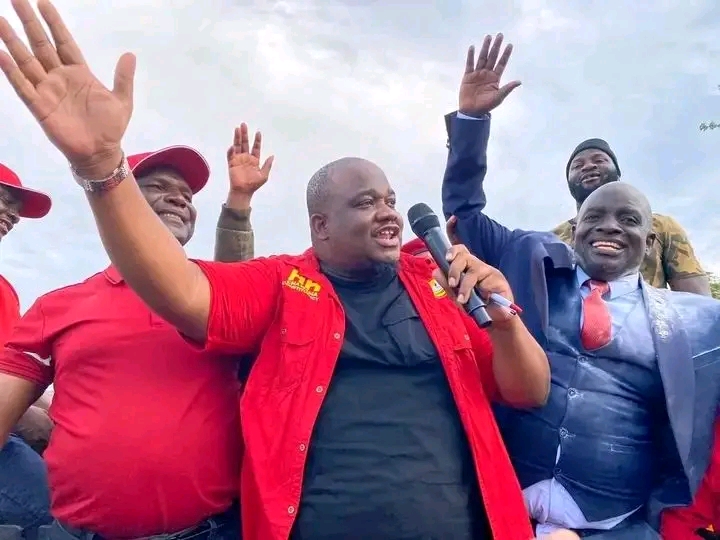

🇿🇲 ANALYSIS | Chawama Exposes UPND’s Adoption Fault Lines
Chawama has become one of the most politically instructive constituencies of Zambia’s election year, not because of the opposition’s strength, but because of what the ruling party is now revealing about itself.
The January by-election was supposed to be a routine test of mobilisation in the capital. Instead, it ended in an upset. The seat was taken by the FDD’s Bright Nundwe under an opposition alliance arrangement, while UPND with Morgan Muunda failed to flip a constituency it had heavily contested.
Now, the aftermath has descended into open internal warfare.
At the centre is Timothy Kantenga, the party’s initially preferred candidate, and Muunda, an aspiring parliamentary figure who has publicly declared Kantenga “expelled” and blamed him for the loss. Kantenga has responded with a firm rebuttal, insisting Muunda holds “no constitutional authority” to expel anyone and that he remains “a committed and bona fide member” of UPND.
This is not simply a personal dispute. It is a symptom.
When Electoral Losses Become Internal Trials
Kantenga’s statement is notable for its political subtext. He rejects allegations of decampaigning, bribery, or sabotage, calling them “an attempt to shift blame following an electoral outcome.”
That line matters because it captures the instinct that often emerges inside governing parties: when a loss occurs, someone must be sacrificed.
Muunda’s accusations are sweeping. He claims Kantenga undermined the campaign in John Howard area, distributed inducements including a cow, blocked alliance figures such as Charles Milupi, and even sought adoption without a valid voter’s card as part of an alleged plot to disqualify UPND at nomination stage.
These are extreme claims. They also reveal the paranoia that adoption season produces.
In an election year, adoption is never just selection. It is survival.
Adoption Battles Are Becoming UPND’s Quiet Crisis
UPND’s strength since 2021 has been institutional discipline and a clear presidential centre. But discipline becomes harder when incumbency produces a crowded field of ambition.
Young aspirants want space. Long-serving MPs want continuity. Constituencies become battlegrounds before voters even arrive.
Chawama shows what happens when internal competition is not contained: party members begin litigating defeat through voice notes, factional blame, and public threats.
Muunda reportedly declared he would do “whatever it takes” to become the sole candidate in August. Kantenga, in contrast, urges unity and warns against “public confrontation” that erodes confidence.
This is the governing party’s adoption dilemma in miniature. What makes Chawama especially sensitive is location.
Lusaka is not a rural stronghold where party loyalty is inherited. Urban constituencies are transactional, impatient, and volatile. By-elections in the capital often expose mood swings before general elections.
A ruling party cannot afford to look unserious in Lusaka, not because Lusaka decides everything, but because it signals everything.
When candidates declare themselves winners, then dispute results, then accuse each other of sabotage, voters do not see strategy. They see disorder.
FDD did not win because it is suddenly dominant. It won because the opposition consolidated while the ruling party messed up with the adoption decision.
This is the irony of 2026 politics. UPND’s biggest threat may not be a single opposition figure, but internal erosion at the point of candidate selection.
Kantenga ends his statement by reaffirming President Hichilema as his “sole candidate” and signalling loyalty to the centre. But loyalty to the president does not automatically resolve constituency-level rivalry.
UPND’s challenge now is structural: can it run an orderly adoption process that protects legitimacy, rewards renewal, and avoids public implosions? Because every adoption dispute that spills into the open does something dangerous.
It turns a governing party into a collection of quarrelling aspirants. And Chawama is warning that the campaign is not only against the opposition.
It is also inside the house.
© The People’s Brief | Analysis Desk
Upnd candidate was and is still a burden, bad for elections, what he says is out of the wild, never seen such a candidate, but he has his constitutional right, but bad for political business for upnd
The confused candidate for UpNd who lost the recent election is busy campaigning on the ground before the whistle is blown, that in itself will be a contestation point should he be adopted because he has broken the law, in addition to that, he has also shown how unstable his brain operates and those that follow him now are doing so only because he has some coins to give around but they know he is a scopo donono. Now if UPND is not going to adopt him, they should be ready for a political war from within because this guy has smelled the coffee and the urge to drink it is ever increasing to a point where he is now giving himself the power to fire members of the party using disillusioned authority. Nkombo should have done better than bring out this person in Chawama. even during campaigns, I could see UPND members restraining him from talking too much because much of what he said was nonsense.