
🇿🇲 FOCUS | Chawama Votes as UPND Tests Organisation Against Grief Politics
As Chawama heads to the polls tomorrow, January 15, the constituency presents a tightly watched political moment that goes beyond a routine parliamentary by-election. The environment on the ground has remained largely peaceful, with no major incidents reported during the final stretch of campaigning. What stands out instead is the contrast in campaign styles and political framing, with the ruling United Party for National Development running a visibly coordinated ground operation while opposition actors warn of manipulation and invoke memory, loss, and grievance.
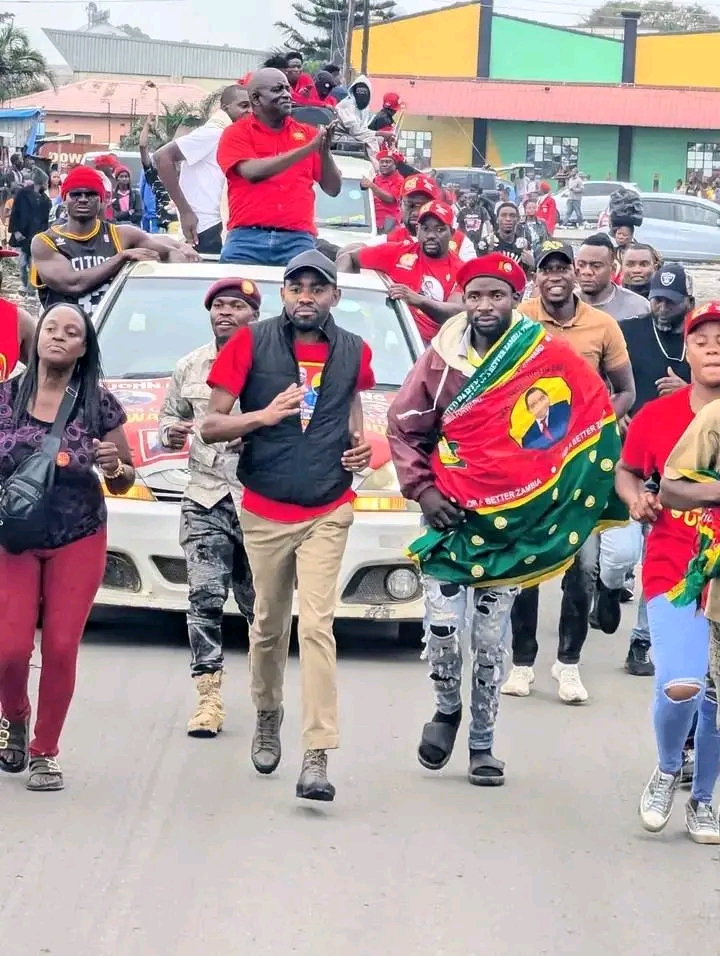
UPND’s campaign in Chawama has been marked by saturation. Party colours, door-to-door teams, and consistent messaging have been visible across markets, residential zones, and key transit points. The party has leaned heavily on incumbency advantages, not through grand promises, but through a record-based appeal anchored in social protection, order, and continuity. Ministers, party officials, and local organisers have spoken in one register: development must be defended by participation.
This message was reinforced by Doreen Mwamba, UPND National Chairperson for Women and Minister of Community Development and Social Services, who used the campaign platform to point to concrete data. She cited growth in Social Cash Transfer beneficiaries in Chawama from just over 13,000 in 2021 to 26,659 today, with a further 10,596 set to be added next month.
The framing is deliberate. This is not an abstract policy pitch, but a reminder that state presence in Chawama has expanded in measurable ways.
UPND candidate Morgan Muunda has echoed that tone, positioning himself as a custodian rather than a disruptor. His appeal has centred on consolidating existing gains and ensuring that Chawama remains plugged into national programmes rather than drifting into protest politics. It is a strategy that assumes voters are weighing stability against uncertainty, not ideology against ideology.
Alongside this, UPND has benefited from a steady stream of defections from the Patriotic Front, particularly figures with grassroots mobilisation capacity. These moves have been publicly framed as personal realignments rather than orchestrated recruitment, but they have added to the perception of momentum around the ruling party’s campaign. In a constituency as politically active as Chawama, perception itself carries weight.
The opposition, however, has pushed back strongly against that narrative. Claims of rigging have entered the discourse, most notably from Mwenda Kasonde, who during a Facebook Live broadcast on Monday alleged that the ruling party was manipulating the electoral process. While no evidence has been presented publicly to substantiate the claim, the statement reflects a broader opposition anxiety about competing against a well-resourced and disciplined ruling party machinery.
Beyond procedural fears, the opposition campaign has leaned heavily on symbolism. Chawama was home to former president Edgar Lungu, and his death, coupled with the unresolved burial process, has become a central emotional reference point. PF and allied actors have invoked his name and memory to mobilise sympathy, framing the by-election as a moral contest rather than a service-delivery choice. In this telling, the vote becomes an act of remembrance and protest, not an endorsement of policy direction.

This is where the election’s deeper fault line lies. The Chawama by-election is less about ideological competition and more about whether grief politics can still mobilise decisively in an urban constituency facing everyday economic pressures.
UPND’s campaign appears designed to neutralise that approach by shifting attention to tangible benefits and future continuity, implicitly arguing that mourning cannot substitute governance.
The Electoral Commission of Zambia has reiterated its readiness to conduct a credible poll, and stakeholders have so far exercised restraint. As voting day arrives, the real test will not only be who wins Chawama, but which political language resonates more strongly with voters: the language of loss and grievance, or the language of administration, data, and order.
By Thursday evening, Chawama will have delivered its answer. And that answer will likely be read nationally as an early signal of how urban voters may approach the larger contest ahead.
© The People’s Brief | Editors
For PF, it’s bye bye Polio to Chawama, the seat is going, it is going to Bally’s UPND.
It appears hh may get 98% votes this time