Civil Society Blasts ZAM for Spreading Falsehoods on Tobacco Control Bill 2025
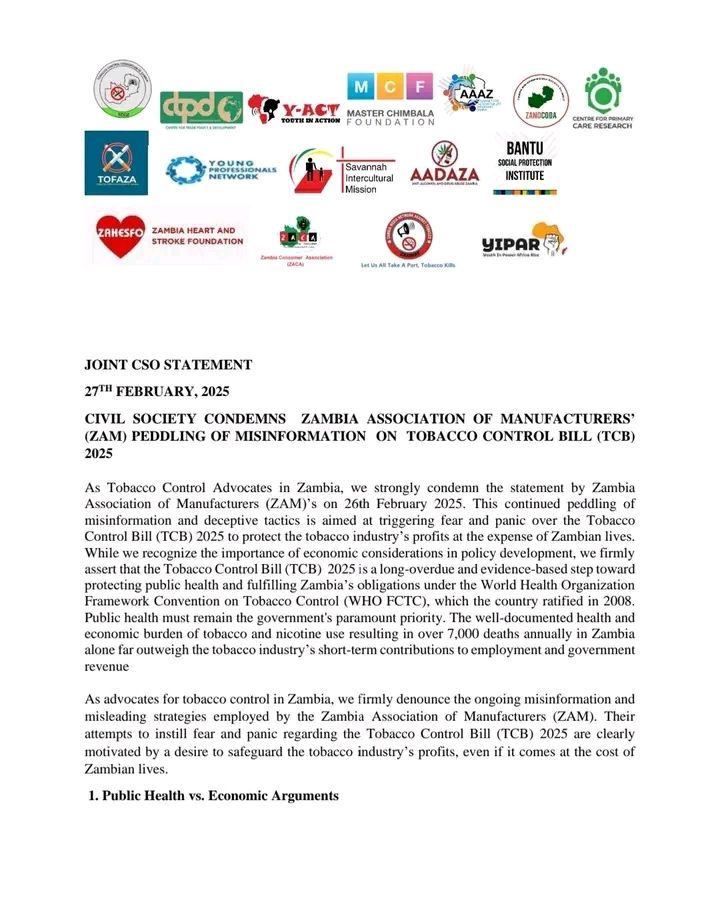
A storm of condemnation has erupted from Zambia’s civil society organizations (CSOs) following the Zambia Association of Manufacturers’ (ZAM) recent statements opposing the Tobacco Control Bill (TCB) 2025. In a fiery joint statement, tobacco control advocates accused ZAM of shamelessly peddling misinformation to shield the tobacco industry’s profits at the expense of thousands of Zambian lives.
The CSOs minced no words, labeling ZAM’s remarks as fearmongering designed to trigger panic among the public and policymakers. According to the advocates, ZAM’s claim that the Bill would devastate the economy by causing job losses and crippling government revenue is not only misleading but also a calculated attempt to manipulate public opinion.
“The tobacco industry’s so-called ‘economic contribution’ pales in comparison to the staggering human cost of tobacco use more than 7,000 Zambians die annually due to smoking-related illnesses. This is a crisis, not an economic success story,” the statement read.
The Tobacco Control Bill 2025 is rooted in scientific evidence and Zambia’s commitment to the World Health Organization Framework Convention on Tobacco Control (WHO FCTC), which the country ratified in 2008.
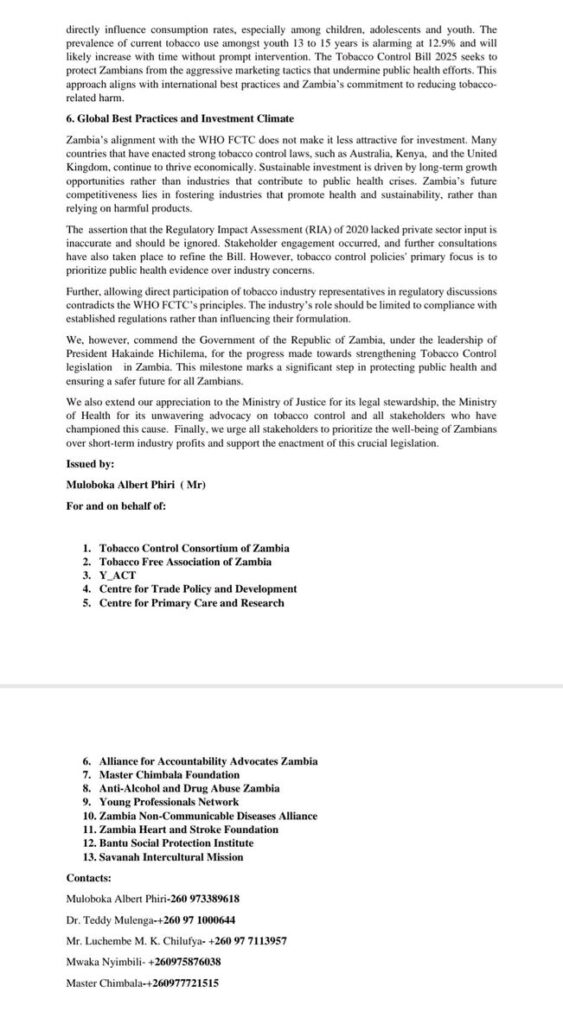
CSOs stressed that the Bill does not ban tobacco farming or manufacturing but seeks to regulate the sale and marketing of tobacco products to reduce their deadly impact. “This law is not about shutting down businesses it’s about saving lives,” said Muloboka Albert Phiri, speaking on behalf of 13 organizations.
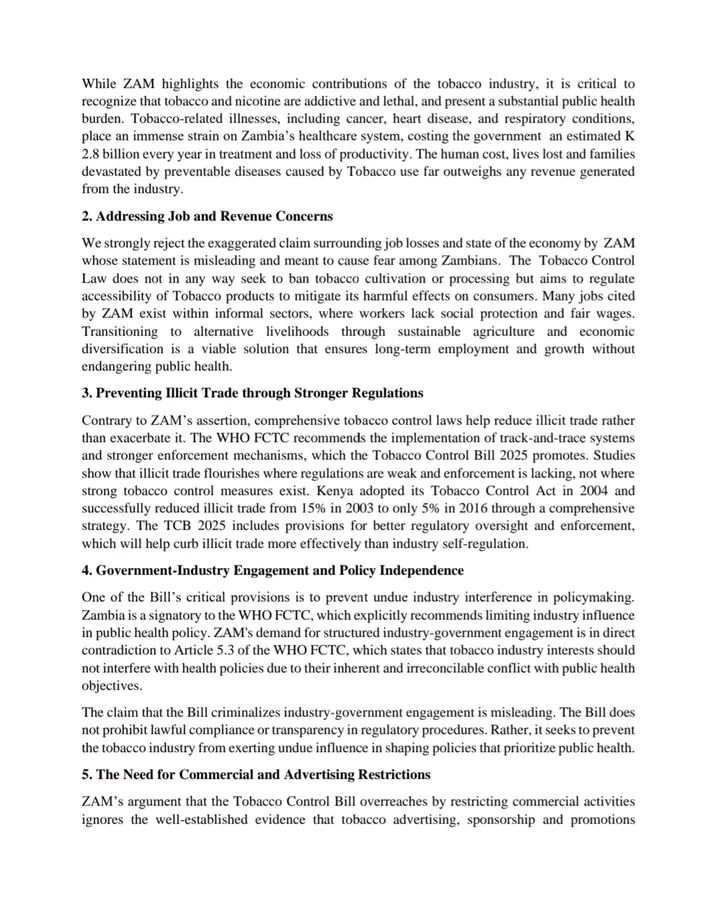
ZAM’s scare tactics about job losses, the CSOs argued, ignore the harsh reality that many of the jobs linked to tobacco exist in informal, unprotected sectors where workers earn meager wages and lack basic social security. The advocates called for a shift towards sustainable agriculture and economic diversification, noting that clinging to an industry known for causing preventable deaths is a step backward for Zambia’s progress.
The civil society coalition also tore into ZAM’s assertion that strong tobacco control laws would fuel illicit trade. “This is a tired, baseless argument used by the tobacco industry globally,” said Dr. Teddy Mulenga. “In fact, countries like Kenya have demonstrated that robust regulations not industry-friendly loopholes help reduce illegal trade. The Tobacco Control Bill 2025 includes tracking mechanisms and strict enforcement tools to combat smuggling, which the industry conveniently overlooks.”
Perhaps the most damning rebuttal was directed at ZAM’s push for structured engagement between the government and the tobacco industry. The CSOs branded this suggestion as a direct violation of the WHO FCTC’s Article 5.3, which warns against industry interference in public health policies. “ZAM wants a seat at the table not to protect jobs or the economy but to poison policies and derail life-saving reforms. Their interests are fundamentally at odds with public health,” Phiri emphasized.
Moreover, the claim that the 2020 Regulatory Impact Assessment (RIA) lacked private sector input was flatly dismissed by the advocates. “Stakeholder engagement happened. But let’s be clear tobacco control laws are built on scientific evidence, not dictated by industries profiting from death and disease. The tobacco industry’s input doesn’t belong in shaping health laws,” said Mwaka Nyimbili.
The CSOs praised the Zambian government, particularly President Hakainde Hichilema, for standing firm on public health priorities. They also commended the Ministry of Justice and the Ministry of Health for their relentless push to strengthen tobacco control. “This Bill is a bold step forward, and we expect our leaders to reject the tobacco industry’s dirty tactics and keep the focus where it belongs protecting Zambian lives,” the joint statement declared.
As the battle over the Tobacco Control Bill 2025 intensifies, civil society has drawn a clear line: they will not allow the tobacco industry, or its allies, to sabotage life-saving reforms under the guise of economic concerns. With Zambia losing billions each year to treating tobacco-related illnesses, the choice, they insist, is simple people over profits.
February 27, 2025
©️ KUMWESU