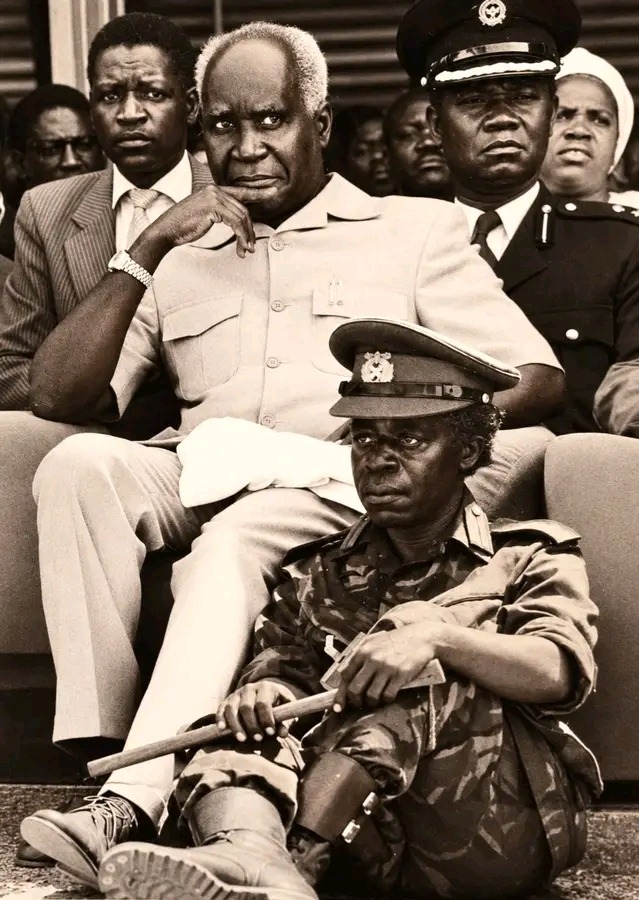

COLONEL MUKUKA NKOLOSO AND HIS SPACE MISSION
Talking about mission, audacity and refusing to be distracted by naysayers, one man in Zambia’s history comes to mind. Edward Mukuka Nkoloso.
Strangely enough, I did not first hear about him from a history book, just like most of us if not all.
My attention was drawn to him around 2012 through American filmmaker Rick Nichols, who was developing a project called Zambians in Space
Nichols mounted quite an energetic online campaign around the story, and what interested me was that his vision went beyond simply making a film. As I remember it from our exchanges, there were plans for the project to contribute towards scholarships and clean-water initiatives, with part of the proceeds intended to support an Edward Mukuka Nkoloso scholaership programme in Zambia.
Around the same period, Spanish photographer Cristina de Middel was creating The Afronauts, her extraordinary visual interpretation of Nkoloso’s space programme. She had begun researching the story in 2010 and self-published The Afronauts in 2012. Rather than attempting a literal historical reconstruction, she used staged photography to explore Nkoloso’s dream and, importantly, the assumptions people make when Africa and technological ambition appear in the same story.
There was some connection between the circles around the two projects at the time, although I no longer remember the exact arrangement. My contact was Nichols, and it was through him that my curiosity about Nkoloso was stirred.
Stories are strange things.
Here I was, a Zambian Army officer, learning about this extraordinary Zambian from an American filmmaker.
I Googled him, the afronaut, watched the old footage and I read whatever I could find.
Then something caught my attention.
Edward Mukuka Nkoloso was also known as Colonel Nkoloso. A Colonel? I got really interested.
I went to dig for more information from an officer who had been in the Army much longer. He said,
“Yes, there was such a project. But the rank was honorary.”
“Honorary Colonel?”
The explanation was essentially that Nkoloso had not travelled the normal commissioned-officer route. The military rank had been bestowed upon him as an honour.
Okay. Fair enough.
But by then, the rank was no longer the most interesting part of the story.
The man had a mission. To take Zambia to Space.
Nkoloso established his Zambia National Academy of Science, Space Research and Philosophy and trained young Zambians whom he called Afronauts. His ambition was extraordinary. It was that Zambia would enter the Space Race and eventually send people to the Moon and Mars.
The United States and the Soviet Union were competing fiercely for supremacy in space.
And somewhere in Zambia was Edward Mukuka Nkoloso looking at that same sky and apparently thinking, “why not us?”
His methods were unconventional. His resources probably also meagre. Some of his training techniques looked eccentric. International funding did not materialise, and the mission never achieved its literal objective. To say tge least the exercise was comical and International media had a field day.
What fascinates me is what happened to the story many years later.
Nkoloso never sent a Zambian into space, yet his idea has refused to disappear.
Cristina de Middel’s The Afronauts became an internationally recognised photographic project and photobook. Other filmmakers, writers, artists and performers have continued returning to Nkoloso and his Afronauts.
Nearly sixty years later, people are still interpreting that mission.
Perhaps that is why his story belongs in a conversation about MISSION.
Not every mission succeeds exactly as its creator intended.
Some ideas are ahead of their resources.
Some are ahead of their time.
Some will be laughed at.
But there is something about having the audacity to imagine beyond the limits other people have accepted for you.
Colonel Edward Mukuka Nkoloso did not put Zambia on the Moon.
But he certainly refused to think small.
And more than sixty years later, we are still talking about his mission, well, dream.
I donno if Nichols also abandoned his Zambians in Space mission. Last I heard he was opening a restaurant with his Madam. But in Zambia, Edward Mukuka Nkoloso is still inspring movement, artswise if not technologically. The drums are still rolling. 論
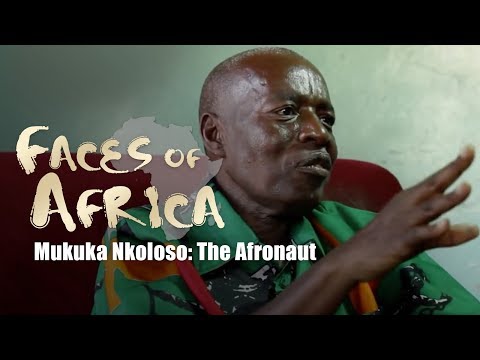
BRIEF BACKGROUND
Nkoloso had been a teacher, an anti-colonial activist, a wartime veteran, later a law graduate, and he was made an honorary colonel in the Zambia Army. He also served as president of the Ndola Ex-servicemen’s League.
The space programme itself was unofficial. Nkoloso created the Zambia National Academy of Science, Space Research and Philosophy and trained young “Afronauts” with the declared ambition of reaching the Moon and Mars. The Zambian government did not formally adopt the project, and Kenneth Kaunda later described it as not being a real state programme.
CULTURE WATCH
Reflections on Life, Places, People, Arts, Memory