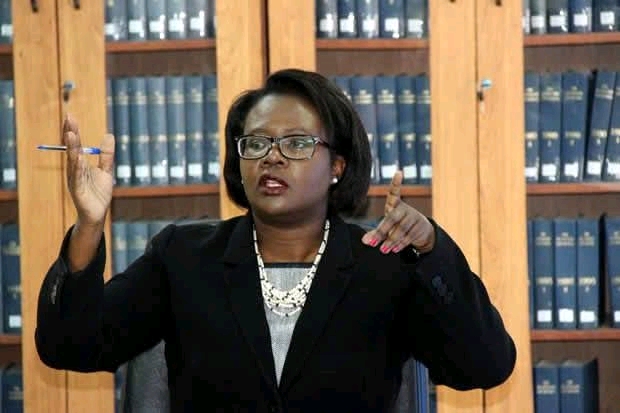

“Constitutional Coup? Linda Kasonde Sounds Alarm Over Zambia’s ‘Dark Path’ Toward Autocracy”
On Africa Freedom Day 2025, a day meant to celebrate liberty and democratic progress across the continent, Zambia finds itself facing a perilous constitutional crossroads. Linda Kasonde, a respected lawyer, activist, and Executive Director of the Chapter One Foundation, has issued a searing warning that the latest Constitutional Amendment Bill No. 7 of 2025 threatens to plunge the nation into entrenched autocracy.
Kasonde, whose voice has long been a beacon for constitutionalism and human rights in Zambia, described the new bill as “even more frightening than Bill 10 of 2019,” which was widely criticized for undermining democratic gains. The 2025 Bill, she argues, seeks to consolidate power within the executive branch and the ruling party, eroding safeguards that protect citizen rights and democratic processes.
“Since 1991, Zambia has been lauded for its transition from a one-party state to a vibrant multi-party democracy,” Kasonde said. “This bill threatens to undo all that progress by constitutionally entrenching dictatorship.”
Unlike previous constitutional review processes which, despite their flaws, at least involved some level of national consultation, Kasonde slammed the current government for rushing the Bill through without broad public engagement or debate.
“Historically, constitutional amendments were preceded by referenda or national dialogue forums President Kaunda’s 1969 referendum, Mwanawasa’s National Constitutional Conference, and Lungu’s National Dialogue Forum. This time, the government has arrogantly dismissed consultation, claiming these amendments are ‘non-contentious.’ This is a dangerous lie,” she said.
Kasonde meticulously dissected key provisions in the Bill that have raised alarm bells among legal experts, civil society, and opposition figures alike:
1. Abolishing the Three-Month Parliamentary Dissolution Period
Under the current Article 81, Parliament must be dissolved three months before a general election, ensuring no last-minute legislation that could unfairly favor the ruling party. The proposed amendment scrapping this safeguard would allow Parliament to function until the day before elections, creating a grave risk of election manipulation.
“This provision was a critical bulwark in 2021, preventing the ruling party from rushing through controversial laws just before the polls. Removing it hands unchecked legislative power to the ruling party during election periods,” Kasonde warned.
2. Curtailing By-Elections for Party-Sponsored MPs
The Bill proposes that by-elections will only apply to independent MPs, while political parties would have the power to appoint replacements for any vacated seats they originally sponsored.
“This undermines the democratic choice of voters and hands parties the power to replace popular MPs with loyalists or ‘yes men’ who may have no connection to the constituency,” said Kasonde.
3. Increasing Parliamentary Seats and Introducing Proportional Representation
The Bill seeks to expand the number of elected MPs from 156 to 211, plus additional seats for women, youth, and disabled persons elected via proportional representation. While increasing representation sounds positive, Kasonde fears this will be exploited to cement an in-built two-thirds majority for the ruling party.
“Without transparent mechanisms on how proportional representation seats will be allocated, and given the ruling party’s dominance, this amendment can skew parliamentary power further,” she explained.
4. Diminishing Qualifications for Secretary to the Cabinet
The Bill reduces the experience requirement for the Secretary to the Cabinet from ten to five years at Permanent Secretary level or equivalent.
“This weakens the senior leadership of the civil service, threatening institutional professionalism and governance standards,” Kasonde noted.
5. Broadening Grounds for Candidate Disqualification
The proposed removal of corruption and misconduct as grounds for disqualification opens the door to courts disqualifying candidates for any reason, potentially as a tool to block political opponents.
“This appears targeted, possibly aiming to exclude certain political figures from contesting elections under vague pretenses,” she said, referencing former President Edgar Lungu.
Kasonde also criticized the opaque delimitation process used by the Electoral Commission to increase constituency seats, calling it “shrouded in secrecy” and lacking transparency.
Beyond the legal technicalities, Kasonde raised serious concerns about the judiciary’s willingness to uphold constitutional protections.
“The courts failed to act decisively during the Bill 10 of 2019 challenge. If history repeats itself, the people of Zambia cannot rely on the judiciary to defend democracy,” she cautioned.
She appealed directly to Zambians, stressing that the Constitution belongs to the citizens, not politicians.
“When institutions fail, it falls upon us—the people—to rise, organize, and protect our freedoms. The country of our dreams should be a nation of unity, liberty, tolerance, and rule of law,” Kasonde declared.
Her powerful message has sparked outrage among opposition parties and civil society groups, many of whom are now mobilizing mass campaigns to resist the amendments.
As the bill moves toward parliamentary debate, all eyes will be on the government’s response and the resilience of Zambia’s democracy.
May 27, 2025
©️ KUMWESU