
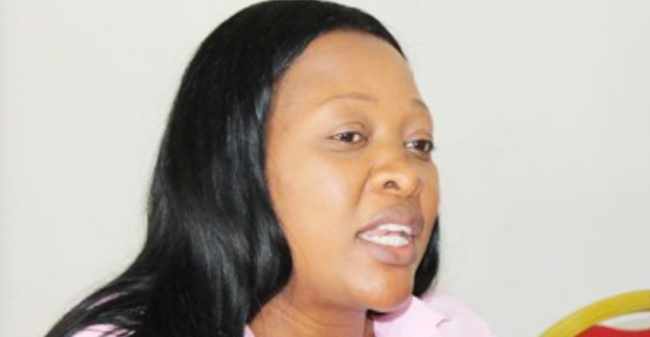
High Court subpoenas Chirwa to testify in Findlay case
By Mwaka Ndawa
THE Lusaka High Court has subpoenaed DEC director general Mary Chirwa to testify.
This is in a matter where former president Edgar Lungu’s associate Valden Findlay, his wife Dessislava and his four companies have petitioned the state for seizing their accounts on the pretext that Findlay was a crook, committed fraud among various financial crimes.
Findlay, his wife’s law firm and businesses want Chirwa to produce an Anti-Money Laundering Unit Investigation report on the payments received by one of his companies from the Ministry of Finance, among other documents.
Judge Susan Wanjelani has granted the plaintiffs leave to issue a writ of subpoena ad testificandum (a court summon to appear and give oral testimony for use at a hearing or trial) and duces tecum (a type of subpoena that requires the witness to produce a document or documents pertinent to a proceeding) to Chirwa.
The DEC boss is on April 22 expected to appear before judge Wanjelani at 10:30 to aid Findlay’s case by giving evidence and producing relevant documents.
“You are commanded in the President’s name to attend before the High Court for Zambia at Lusaka before judge S.M. Wanjelani on 22nd April, 2022 at 10:30 in the fore noon and so from day to day until the above cause is tried, to give evidence on behalf of the Petitioners and also bring with you and produce at the time and place aforesaid the following documents:
1. Anti-Money Laundering Unit Investigation Report on the payments received by D. Findlay and Associates from Ministry of Finance.
2. Joint Task Force investigation team report on the payments received from Ministry of Finance to D. Findlay and Associates; and
3. Such other documents that are relevant to the Investigations on the payments received by D. Findlay and Associates from Ministry of Finance.
Witness statement filed by Makebi Zulu Advocates,” read the summons.
Findlay, a businessman, Dessislava Findlay trading as D Findlay and Associates, Twatotela Properties Limited, Chrismar Earth Moving Equipment Limited and Greenview Service Providers say the secretive freezing of their accounts by the DEC without communication is a violation of their rights to be informed about the allegations they face before DEC takes an arbitrary action and for them to have representation to obtain reliefs from punitive measures taken.
Findlay claimed that the wealth grabbed from him by the Drug Enforcement Commission was clean as it was amassed from rentals and various business activities which he was engaged in with tax liabilities, having been duly paid and the same could be easily verified and explained.
He said the money in the law firm’s account belonged to clients and was received by his wife to be distributed and transferred upon the clients’ requests during business operations.
The plaintiffs are seeking a declaratory order that the seizure notices on their accounts are illegal
They want a declaration that the freezing of the accounts without notification and being given an opportunity to legal representation violates their rights to the presumption of innocence and fair hearing before punishment is meted out on them.
The plaintiffs are seeking an order that the accounts be released.
In its answer to the petition, the State said it seized Harry Valden Findlay’s bank account including that of his wife’s law firm and his businesses as it was tipped that the Ministry of Finance had illicitly paid out K386,265,277 to one of his business accounts.
The office of the Attorney General clarified that the bank accounts were frozen by the Drug Enforcement Commission (DEC) based on reasonable suspicion that the petitioners were involved in money laundering activities and there was need to safeguard the money in the subject accounts which is reasonably believed to belong to the national treasury.
“One of the reasons for seizing or freezing the petitioners’ bank accounts is to prevent the petitioners from moving or dealing with the money in the subject accounts so as not to jeopardise the criminal investigations,” said Attorney General Mulilo Kabesha.