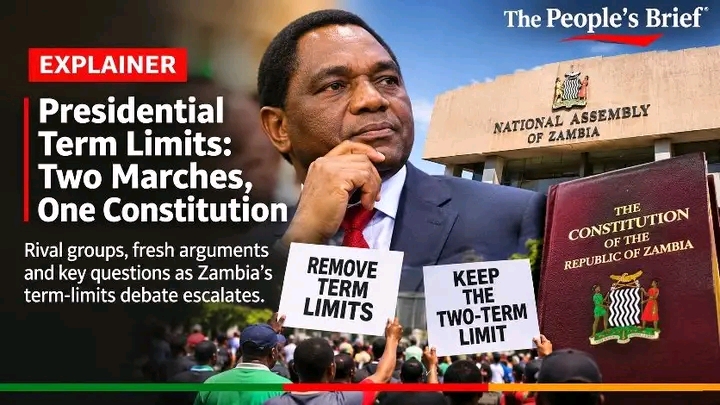

🇿🇲 EXPLAINER | Presidential Term Limits: Two Marches, One Constitution
Zambia’s debate over presidential term limits is gathering momentum, with rival groups planning demonstrations on November 25, opposition leaders questioning the motives behind the campaign and State House insisting President Hakainde Hichilema has nothing to do with calls to remove the constitutional restriction.
The controversy centres on Article 106(3) of the Constitution, which prevents anyone who has twice held the office of President from being elected again. Supporters of removing the provision argue that voters should have the freedom to retain a leader they consider effective. Opponents maintain that the two-term restriction protects the country against the excessive concentration of executive power.
The Zambia Youth Organisations Consortium has emerged as one of the leading groups advocating the change. Its vice chairperson, Boas Kanyama, says 63,151 youths from all 10 provinces are expected to march from Northmead Bus Station to Parliament Buildings in Lusaka on November 25. The organisation says it has notified police and expects about 500 officers to provide security.
“As a consortium, we will not be reduced to a political party. This is not about the third term, it’s about Zambians exercising their democratic right and the Constitution should not stand in the way for Zambians,” Kanyama said.
Supporters argue that presidential elections should continue every five years, but voters should decide how many times a candidate can contest. Some have linked their position to Hichilema’s development agenda, arguing that effective leadership should not be interrupted by constitutional restrictions. The consortium previously petitioned Parliament seeking the removal of term limits.
State House, however, has rejected suggestions that Hichilema is directing the campaign. Chief Communications Specialist Clayson Hamasaka said on Sunday that the debate originated among citizens satisfied with the President’s leadership and that stopping them from expressing their views would be undemocratic.
“This has nothing to do with the head of State, so why should he be dragged into it?” Hamasaka asked. State House maintains that Hichilema remains focused on development and will continue governing according to the Constitution.
Economic Front leader Wynter Kabimba has questioned the reasoning behind changing constitutional rules because of one political leader. Speaking on Prime Television’s *Matters Arising*, Kabimba argued that laws must serve society rather than individuals. His position raises a broader question: should a constitutional safeguard be removed because supporters believe the current President is performing well, when the same rules would also apply to future leaders?

Opposition leader Given Lubinda has called for a referendum, arguing that citizens should directly decide whether presidential term limits should be removed. Socialist Party president Fred M’membe has also sought clarification from the Law Association of Zambia on the constitutional implications of the proposals.
Civil society organisations, including Chapter One Foundation, Transparency International Zambia, Caritas Zambia and the Council of Churches in Zambia, have meanwhile announced their own November 25 procession to defend the existing two-term limit. The organisations say they respect the right of those campaigning for constitutional change but intend to exercise the same freedom to oppose it.
“We respect their right to do so, notwithstanding our disagreement with their position,” the organisations said in their joint statement, referring to citizens who petitioned Parliament to abolish term limits.
Chief Government Spokesperson Elvis Nkandu subsequently questioned the need for the civil society demonstration, describing the third-term debate as an imaginary issue and urging organisers to reconsider. The groups have maintained their intention to proceed, while Channel Africa reported on November 11 that they had secured police clearance.
The contrasting responses have introduced another question into the debate. If supporters of removing presidential term limits can petition Parliament and organise public demonstrations, should those defending the existing provision not enjoy the same freedom? Government maintains that citizens on both sides have the right to express their opinions, even as it disputes suggestions that removing term limits is official policy.
Zambia has confronted a similar controversy before. Former President Frederick Chiluba’s proposed third term in 2001 met strong resistance from churches, civil society and political leaders. The campaign eventually failed, leaving presidential term limits as an important feature of the country’s constitutional arrangements.
Several questions remain unresolved. State House has denied presidential involvement but has not expressly stated whether Hichilema supports or opposes removing the restriction. Parliament has received petitions, but no formal Government proposal to abolish the two-term limit has been established. The legal process for any eventual amendment, including whether a referendum would be required, is also part of the public debate.
For now, Zambia faces competing interpretations of democracy. Supporters of removal emphasise voters’ freedom to retain their preferred leaders, while opponents emphasise constitutional limits on presidential power. With both sides preparing to demonstrate on November 25, attention is turning to Parliament, the Government’s next steps and whether citizens holding opposing views will be afforded equal space to make their case.
The People’s Brief | Mwape Nthegwa; Hora Hanene
17 November 2026