⬆️ FACT CHECK | Lubinda, Citizenship Law and the Tribal Question in PF
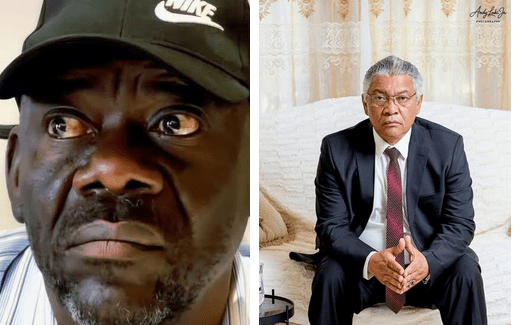
Davies Mwila’s assertion on Diamond TV that Given Lubinda is “not Zambian” and therefore unfit to lead the Patriotic Front is false in law and reckless in public effect. The governing law on presidential qualifications is settled under Article 100(1) of the Constitution of Zambia and the Electoral Process Act No. 35 of 2016.
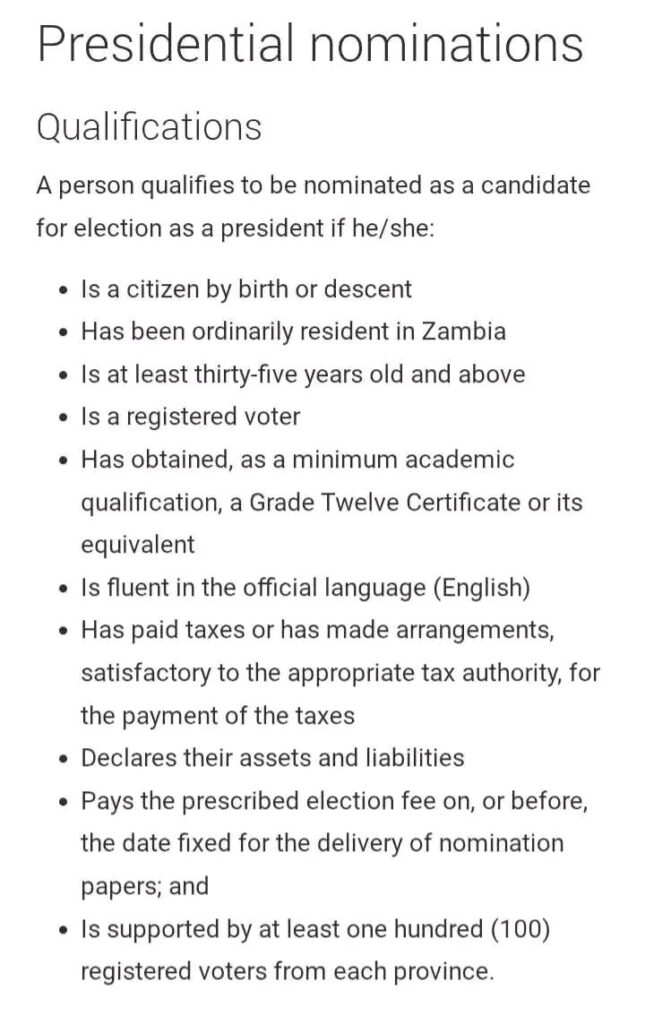
These provisions require that a presidential candidate be a citizen by birth or descent, be ordinarily resident in Zambia, be at least 35 years old, be a registered voter, meet Grade Twelve academic qualification requirements, be tax compliant, declare assets and liabilities, and meet nomination thresholds. There is no parentage clause in the current Constitution
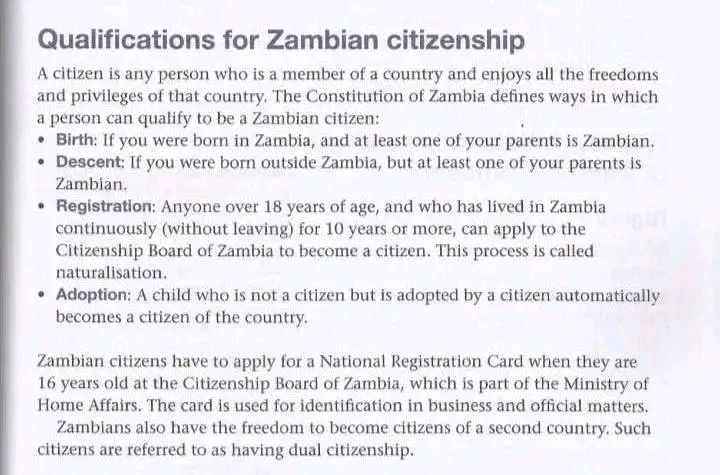
The controversial parentage requirement was introduced in 1996 under the MMD government and later judicially neutralised by the Supreme Court in 1998 when Akashambatwa Mbikusita-Lewanika challenged the eligibility of President Frederick Chiluba. The Court ruled that citizenship by descent at independence satisfied the requirement.
Crucially, that entire clause was formally abolished in the 2016 Constitution, making Mwila’s argument not merely outdated but constitutionally extinct.
Amb. Emmanuel Mwamba’s legal position is therefore correct when he states that:
“In Zambia, besides other qualifications, one needs to be Zambian by birth or descent to qualify to stand. The obnoxious parentage clause was completely removed in 2016.”
On this specific point of law, Mwila is factually wrong.
Mwamba is also correct on the media ethics breach. The program was pre-recorded. That imposed a higher editorial duty on the broadcaster to remove content that is racially inflammatory, factually false and constitutionally misleading. Broadcasting it in full exposed both the station and the speaker to reputational and possible legal consequences.
While Mwila misses the law, he hits the political nerve. His remarks did not emerge from a vacuum. They reflect long-standing tribal anxieties inside PF, especially in a post-Lungu vacuum marked by succession fights. His outburst is not an accident. It is a symptom.

PF, like UPND, was not born as a clean national party. It was first built through ethnic mobilisation before broadening nationally. The difference is rhetorical, not structural. PF presents itself as nationally neutral, yet its leadership wars are often traced along provincial and tribal lines.
When President Michael Sata was accused of tribal favouritism, he famously told Parliament:
“We do not balance tribes. We balance brains.”
That claim is verifiable or falsifiable through Hansard and ministerial appointment records, which remain publicly accessible via the parliamentary archives. A similar verification can be done for appointments under President Edgar Lungu. The empirical record shows patterns of regional clustering, centralisation of loyalists, and provincial dominance, undermining the myth that PF was immune to tribal balancing.
This is why the attempt by sections of PF to brand UPND as uniquely tribal lacks moral authority. Both parties have used ethnic arithmetic at different stages of their political rise.
It is also true, and verifiable, that UPND entered national politics through elite economic and academic networks, beginning with Anderson Mazoka and deepened under President Hakainde Hichilema. This has produced a leadership class that is more internationally networked and economically literate. That reality does not make UPND morally superior, but it explains why PF’s politics has often leaned more on populist mobilisation than technocratic legitimacy.

Mwila did not reveal the law. He revealed PF’s unresolved identity crisis. His words exposed:
– The questionable internal democratic culture,
– The use of heritage as a weapon in leadership battles,
– The collapse of ideological contestation into ethnic suspicion,
– And the fact that PF’s current conflict is no longer about policy, but about ownership of the party shell.


That is why Amb. Mwamba is right to condemn the remarks as discriminatory and unconstitutional, but also why politically, Mwila unintentionally told the truth about the emotional logic now driving PF’s implosion.
On the strict legal question:
✅ Given Lubinda meets constitutional citizenship requirements
✅ The 1996 parentage clause no longer exists
✅ Article 4(3) of the Constitution affirms Zambia as multi-ethnic, multi-racial, multi-cultural
✅ Article 11 prohibits discrimination on grounds of race, origin or political opinion
Mwila’s claim fails every one of these tests.
Overall, Davies Mwila was wrong in law.
But he was not lying about the emotional DNA of PF. Emmanuel Mwamba is right on the Constitution. But the Constitution alone will not cure the tribal reflexes that still define Zambia’s big parties. And Diamond TV failed the test of editorial responsibility.
Editorial Notice:
This analysis is grounded in constitutional law, Supreme Court precedent, parliamentary history, and public record. It is offered to correct misinformation, not to defend or attack any political party. Readers are encouraged to verify appointments, rulings and debates through the National Assembly of Zambia Hansard archives and the Constitution of Zambia (Amendment) Act No. 2 of 2016.
© The People’s Brief | Editors
The matters at hand are purely for PF and it’s succession battle why then drag UPND . It’s like the writer is apologising for calling out PF for their tribal politics by leveraging his misplaced opinion on UPND.
It’s now dog eat dog.
Thank you for a well balanced article. It was refreshing and enlightening. This is what we need as citizens. Very clearly explained.
The identification of the deep rooted inclinations within our political make up was brilliant. The unfortunate reality is that elements of tribal sentiments can be traced within our political actors. This problem needs to be dealt with and not swept under the capet.
The politicians have also exposed gross incompetence regarding understanding the constitution which they swore to defend. This ignorance of lack of knowledge on what the actual constitution states is the main reason for much of the confusion we experience. Misinterpretation of the Constitution. Personal sentiments are championed at the expense of the law.
I thoroughly enjoyed reading this article. Well done.
These are the contours of a post-colonial state trying to be a nation. I do not understand why there’s no widespread condemnation of Davies Mwila from the usual suspects.