
FACTS 1ST | What Bill 7 Looks Like After Parliament’s Final Vote
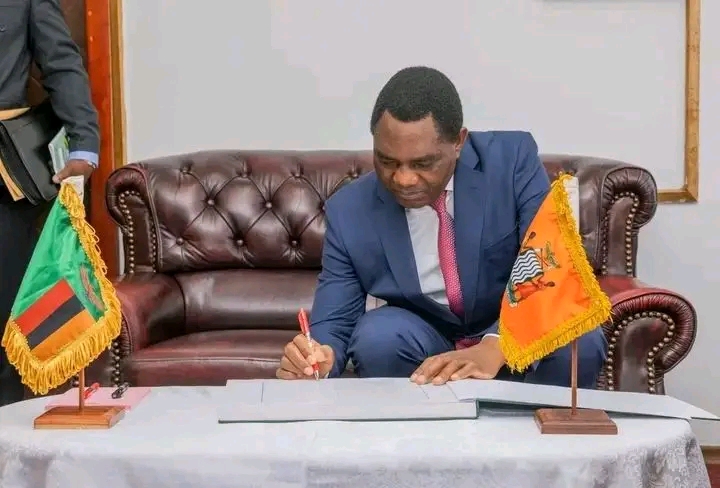
As President Hakainde Hichilema prepares to assent to the Constitution of Zambia (Amendment) Bill No. 7 of 2025 this morning, public debate remains clouded by outdated drafts, rejected clauses, and deliberate misinformation.
Here is what Bill 7 actually contains following parliamentary amendments and final passage. Not rumours. Not intentions. Not speculation. The law as passed.
1. Three Controversial Clauses Were Removed Before Final Passage
Parliament deleted three provisions that had triggered the most public anxiety. These clauses are not part of the law being assented to.
Article 52 (Elections without candidates): REMOVED
The proposal that would have allowed elections to proceed even if a candidate resigned or was disqualified after nominations was dropped.
Effect: Elections must still offer meaningful voter choice. No empty ballots.
Article 72 (Replacement of MPs without by-elections): REMOVED
The attempt to allow political parties to replace MPs without by-elections was rejected.
Effect: Voters retain the power to choose replacements through by-elections.
Article 73 (Dissolution of Parliament before elections): REMOVED
The proposal to dissolve Parliament one day before a general election was discarded.
Effect: Parliamentary continuity and oversight during election periods is preserved.
These removals were adopted before the Bill passed Third Reading.
2. The Core of Bill 7 Is Article 68: Representation and Delimitation
The central reform retained in Bill 7 is the amendment of Article 68, which restructures the National Assembly and constitutionally anchors delimitation and inclusion.
Under the amended Article 68, Parliament will consist of:
• 226 constituency-based MPs, reflecting population growth and ECZ delimitation
• 40 proportional representation MPs, allocated as:
– 20 women
– 15 youths
– 5 persons with disabilities
• Not more than 11 nominated MPs, capped at five percent of elected seats
• The Vice-President
• The Speaker
• The First and Second Deputy Speakers
This is the structure President Hichilema is assenting to.
3. Inclusion Is Now Constitutional, Not Discretionary
For the first time in Zambia’s constitutional history, women, youths, and persons with disabilities are guaranteed representation by the Constitution itself, not by party goodwill.
This means inclusion becomes justiciable. It can be enforced in court. It is no longer optional.

4. Delimitation Is Given Legal Force
Bill 7 gives constitutional effect to the Electoral Commission of Zambia’s Delimitation Report, correcting demographic distortions where constituencies had grown too large to be effectively represented.
This applies to both rural and urban areas.
• In rural constituencies, smaller units reduce distance, oversight costs, and service delays.
• In urban constituencies, it addresses congestion, informal settlements, and overstretched MPs.
5. The Bill Does Not Change Tax Laws
Bill 7 does not amend tax rates, introduce new taxes, or mandate increased taxation. Any future tax changes would require separate legislation, debated independently in Parliament.
Claims that Bill 7 automatically raises taxes are false.
6. Representation Costs vs Underdevelopment Costs
Bill 7 increases representation. That carries a fiscal cost.But Parliament’s debate turned on a competing reality:
• Oversized constituencies increase project failure
• Weak oversight inflates wastage
• Underrepresentation entrenches inequality
The economic question Parliament resolved was not “representation is free” but whether underrepresentation is more expensive in the long run.
7. What Bill 7 Does Not Do
• It does not extend presidential terms
• It does not remove elections
• It does not abolish by-elections
• It does not suspend the Constitution
• It does not legalise rule by decree
These claims do not appear anywhere in the final text.
8. Why This Matters Now
President Hichilema is assenting to a Bill that Parliament reshaped. The law going into force is not the same Bill that entered Parliament months ago.
Opposition figures remain free to challenge its constitutionality in court. That process continues separately.
But as of today, the facts are clear. Bill 7, as passed:
• expands representation
• constitutionalises inclusion
• operationalises delimitation
• preserves electoral choice
• retains voter sovereignty
Debate will continue. Politics will rage. But misinformation ends here.Facts first. Politics second.
The People’s Brief | Ollus R. Ndomu
• Oversized constituencies increase project failure
• Weak oversight inflates wastage
• Underrepresentation entrenches inequality
The economic question Parliament resolved was not “representation is free” but whether underrepresentation is more expensive in the long run.
7. What Bill 7 Does Not Do
• It does not extend presidential terms
• It does not remove elections
• It does not abolish by-elections
• It does not suspend the Constitution
• It does not legalise rule by decree
These claims do not appear anywhere in the final text.
8. Why This Matters Now
President Hichilema is assenting to a Bill that Parliament reshaped. The law going into force is not the same Bill that entered Parliament months ago.
Opposition figures remain free to challenge its constitutionality in court. That process continues separately.
But as of today, the facts are clear. Bill 7, as passed:
• expands representation
• constitutionalises inclusion
• operationalises delimitation
• preserves electoral choice
• retains voter sovereignty
Debate will continue. Politics will rage. But misinformation ends here.Facts first. Politics second.
The People’s Brief | Ollus R. Ndomu
Inclusion Is Now Constitutional, parliament is now a spectator sport for youth, women, disabilities.