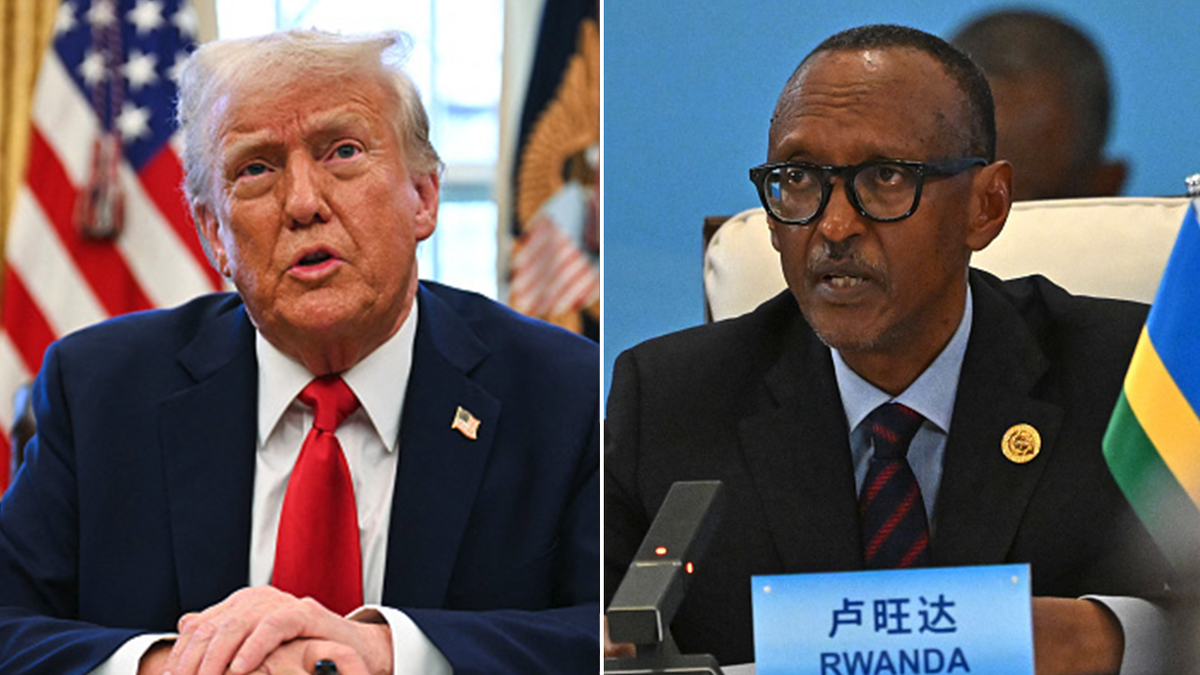

Rwanda has begun receiving deportees from the US amid wider scrutiny of African countries’ agreements to accept migrants. Uganda, for example, had agreed to take certain deportees, but a federal judge has blocked the planned transfer of Colombian national Kilmar Abrego Garcia.
Rwanda has received its first group of deportees from the United States, marking the start of a controversial arrangement under which African countries have agreed to take in migrants facing removal from America.
“The first group of seven vetted migrants arrived in mid-August,” Rwandan government spokesperson Yolande Makolo told journalists.
“Four of them will remain in Rwanda, while three opted to return to their home countries.”
Makolo added that “regardless of their specific needs, all of these individuals will receive appropriate support and protection from the Rwandan government.”
She said the deportees are being accommodated by “an international organisation” and will be visited by the International Organization on Migration (IOM) and Rwandan social services.
An IOM spokesperson confirmed to AFP that the organisation had assessed the migrants’ basic needs but did not provide further details.
The move comes amid heightened scrutiny of similar agreements elsewhere in Africa.
Uganda, for instance, had previously reached an understanding with the US to receive certain deportees, but the planned transfer of Colombian national Kilmar Abrego Garcia has been blocked by a US federal judge.
His lawyers argued that deporting him to Uganda, where he had no ties or protection, would “amount to a form of exile in violation of international law.”
Human rights advocates have warned that such deportations risk breaching international law.
“Sending migrants to countries where they may face abuse or inadequate support is deeply concerning,” said a Kampala-based activist.
“We do not know who these individuals are, why Uganda was chosen, or what safeguards exist to protect them.”
Rwanda, meanwhile, has defended the deal, citing its history of hosting displaced populations. Earlier this year, Makolo told the BBC: “Nearly every Rwandan family has experienced the hardships of displacement. We are confident we can provide safe accommodations and proper care for these migrants.”
The arrangement is part of a broader US plan under President Donald Trump to deport undocumented migrants globally.
At least a dozen countries have reportedly signed agreements to receive deportees. Rwanda has previously taken in thousands of refugees evacuated from Libya under UN and African Union frameworks, and also reached a deal with the UK in 2022 to accept asylum seekers, though the latter scheme was later scrapped.
Observers in East Africa note that while Uganda has a strong record of hosting refugees — with more than 1.6 million people from South Sudan, DR Congo, and beyond — bilateral deportation agreements with countries like the US present new legal and ethical challenges.
Abrego Garcia’s case has already highlighted these tensions. “This is not just about one person,” said his lawyer.
“It raises questions about transparency, accountability, and the treatment of migrants under international law.”
As Rwanda hosts the first deportees from the US, attention is likely to turn to how African nations like Uganda may be involved in similar programs, and whether legal safeguards and humanitarian protections are adequately enforced.