
GOVT FACTS ABOUT ECONOMIC GROWTH DO NOT RESOUND WITH THE PEOPLE
By Brian Matambo
Lusaka, Zambia
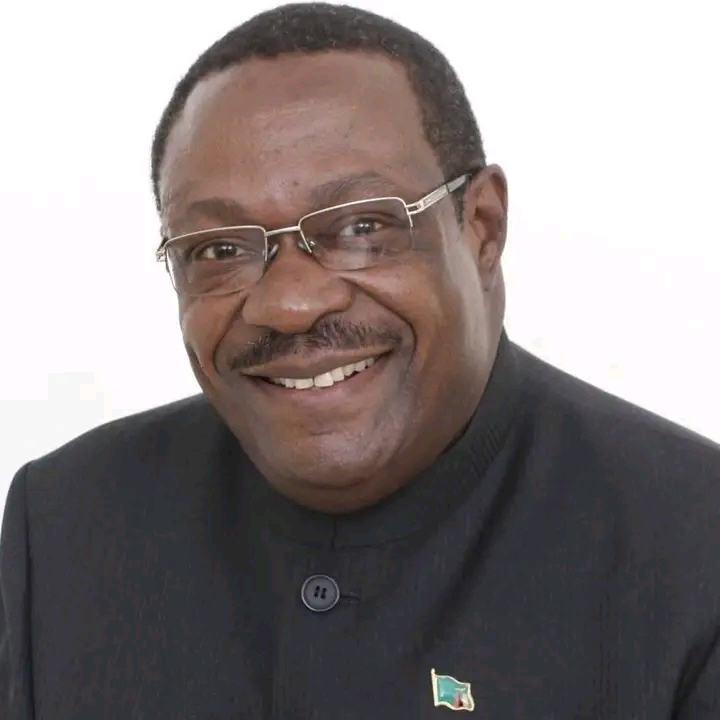
On the Tuesday edition of Emmanuel Mwamba Verified (EMV), Dr. Sebastian Kopulande, former MP for Chembe Constituency, former Special Assistant to President Levy Mwanawasa, and former Permanent Secretary, warned that Zambia’s growth projections bear little resemblance to the economic reality facing most households.
“The economy does not grow from what I say or wish,” Dr. Kopulande told host Emmanuel Mwamba. “It grows from what people produce. How do you talk about six percent growth when the population only has access to power for five hours a day?”
Dr. Kopulande’s comments cut against the government’s narrative of steady recovery. Ministers point to debt restructuring, copper output, and community development funds as proof that Zambia is on the right track. Yet, as he stressed, optimism means little in a country where blackouts stall productivity and wages lag far behind rising prices.
Independent data confirms the strain. An Afrobarometer survey published in March 2025 reported that most Zambians view the economy as “fairly bad” or “very bad,” with over half citing the soaring cost of living as their primary concern.
The Jesuit Centre for Theological Reflection’s Basic Needs and Nutrition Basket showed the monthly cost for a Lusaka family of five at K11,272.97 in May 2025, rising to over K11,600 by July. Average household incomes, often below K5,000, fall well short of that threshold.
Pressed by Mwamba on how to bridge this gap, Dr. Kopulande argued that Zambia’s financial system is structurally incapable of supporting long-term growth. Commercial banks, he noted, focus on short-term lending that cannot finance mining ventures, industrialisation, or housing. He called for the creation of new institutions, a development bank, an SME bank, and an export-import bank, alongside sector-specific lenders for agriculture and mining.
Live callers from Zambia and abroad echoed the frustrations. Patricia from Germany complained of government neglect of agriculture, while others pointed to the high cost of fuel, poor irrigation systems, and lack of jobs. Some asked directly whether Dr. Kopulande was prepared to take on an opposition leadership role.

While government officials continue to highlight debt deals, free education, and decentralisation as milestones, EMV’s debate highlighted the disconnect between official optimism and the lived reality of Zambian citizens. “The danger of self-deception,” Dr. Kopulande cautioned, “is that you fail to fix what is broken because you believe it is not.”
Until wages catch up with the cost of food, electricity supplies stabilize, and capital flows into productive sectors, the government’s six percent growth story will remain, in the eyes of many Zambians, a distant promise.
This culture of just eating without planting is what brought where we are today.You don’t like planting and wait to harvest in abundance you people.You want everything to be fixed today forgetting that your economy which was in ICU.The ripple will reach the man on the street very soon. HH is busy working give the man a break
It’s early days of course. What the government is talking about are leading economic indicators, that is, the early signs of economic recovery; GDP growth, reduction in inflation, relative exchange rate stability, increasing investment etc. If Sebastian Kopulande doesn’t know that fertiliser, grain and mining output have increased and that this is a good thing, then he’s being dishonest. The task facing the country is to sustain them so that even HH’s harshest critics can be put out of business. And who to sustain these gains apart from HH himself by giving him a second term in 2026?
Ba Kopulande, who is supposed to create those financial institutions (SME Bank, Import-Export Bank, Agriculture Bank)? If you are expecting the government to create them, where is the money going to come from? It is us the general public who must create the wealth. To make matters worse, our credit worthiness is almost zero. People talk of empowerment but how many are faithful enough to pay back the loans? And if people don’t pay back, how do you sustain the lending?
The problem we have is that we are very unreliable. A Zambian will first ask for an advance payment before even lifting a finger. Then you have to chase him to complete the job. So how do you expect the economy to grow. It is one step forward and two steps.back.
If we look to the government to provide all solutions, we will never develop. The government is there to provide a good environment for citizens to realise their full potential not to provide loans.