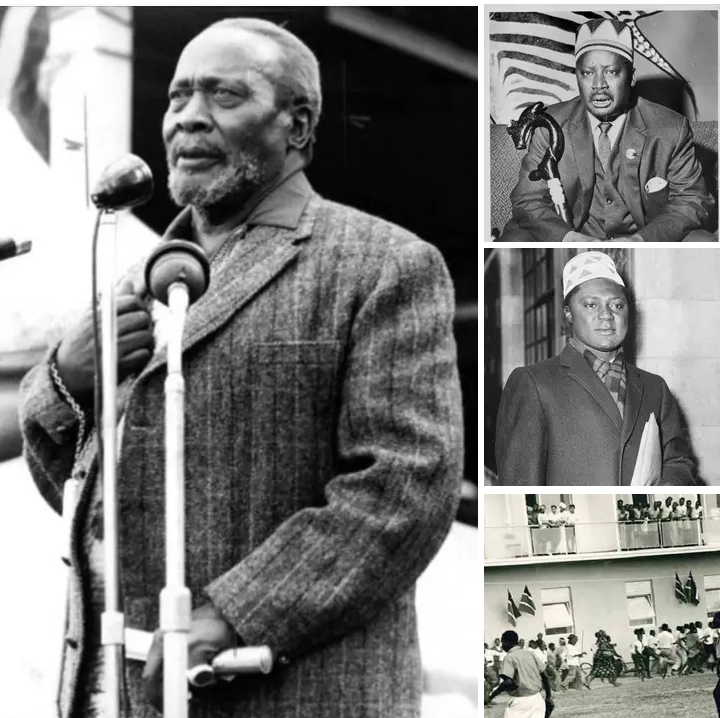

“How Kenya’s First President’s Bodyguards Killed Dozens of Civilians While Protecting Him”
On October 25, 1969, Kenya’s first president, Mzee Jomo Kenyatta, visited Kisumu to officially open the New Nyanza Provincial General Hospital, popularly known as Russia Hospital because it was funded by the Soviet Union. Sadly, the occasion ended in bloodshed when presidential guards opened fire, killing civilians after chaos erupted during the visit.
The events took place at a time when political tensions between Kenyatta and his former vice president, Jaramogi Oginga Odinga, had grown increasingly bitter.
The conflict dated back to 1966, when Odinga resigned from the government following disagreements over political power and the direction of Kenya’s economic policies. He later formed the opposition Kenya People’s Union (KPU), becoming one of Kenyatta’s strongest political rivals.
Three months before the Kisumu incident, on July 5, 1969, popular Luo politician and economic planner Tom Mboya was assassinated in Nairobi. His death sparked widespread grief and anger, particularly among many Luo residents.
It was against this background that Kenyatta travelled to Kisumu to open the hospital, a project closely associated with Odinga, who had helped secure Soviet support for its construction.
Kenyatta had to delay the hospital’s opening as members of the public clashed with anti-riot police. Eventually, calm was restored, and he proceeded to the hospital grounds. There, an agitated crowd chanted “Dume”, meaning bull, the symbol associated with Odinga’s KPU party, and heckled Kenyatta, who responded by hurling insults at them.
Meanwhile, tensions escalated on the platform, where Kenyatta and Odinga were exchanging harsh words.
As the president left the meeting, the crowd surged forward, and the presidential guards and police opened fire into the unarmed crowd as Kenyatta’s motorcade sped out of town. Security forces continued shooting at people along the Kisumu-Nairobi Road. While official government reports claimed that only 11 people died, independent estimates suggest that between 50 and 100 people were killed, including women and children. The actual death toll remains disputed.
Following the chaos, the government banned the Kenya People’s Union, while Odinga and other party officials were arrested and detained.
The massacre deepened mistrust between the government and many people in Nyanza, with the killings becoming a symbol of political exclusion among many Luo residents.
Jomo Kenyatta never returned to Kisumu before his death in August 1978.