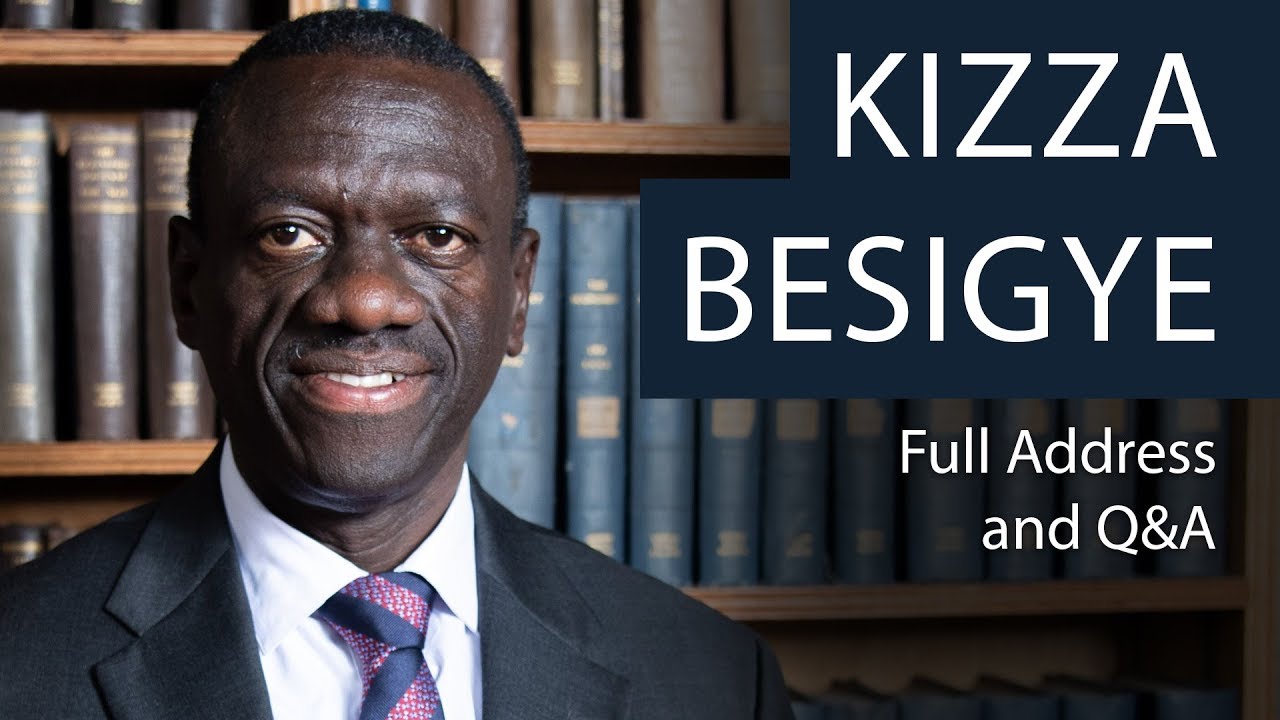

Kampala High Court on Monday rejected an application by veteran opposition figure Kizza Besigye and activist Obeid Lutale to suspend their treason trial and grant them bail, ordering the pair to first take plea on charges that have kept them in custody for months.
Justice Emmanuel Baguma ruled that proceedings in Criminal Session Case No. 335 of 2025 should continue despite a pending constitutional petition in which the applicants argue that aspects of their arrest, committal and prosecution violated their right to a fair hearing.
“In simple terms, plea taking enables court to ask an accused person if he or she admits or denies the charges,” Baguma said in his ruling.
“A stay of proceedings, even if it was to be granted, would make sense after the applicants have taken plea, not at the stage of halting plea taking itself.”
Besigye, a four-time presidential challenger to President Yoweri Museveni, and Lutale were charged in February with treason and misprision of treason at Nakawa Chief Magistrates Court and remanded to Luzira Government Prison.
The charges stem from alleged participation in what prosecutors describe as unlawful activities aimed at undermining the state.
The defence told court that the two men have been on remand for more than a year and that delays in resolving Constitutional Petition No. 031 of 2025 were beyond their control.
Their lawyers argued that the petition raises serious questions of public interest touching on the fairness of the trial.
“This court has inherent powers to stay proceedings and to grant bail,” defence counsel submitted, citing past Supreme Court and Constitutional Court decisions.
They said the applicants were “responsible citizens” with fixed places of abode and substantial sureties, and stressed that bail is a temporary release that does not stop a trial from proceeding.
Prosecutors opposed the application, arguing that there was no legal basis for halting the criminal case.
“It is wrong for the applicants to seek a stay from this court when the petition is before a higher court,” the state said in submissions.
The prosecution accused the defence of using “delaying tactics deliberately to halt the proceedings.”

The state further argued that the offences carry severe penalties — death for treason and life imprisonment for misprision of treason — creating a high risk of absconding if bail were granted. Prosecutors also questioned the independence of the proposed sureties, saying many were politically aligned to Besigye.
In his decision, Baguma said a constitutional petition filed directly in the Constitutional Court does not trigger an automatic stay of proceedings in the High Court.
“The injunctive remedy sought is discretionary and must be exercised judiciously,” he said, adding that the discretion to stay criminal proceedings should be exercised “sparingly and carefully, taking into account the gravity and seriousness of the offences.”
The judge noted that the applicants were committed to the High Court in May and that plea taking had been scheduled for September but repeatedly deferred.
“Instead, they resorted to filing applications after applications, making the process of plea taking difficult,” he said.
Baguma dismissed both the request to stay proceedings and the application for bail, but left the door open for a future bail application.
“If they so wish, they can apply for bail at a later stage if there is any delay in the hearing of their case,” he said, while stressing that the presumption of innocence still applies.
He directed the applicants to “proceed to take plea immediately,” clearing the way for the long-running case — which has drawn intense political and legal scrutiny — to move to its next stage.
The decision drew immediate reaction from Besigye’s supporters.
His wife, Winnie Byanyima, said in a social media post that the courtroom was heavily guarded as the charges were read and criticised the proceedings as unjust.
Separately, political analyst Gerald Kwingira warned that insisting on plea-taking before bail consideration in politically sensitive cases risks prolonging pre-trial detention and deepening perceptions of selective justice.