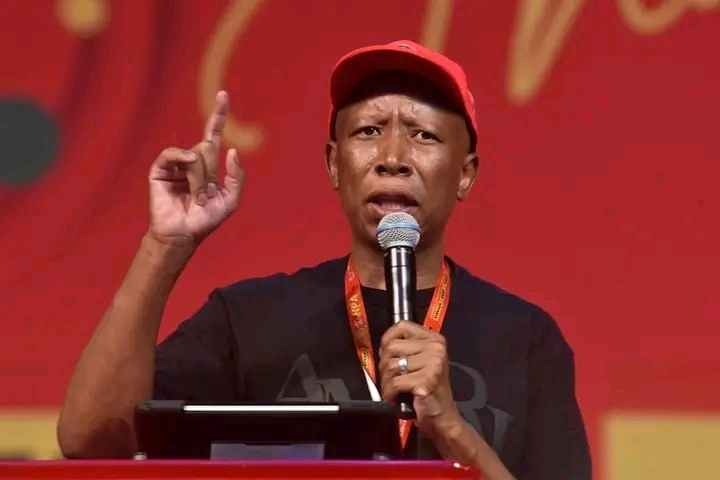

Julius Malema Reveals He Once Planned a ‘Black AfriForum’ to Champion Black South Africans’ Rights With Former Judge President John Hlophe as Legal Leader — A Civil Organisation That Could Have Challenged Groups Like AfriForum and Freedoms Under Law
EFF leader Julius Malema recently shocked many by revealing that long before his current political prominence, he envisioned creating a civil rights organisation for black South Africans, modeled on AfriForum, the well-known group that advocates for Afrikaner and minority rights. Malema said the idea was meant to provide black South Africans with legal and civil advocacy similar to what AfriForum offers for white communities, filling a gap he believed existed in the country’s civil society.
⚖️ John Hlophe: The Legal Brain Behind the Plan
Malema disclosed that he wanted former Judge President John Hlophe to serve as the organisation’s main legal strategist. He even compared the role Hlophe could have played to Gerrie Nel, the high-profile prosecutor who later became a key figure in AfriForum’s private prosecutions.
The plan included leveraging Hlophe’s courtroom expertise and legal influence to counter organisations like AfriForum, Freedom Under Law, and other advocacy groups — but with a focus on protecting and promoting the rights of black South Africans.

Why the Plan Never Took Off
The organisation never became a reality. According to Malema, Hlophe opted to pursue a political path instead, joining the uMkhonto weSizwe Party (MKP) after leaving the judiciary following his impeachment in 2024. Malema suggested that Hlophe’s decision was influenced by financial pressures after losing his judicial salary. As a result, the envisioned “Black AfriForum” remained an idea rather than a functioning institution.
類 What This Means for South Africa
Malema’s revelation highlights ongoing debates in South Africa over representation, legal advocacy, and civil rights. While AfriForum has long fought for minority rights and taken legal action on social and political issues, Malema’s idea suggested that black South Africans lacked a comparable civil structure outside political parties to champion their legal and socio-economic interests.
This disclosure also raises questions about how civil advocacy and politics intersect, and whether influential legal figures can shape rights-based organisations without being drawn into partisan politics