

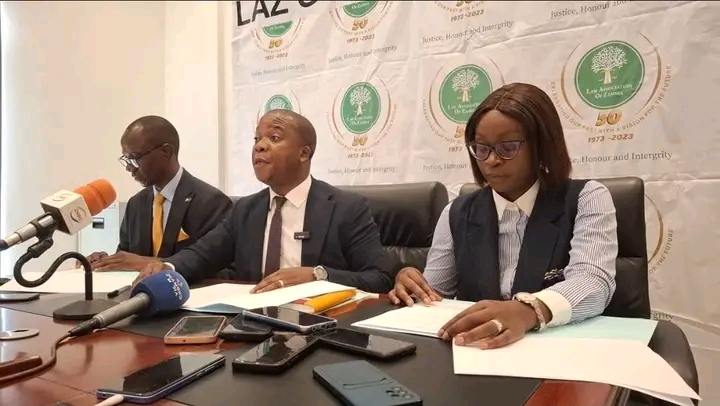

LAZ REJECTS BILL 10 RELOADED
THE LAW ASSOCIATION OF ZAMBIA DETAILED RESPONSE TO THE
OUTLINE OF THE PROMINENT KEY ISSUES REQUIRING CONSTITUTIONAL AMENDMENT AND PROPOSED ROAD MAP.
The Law Association of Zambia (LAZ) has carefully studied Government Position paper on the proposed Constitutional reforms as presented by the Honorable Minister of Justice, Honorable Princess Kasune, MP in her Parliamentary address on 26th March, 2025. The Minister of Justice outlined the prominent key issues requiring Constitutional amendment and also presented a road map for the reform process.
We have reviewed the said position paper, and in line with our statutory mandate, would like to offer a detailed response thereto. For clarity, we have itemized the specific issues as submitted by the Minister of Justice, and our position is as hereinbelow:
“1. DELIMITATION OF NEW CONSTITUENCIES AND WARDS BY THE ELECTORAL COMMISSION OF ZAMBIA
THE CONSTITUTION, CHAPTER 1 OF THE LAWS OF ZAMBIA, PROVIDES FOR A FIXED NUMBER OF CONSTITUENCIES IN THE COUNTRY, WHICH TODAY, IS ONE HUNDRED AND
FIFTY-SIX (156).
THE ELECTORAL COMMISSION OF ZAMBIA (ECZ) IS MANDATED, AT INTERVALS OF NOT MORE THAN TEN YEARS, TO REVIEW THE NAMES AND BOUNDARIES OF CONSTITUENCIES.
IT IS PROPOSED THAT ARTICLES 58 AND 68 BE AMENDED TO PROVIDE FOR ACTUALISATION OF DELIMITATION OF CONSTITUENCIES AND WARDS, TO BE DETERMINED BY THE ELECTORAL COMMISSION OF
ZAMBIA.
THE IMPACT OF DELIMITATION, MADAM SPEAKER WILL PROVIDE EQUITABLE DISTRIBUTION OF RESOURCES (PARTICULARLY THE CDF) BASED ON POPULATION AND GEOGRAPHIC SIZE OR LAND MASS.
EQUITY VERSUS EQULITY, MADAM SPEAKER.
IMAGINE CONSTITUENCIES WHICH ARE THE SIZE OF SOME EUROPEAN COUNTRIES GETTING THE SAME AMOUNT AS A SMALL CONSTITUENCY.
THIS IS THE INJUSTICE, THE INEQUITY THAT THE GOVERNMENT AND THE PEOPLE OF ZAMBIA ARE CONCERNED ABOUT.”
LAZ Response: This is a new proposal. However, delimitation requires a careful and wide consultative process to avoid potential political conflict in terms of drawing boundaries to perpetuate political gains. Proposed timeline in the road map is not sufficient to achieve the required consultative process. Rushing delimitation ahead of elections is not wise.
There is also no agreement as to the basis of the proposed delimitation exercise, will it be based on the 2019 review by the Electoral Commission or indeed a new one? Have political parties agreed the parameters of the proposed delimitation, and will they agree just before elections.
Using the argument of Constituency Development Fund (CDF) as a basis for delimitation is also not persuasive, as CDF is not is not in the Constitution. Further CDF is not one of the matters to be taken into account by the Electoral Commission when delimiting constituencies and wards under Article 59 of the Constitution.
There are many options available to the Government to enhance equity in CDF allocations and utilization. Government could consider allocating Constituency Development Fund based on number of wards, within each Constituency. Since creation of wards does not require Constitutional amendment but within the control of Parliament, bigger Constituencies in terms of geographical size and population can have more wards, thereby attracting higher CDF, to achieve equity in the interim.
Government could also consider creating more Districts to enhance service delivery in areas with bigger Constituencies in line with the decentralization policy.
Additionally, Government should attend to inefficiencies surrounding the low utilization of CDF across the country.
“2. THE NEED TO REVISE THE PROVISIONS RELATING TO FILING OF FRESH NOMINATIONS ON RESIGNATION OF A CANDIDATE IN AN ELECTION
THE CONSTITUTION, UNDER ARTICLE 52(6), MANDATES ELECTORAL COMMISSION OF ZAMBIA TO CANCEL AN ELECTION AND REQUIRE THE FILING OF FRESH NOMINATIONS, WHERE A CANDIDATE RESIGNS.
THE PROPOSAL IS TO AMEND THE ASPECT RELATING TO RESIGNATION OF A CANDIDATE, SO THAT THE REMAINING CANDIDATES PROCEED TO PARTICIPATE IN THE ELECTION, AS OPPOSED TO REQUIRING THE FILING OF FRESH NOMINATIONS.
THIS WOULD BE AN UNNECESSARY COST TO THE GOVERNMENT AND WOULD HAVE THE PROBABILITY TO DESTABILISE THE PEACE OF OUR COUNTRY “.
LAZ Response: This proposal is similar to what was contained in Clause 11 of Bill 10 of 2019 which ultimately failed to pass.
The proposal requires wider consultations and consensus with stakeholders including political parties who sponsor the candidates.
“3. INTRODUCTION OF AN ELECTORAL SYSTEM THAT ENHANCES REPRESENTATION OF WOMEN, YOUTH AND PERSONS WITH DISABILITIES IN THE NATIONAL ASSEMBLY
IT HAS BEEN NOTED THAT THE CURRENT ELECTORAL SYSTEM DOES NOT PROVIDE GUARANTEED SEATS FOR WOMEN, YOUTHS AND PERSONS WITH DISABILITIES IN THE NATIONAL ASSEMBLY.
THEREFORE, IT IS PROPOSED THAT THE CONSTITUTION UNDER ARTICLES 47(2) AND 68 BE AMENDED SO AS TO GUARANTEE THE
REPRESENTATION OF WOMEN, YOUTHS AND PERSONS WITH DISABILITIES IN PARLIAMENT. “
LAZ Response: This is a progressive proposal considering the low participation of women, youths and persons with disabilities in the National Assembly and in key Governance Institutions in the country.
However, there are existing Constitutional provisions to address this challenge.
Firstly, Government should fully implement the provisions of Article 60 of the Constitution to urgently enacting a Political Parties Bill compelling Political Parties to adopt more women, youths and persons with disabilities as candidates in Parliamentary elections.
Additionally, Government should take advantage of the provisions of Article 259 of the Constitution, which calls upon appointing authorities to appoint women, youth and persons with disabilities into key Governance institutions.
We note that this proposal is similar to what was contained in Clause 15 of Bill 10 of 2019, which ultimately failed to pass. In any event, it should be part of a holistic Constitutional reform process.
“4. RE-INTRODUCTION OF MEMBERS OF PARLIAMENT IN COUNCILS
THE CONSTITUTION, UNDER ARTICLE 153(2), DOES NOT INCLUDE
MEMBERS OF PARLIAMENT AS BEING PART OF THEIR RESPECTIVE COUNCILS. IT IS, THEREFORE, PROPOSED THAT ARTICLE 153(2) BE AMENDED IN ORDER TO INCLUDE THE MEMBER OF PARLIAMENT ON THE LIST OF PEOPLE WHO CONSTITUTE A COUNCIL.
THIS SHALL ENSURE THAT MEMBERS OF PARLIAMENT, AS THE PEOPLES’ REPRESENTATIVES, ACTIVELY TAKE PART IN THE DEVELOPMENTAL ACTIVITIES UNDERTAKEN BY THE COUNCIL”.

LAZ Response: This proposal is similar to what was contained in Clause 52 of Bill 10 of 2019, which ultimately failed to pass.
The proposal requires wider consultations and consensus with stakeholders including political parties.
It can benefit from a holistic reform of the Constitution.
“5. PROVIDE FOR THE HEARING AND DETERMINATION OF AN ELECTION PETITION
THE CONSTITUTION, IN ARTICLES 73(2), 101(5) AND 103(2), PROVIDES THAT A PARLIAMENTARY ELECTION PETITION AND PRESIDENTIAL ELECTION PETITION SHALL BE HEARD WITHIN NINETY DAYS AND FOURTEEN DAYS OF THE FILING OF THE PETITION, RESPECTIVELY.
THE PROPOSAL IS THAT THESE PROVISIONS BE AMENDED TO CLARIFY THAT THE PETITIONS SHALL NOT ONLY BE HEARD, BUT ALSO DETERMINED, WITHIN THE SPECIFIED TIMEFRAMES, AS PROVIDED IN THE CONSTITUTION. THIS WILL AVERT THE UNFORTUNATE POSITION THE COUNTRY FOUND ITSLEF, IN 2016”.
LAZ Response: This proposal is similar to what was contained in Clause 30 of Bill 10 of 2019.
Additionally, the provisions of the Constitutional Court Rules, Statutory Instrument No. 37 of 2016 as amended by Statutory Instrument number 29 of 2021, have greatly brought clarity in the determination of elections petitions to avoid the repeat of the unfortunate position the country found itself, in 2016.
“6. REVISE THE PROVISIONS RELATING TO BY-ELECTIONS
THE CONSTITUTION, UNDER ARTICLE 57(1), PROVIDES FOR A BYELECTION IN THE EVENT OF A VACANCY IN THE OFFICE OF A MEMBER OF PARLIAMENT, MAYOR, COUNCIL CHAIRPERSON OR COUNCILLOR.
WE ARE ALL WELL AWARE HOW THE PEOPLE HAVE REPEATEDLY LAMENTED THAT THESE BY-ELECTIONS ARE A HUGE COST ON THE
TREASURY, WHICH DERAIL AND DESTABILISE DEVELOPMENTAL PROJECTS.
THE HOUSE MAY WISH TO KNOW THAT, FROM 2021 TODATE, THE
ELECTORAL COMMISSION OF ZAMBIA HAS SPENT, ON BY-ELECTIONS AT
CONSTITUENCY AND WARD LEVEL A TOTAL OF TWO HUNDRED SIXTYFOUR MILLION, ONE
HUNDRED FORTY-FIVE THOUSAND, THREE HUNDRED AND NINE KWACHA
(K264,145,309.00).
THIS DOES NOT INCLUDE THE COLOSSAL AMOUNTS WHICH CANDIDATES AND THOSE SUPPORTING THE PROCESS, HAVE TO SPEND DURING THE CAMPAIGNS. RESEARCH HAS SHOWN THAT A CANDIDATE WILL SPEND ABOUT THREE POINT NINE MILLION KWACHA OF AN INDIVIDUAL’S RESOURCES.
MADAM SPEAKER, BY-ELECTIONS DISRUPT BUSINESSES AND DEVELOPMENT BY DIVERTING PEOPLES ATTENTION AND RESOURCES.
THIS IS MONEY WHICH COULD HAVE BUILT SCHOOLS, HOSPITALS AND BRIDGES, THEREFORE ENABLING ALL OF US DELIVER FOR OUR PEOPLE.
IT IS, THEREFORE PROPOSED THAT ARTICLE 57 BE AMENDED SO AS TO DISPENSE WITH
BY-ELECTIONS WHERE A VACANCY IN THESE OFFICES
IS OCCASIONED BY A MEMBER OF PARLIAMENT UNDER A POLITICAL PARTY.
LAZ Response: This is new and progressive proposal in so far as it seeks to provide a solution to the colossal sums spent on by -elections.
However, the proposal requires wider consultations and consensus with stakeholders including political parties. While the problem of by-elections is generally agreed, there is no consensus on the solution. Whatever the solution will be, it will be important to balance the rights of the citizens to vote for candidates of their choice and dispensing with by-elections.
It can therefore benefit from a holistic reform of the Constitution.
“7. INCREASE IN THE NUMBER OF NOMINATED MEMBERS OF PARLIAMENT
THE CONSTITUTION, UNDER ARTICLE 68(2)(B), PROVIDES THAT THERE SHALL BE NOT MORE THAN 8 NOMINATED MEMBERS OF PARLIAMENT.
IT IS PROPOSED THAT ARTICLE 68(2)(B) BE AMENDED SO AS TO INCREASE THE NUMBER OF NOMINATED MEMBERS OF PARLIAMENT TO A NUMBER THAT WOULD BE PROVIDED FOR IN AN ACT OF PARLIAMENT.”
LAZ Response: This is contentious and in fact retrogressive. It will result in increasing, instead of reducing, the powers of the Presidency. The proposed Article can be subject of abuse, with a potential to water down the accountability and legislative function of the legislature. It may result in creating a rubber-stamp National Assembly for the Executive’s arbitrary actions. The Executive arm of Government will effectively do whatever it shall please, including passing whatever legal and constitutional amendments it may desire, to the detriment of democratic practices, citizens will ultimately be the losers.
We also note that one of the reasons behind nominated members of Parliament is to allow the Presidency to incorporate the youths, women and persons with disabilities or indeed citizens with unique skills and experience to be incorporated in National Assembly and Cabinet. It should follow that if we are discussing broadening pathways for women, youths and persons into key Governance institutions, maintaining the status quo of 8 nominated MPs is more reasonable. If the President wants more people to appoint as Cabinet Ministers, then perhaps it should be proposing appointment of Cabinet Ministers outside Parliament, as submitted by various Constitutional reviews commissions, and not bloating the legislature.
It is unclear which stakeholders recommended the relegation of the number of nominated MPs to an Act of Parliament, considering that the issue has been extensively deliberated at previous Constitutional Review Commissions, and it has been agreed that it is safer for this limit on nominated MPs to be in the Constitution.
This proposal poses the most threat to the national values and principles of democracy and Constitutionalism, good governance and integrity as contained in Article 8 of the Constitution.
“8. HARMONIZATION OF THE TERM OF OFFICE FOR MEMBERS OF PARLIAMENT THE CONSTITUTION, UNDER ARTICLE 81, PROVIDES THAT THE TERM OF PARLIAMENT SHALL BE FIVE YEARS, STARTING FROM THE DATE THAT THE MEMBERS OF PARLIAMENT ARE SWORN INTO OFFICE, AFTER A GENERAL ELECTION AND ENDING ON THE DATE THAT PARLIAMENT IS DISSOLVED.
THIS IS A PERIOD OF FOUR YEARS AND SOME MONTHS. YOU WILL ALSO NOTE THAT ARTICLE 266 HAS A SIMILAR DEFINITION FOR THE WORD “TERM”.
IT IS PROPOSED THAT ARTICLES 81 AND 266 BE AMENDED IN ORDER TO ACTUALISE THE TERM OF OFFICE TO A PERIOD OF FIVE YEARS.”
LAZ Response: This proposal is similar to what was contained in Clause 22 of Bill 10 of 2019. It is hard to appreciate the real mischief it is aimed to cure.
The dissolution of Parliament 90 days before the holding of general elections under Article 81(3) of the Constitution is aimed at reducing the potential abuse of public funds, ahead of elections. It also ensures a level political playing field, so that Members of Parliament and Cabinet Ministers from the ruling party, do not campaign using the public purse.
In any event, it can benefit from a holistic reform of the Constitution.
“9. VACANCY OF MINISTER’S OFFICE NINETY DAYS BEFORE ELECTIONS THE CONSTITUTION, UNDER ARTICLE 116(3), PROVIDES FOR VACANCY IN THE OFFICE OF THE MINISTER.
IT IS PROPOSED THAT ARTICLES 116 BE AMENDED TO PROVIDE THAT
THE OFFICE OF THE MINISTER BECOMES VACANT, NINETY DAYS BEFORE THE HOLDING OF THE NEXT GENERAL ELECTIONS.
THIS SHALL AVOID THE ILLEGAL STAY OF MINISTERS IN OFFICE AND USE OF PUBLIC RESOURCES FOR CAMPAIGN PURPOSES.
THIS IS IN LINE WITH THE DECISION OF THE CONSTITUTIONAL COURT JUDGEMENT, AS STATED IN THE CASE OF STEPHEN KATUKA (SUING AS SECRETARY GENERAL OF THE UNITED PARTY FOR NATIONAL DEVELOPMENT) AND THE LAW ASSOCIATION OF ZAMBIA VS THE ATTORNEY-GENERAL, NGOSA SIMBYAKULA AND 62 OTHERS.”
LAZ Response: This matter is already clearly settled by the current Constitution.
Under Article 116 of the Constitution, Cabinet Ministers are appointed from members of Parliament. It follows that once Parliament is dissolved 90 days before general elections under Article 81(3), Cabinet is also dissolved. There is therefore no danger of Cabinet Ministers illegally staying in office.
“10. REMOVE THE TERM LIMIT FOR THE OFFICE OF MAYOR
THE CONSTITUTION, UNDER ARTICLE 154(2)(B), PROVIDES THAT A MAYOR AND COUNCIL CHAIRPERSON SHALL HOLD OFFICE FOR TWO TERMS. THIS DOES NOT APPLY TO THE OFFICE OF COUNCILLOR AND MEMBER OF PARLIAMENT.
IT IS PROPOSED THAT ARTICLE 154(2)(B) BE AMENDED SO AS TO REMOVE THE TWO-TERM
LIMIT FOR THE OFFICE OF MAYOR TO REMOVE THE DISCRIMINATORY CONNOTATION AND ENSURE CONSISTENCY IN THE TENURE OF CONSTITUTIONAL OFFICES.”
LAZ Response: This proposal was equally part of Bill 10 of 2019, which ultimately failed to pass.
The proposal requires wider consultations and consensus with stakeholders On limiting terms, the broader discussion should be whether the current limitation applicable to Mayors and the Republican Presidency, should also apply to other political offices such as member of Parliament.
It can therefore benefit from a holistic reform of the Constitution.
“11. REVISION OF THE QUALIFICATIONS OF THE OFFICE OF SECRETARY TO THE CABINET
THE CONSTITUTION, UNDER ARTICLE 176(3), LIMITS THE QUALIFICATIONS AN INDIVIDUAL TO BE APPOINTED TO THE OFFICE OF THE SECRETARY TO THE CABINET, TO TEN YEARS’ EXPERIENCE AS A PERMANENT SECRETARY OR EQUIVALENT RANK.
IT IS PROPOSED THAT ARTICLE 176(3) BE AMENDED SO AS TO REVISE THE QUALIFICATION OF THE OFFICE OF THE SECRETARY TO THE CABINET TO FIVE YEARS, IN ORDER TO
EXPAND THE POOL OF SUITABLY QUALIFIED POTENTIAL CANDIDATES FOR THE POSITION.”
LAZ Response: It is difficult to appreciate the justification for the proposal. It is hard to make a case for the reduction from the current 10 years’ experience for this critical role which serves as the head of the civil service and chief advisor to the President on the management of the public service in line with Article 176 of the Constitution. We also note that 10 years is consistent with qualifications for other constitutional offices such as High Court Judge, Director of Public Prosecutions, Attorney General and Solicitor General, among others.
We do not believe that there is any urgency in dealing with the proposal considering that Clause 61 of Bill 10 of 2019 had touched on this office in similar lines.
It can therefore benefit from a holistic reform of the Constitution.
“12. REVISION OF THE PROVISIONS RELATING TO A VACANCY IN THE OFFICE OF THE ATTORNEY-GENERAL AND SOLICITOR GENERAL
THE CONSTITUTION, UNDER ARTICLES 178(1)(B) AND 179(4)(B), PROVIDES
THAT THE OFFICES OF THE ATTORNEY-GENERAL AND SOLICITORGENERAL BECOME VACANT WHEN ANOTHER PERSON ASSUMES THE OFFICE OF PRESIDENT.
IT HAS BEEN NOTED THAT THIS CREATES A VACUUM WHENEVER A NEW PRESIDENT ASSUMES OFFICE, WHICH GRIND THE OPERATIONS OF THE OFFICES.
IT IS PROPOSED THAT ARTICLES 178(1)(B) AND 179(4)(B) BE AMENDED TO PROVIDE FOR
THE ATTORNEY-GENERAL AND SOLICITOR-GENERAL TO CONTINUE HOLDING OFFICE UNTIL THE FORMAL APPOINTMENT OF NEW OFFICE BEARERS. “
LAZ Response: This proposal is welcome to deal with the administrative vacuum created by the current constitutional provision.
However, we do not believe the problem can justify a piece-meal amendment to the Constitution, especially that this matter was also subject of Bill 10 of 2019.
It should be considered as part of the holistic Constitutional reform process.
“13. REVISION OF THE DEFINITIONS OF “CHILD” AND “ADULT”
THE CONSTITUTION, UNDER ARTICLE 266, PROVIDES FOR THE DEFINITION OF THE WORDS “CHILD” AS A PERSON UNDER THE AGE OF EIGHTEEN YEARS, AND “ADULT” AS A PERSON WHO HAS ATTAINED, OR IS ABOVE THE AGE OF EIGHTEEN YEARS.
IT HAS BEEN OBSERVED THAT ARTICLE 266 LACKS CLARITY BECAUSE IT DEEMS A CHILD
AS ANY PERSON WHO HAS ATTAINED THE AGE OF EIGHTEEN YEARS. IT IS PROPOSED THAT THE WORDS “CHILD” BE AMENDED TO PROVIDE FOR CLARITY.”
LAZ Response: This proposal is welcome to harmonize the definition of child and adult.
However, challenge presented by the definition has largely been addressed by the Children’s Code Act, No. 12 of 2022.
It should be considered as part of the holistic Constitutional reform process.
B. “PROPOSED ROADMAP
IN LIGHT OF THE ABOVE, I WISH TO PRESENT TO THIS AUGUST HOUSE A PROPOSED ROADMAP FOR THE ENACTMENT OF THE CONSTITUTION, WITH APPROPRIATE TIMELINES, AS FOLLOWS:
ROADMAP FOR THE ENACTMENT OF THE CONSTITUTION OF ZAMBIA (AMENDMENT) BILL, 2025
TASK TIME PERIOD
THE HONOURABLE MINISTER OF JUSTICE TO UPDATE PARLIAMENT ON THE ROADMAP AND THE CONTENT OF THE
PROPOSED CONSTITUTION OF
ZAMBIA (AMENDMENT) BILL, 2025 26TH MARCH, 2025
RECEIPT OF THE ELECTORAL REFORM TECHNICAL COMMITTEE REPORT FROM THE ELECTORAL COMMISSION OF ZAMBIA BY THE MINISTRY OF
JUSTICE, RELATING TO –
(i) THE DELIMITATION OF CONSTITUENCIES;
(ii) BY-ELECTIONS; AND
(iii) ELECTORAL SYSTEM FOR ENHANCEMENT
OF PARTICIPATION OF WOMEN, YOUTHS AND PERSONS WITH DISABILITY 22ND APRIL, 2025
THE MINISTRY OF JUSTICE TO COMMENCE THE DRAFTING OF THE
CONSTITUTION OF ZAMBIA
(AMENDMENT) BILL, 2025 23RD APRIL, 2025
TO 20TH MAY, 2025
PUBLICATION OF THE CONSTITUTION OF ZAMBIA (AMENDMENT) BILL, 2025, IN THE GAZETTE FOR 30 DAYS, FOR PUBLIC CONSULTATION, IN ACCORDANCE WITH ARTICLE 79 OF THE CONSTITUTION, CAP. 1. 21ST MAY, 2025 TO 21ST
JUNE, 2025
(30 DAYS)
INTRODUCTION OF THE CONSTITUTION OF ZAMBIA (AMENDMENT) BILL, 2025, IN PARLIAMENT 24TH JUNE, 2025
A SELECT COMMITTEE OF PARLIAMENT SHALL EXAMINE THE
CONSTITUTION OF ZAMBIA
(AMENDMENT) BILL, 2025 26TH JUNE, 2025 TO
15TH JULY, 2025
A SELECT COMMITTEE OF PARLIAMENT TO REPORT BACK TO THE HOUSE 17TH JULY, 2025
SECOND READING OF THE BILL 22ND JULY, 2025
THIRD READING OF THE BILL 25TH JULY, 2025
LAZ Response: While the road map is