
🇿🇲 WEEKEND DIGEST: Lusambo Loses Appeal as Courts Tighten Grip on High-profile Asset Cases
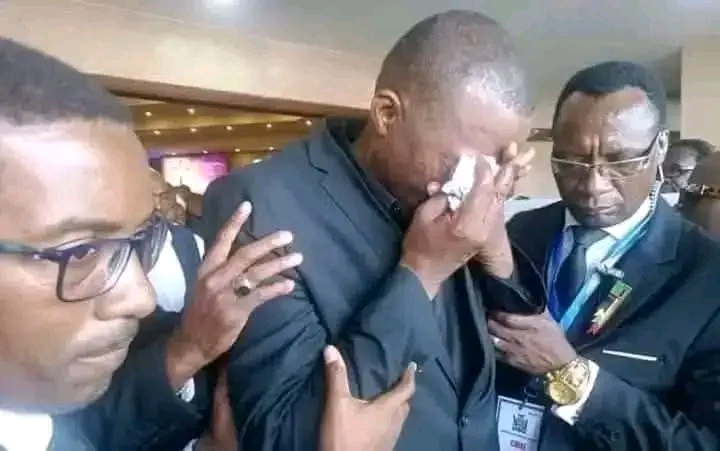
Zambia’s Economic and Financial Crimes Court has delivered one of the most consequential rulings of the political season, upholding the four-year sentence of former Lusaka Province Minister Bowman Lusambo and reinforcing a broader judicial trend that is reshaping the country’s political and economic landscape ahead of the 2026 elections.
On Friday, February 27, 2026, a three-judge panel led by Justice Anna Ononuju dismissed Lusambo’s appeal and affirmed the lower court’s conviction, ruling that the State had proved its case beyond reasonable doubt. Lusambo had been convicted in November 2024 on nine counts of corrupt practices, tax evasion and possession of properties suspected to be proceeds of crime.
His sentence of four years’ imprisonment with hard labour now stands.
The ruling follows months of public complaints by Lusambo over delays in the delivery of judgment. His wife, Nancy Manase, who was initially jointly charged with him, had earlier been acquitted. The former Kabushi Member of Parliament now remains incarcerated at a time when internal Patriotic Front divisions have weakened visible political backing for embattled former officials.
But Lusambo’s case does not stand alone.
In parallel proceedings, the State recently took possession of assets linked to former Defence Minister Geoffrey Bwalya Mwamba (GBM), including property forfeited under a non-conviction based forfeiture order granted in favour of the Director of Public Prosecutions.
Officials from the National Prosecutions Authority confirmed the repossession and indicated that the asset is undergoing valuation.
Similarly, former President Edgar Lungu’s son, Dalitso Lungu, has appealed a lower court decision that ordered the forfeiture his property valued at over K24 million. The Economic and Financial Crimes Court had ruled that the assets were reasonably suspected to constitute proceeds of crime, raising questions about tax compliance and the source of funds used in the acquisitions.
Dalitso Lungu has lodged nine grounds of appeal, arguing that the court erred in rejecting his affidavit evidence and that no specific predicate offence was sufficiently established.
Taken together, these cases illustrate a clear economic and institutional pattern: the aggressive use of both conviction-based and non-conviction based asset forfeiture mechanisms under Zambia’s Forfeiture of Proceeds of Crime framework.
From a policy perspective, the implications are significant.
First, the courts appear willing to uphold lower court findings where prosecutorial evidence meets the threshold of proof beyond reasonable doubt, as seen in Lusambo’s case. Second, the State is increasingly relying on civil forfeiture tools, which do not require a criminal conviction, to recover suspected illicit wealth. Third, appeals are now emerging as the next major battleground in politically sensitive financial crime litigation.
The political consequences are equally notable. Several former PF ministers and officials now face either incarceration, forfeiture, or pending appeals at a time when the opposition is attempting to reorganize ahead of the August 2026 elections. With internal party factions competing for leadership control, sustained legal battles may further fragment already divided support bases.
Economically, asset recovery efforts intersect with investor confidence and governance narratives. Government officials argue that recovery of “ill-acquired wealth” strengthens institutional credibility and restores public trust. Critics within the opposition describe the process as selective or politically timed.
The courts, however, continue to anchor their rulings in statutory interpretation and evidential standards.
As the weekend settles in, one reality is clear: the Economic and Financial Crimes Court has become a central theatre in Zambia’s political economy. The outcome of ongoing appeals, including Dalitso Lungu’s challenge, will shape not only individual fortunes but also the tone of governance debates heading into the election year.
For now, Bowman Lusambo remains behind bars. GBM’s property has been repossessed. Dalitso Lungu’s appeal awaits determination.
The courts are speaking. The political season continues.
© The People’s Brief | Weekend Digest
I honestly don’t understand why Bowman Lusambo should cry over stolen loot. He did not get the assets through normal honest means and government has proven that without question. So why cry?.
Same goes for Dalitso Lungu. He acquired those assets through dishonesty and the state proved beyond doubt. So why enrich lawyers by appealing?
Lawyers are chancers. They will know a case is already lost but greed drives them to cheat you there is a winning chance. Makebi did the same with ECLs sister and wife in South Africa. He made money yet he knew they were going nowhere with the defiance and hatred. Yet he dragged them alone.