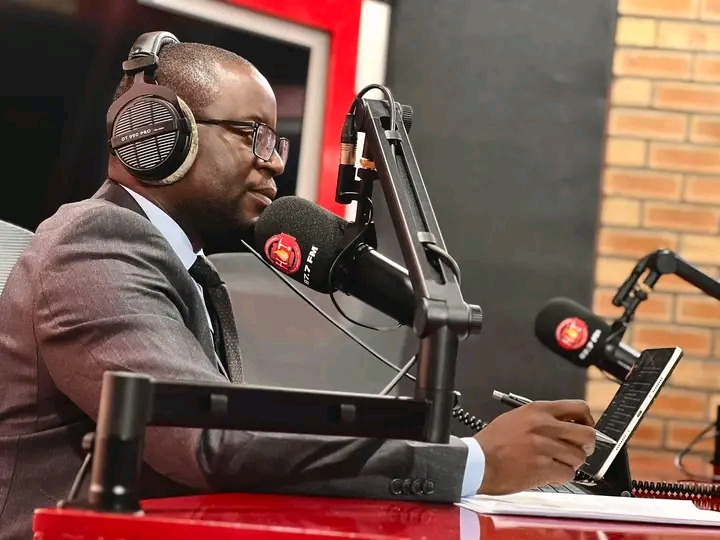

MAKEBI ZULU CALLS FOR RULE OF LAW AND ENERGY REFORM
By Brian Matambo – Lusaka, Zambia
Hon. Makebi Zulu, who yesterday filed his nomination papers to contest the Patriotic Front presidency at the party secretariat, made his first radio appearance on Hot FM’s Hot Seat this morning after featuring the previous evening on Emmanuel Mwamba Verified. The interview was his first major engagement since declaring his candidacy, and it gave listeners a deeper sense of his political outlook and vision for Zambia. Speaking with composure, he focused on two major issues that dominated the conversation: the rule of law and the energy crisis.
Hon. Makebi Zulu began by addressing the Chingola incident in which President Hakainde Hichilema’s motorcade was attacked with stones. He condemned the violence, calling it unfortunate and unacceptable. “The issue of throwing stones at the president should not be tolerated anywhere,” he said. “I wouldn’t wish it even on my worst enemy.”
However, he noted that such incidents reflected deeper social and economic frustrations among citizens. He argued that many people were being silenced through excessive restrictions, such as cyber security laws, leaving them with no proper outlet to air their grievances. “When you bottle people up, they have no other way of expressing themselves,” he said. He explained that the people of Chingola were reacting to economic difficulties, particularly those affecting livelihoods on the Copperbelt.
Hon. Makebi Zulu said the government’s response to the violence revealed how much Zambia’s peace depended on personalities rather than institutions. He warned against the idea that cadres behave properly only because of a leader’s personal instruction. “It is not a favour that they are not doing that. It is law that they should not do that,” he said. “We are dependent on the whims and caprices of men, and not the rule of law.”
He emphasised that the rule of law must apply equally to everyone regardless of political affiliation. “There should not be one law for those in government and another for those outside it,” he said. Hon. Makebi Zulu said Zambia needed to restore confidence in institutions and ensure that decisions were guided by principle, not political convenience.
From there, the conversation turned to the energy crisis, which he described as one of the biggest failures of the current government. Hon. Makebi Zulu listed a number of power generation projects that were planned or started under the Patriotic Front but later abandoned. “We had the Lusiwasi Dam, the Katete Wind Power Project, the Chongwe Nuclear Power Plant, the Kapombo Hydro Plant, the Luapula Power Project, and the Shiwa Hydro Power upgrade,” he said. “These projects were meant to serve different provinces, and if they had been implemented correctly, we would not be experiencing this crisis.”
He said the PF government had focused on ensuring every province had its own source of power, and that abandoning those projects had worsened the shortage. “If it’s not broken, don’t fix it,” he said. “There was nothing to fix. The projects were already working for the good of the country.”

Hon. Makebi Zulu accused the government of allowing politically connected companies to buy electricity cheaply from ZESCO and resell it across borders at a profit. “Why should ZESCO not be the one to export power and benefit from it?” he asked. He argued that this practice deprived the utility of income and left ordinary Zambians facing higher costs and longer hours of load shedding. “Now we have twenty-one hours of load shedding,” he said. “What do you call that?”
He rejected the explanation that the crisis was due to drought, saying the current government had failed to plan for such challenges. “We had droughts even during the Patriotic Front, but we never reached this point,” he said. “The PF had already started addressing the effects of climate change through the nuclear project, which was not dependent on rainfall.”
Hon. Makebi Zulu connected the energy shortage to the rising cost of living, explaining that power outages had increased operational costs for businesses and ordinary citizens. “Those that run butcheries, salons, and welding shops are forced to buy fuel to keep their businesses running, and fuel is expensive,” he said. “When they do that, the prices of their goods and services go up, and that pushes the cost of living even higher.”
Throughout the interview, Hon. Makebi Zulu’s tone was steady, drawing on detail and practical examples. He avoided personal attacks, instead focusing on systems, governance, and solutions. He concluded with a reminder of the late President Edgar Lungu’s message of hope. “There is hope for this country,” he said. “There is hope that we can improve our judiciary, our civil service, and our economy. There is hope that we can get back on track toward development if only we can unite and do what we ought to do.”
His first radio appearance after filing his presidential papers revealed a candidate intent on linking Zambia’s political problems to structural failures rather than personalities. In the face of national frustration, Hon. Makebi Zulu’s call was clear: restore the rule of law, revive energy projects, and rebuild the systems that make the country work.
Where is the …..
Where did you leave …
Why…
What…
When…
Makebi…
UNDERTAKER LOOK AT THE MAJOTITY OF YOUR CLIENTS’ RECORDS BEFORE YOU TALK ABOUT RULE OF LAW, THE ONES YOU WANT TO COME AND RELEASE