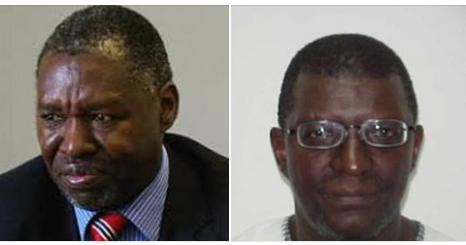
Mbita Chitala, Neo Simutanyi Accused of Pushing Regime-Change Agenda Through Shadowy Group
Founder member of the MMD, Mbita Chitala, and academic Neo Simutanyi have emerged at the centre of what appears to be a coordinated regime-change effort, operating through a little-known organisation styling itself as the Centre for Policy Dialogue.
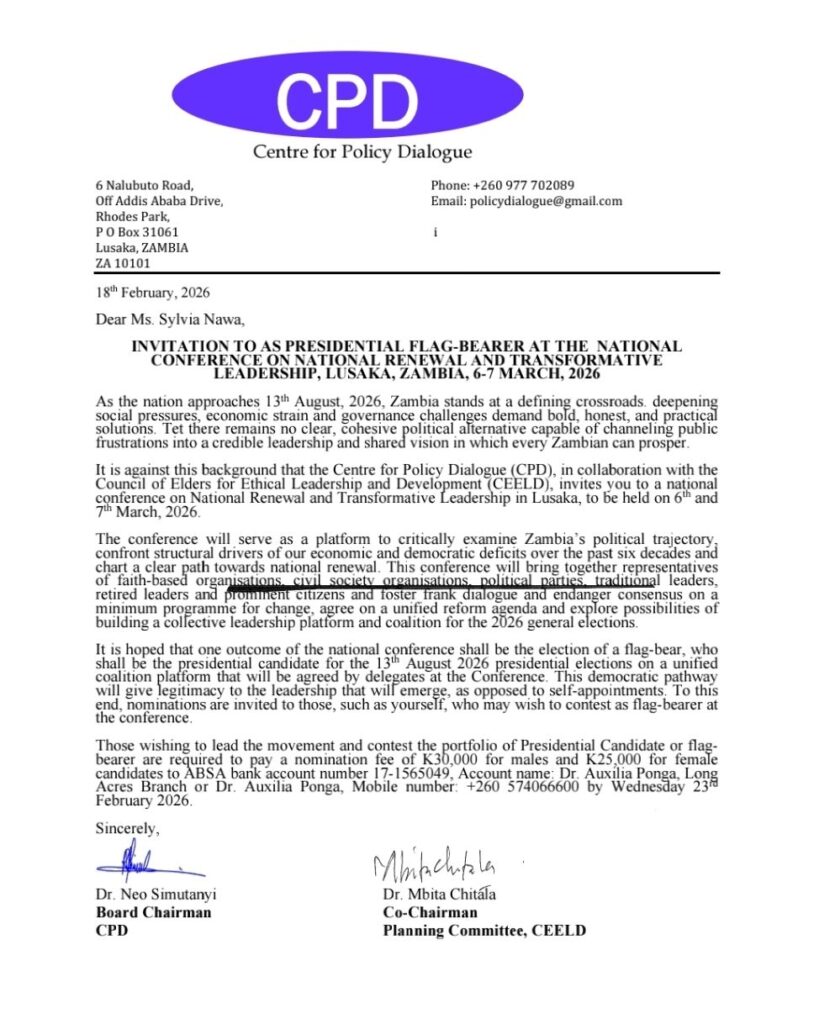
A leaked letter shows the two inviting selected individuals “to be Presidential Flag Bearer” at a so-called Conference of National Renewal and Transformative Leadership in Lusaka, scheduled for 6–7 March 2026.
The correspondence further demands K30,000 from male aspirants and K25,000 from female aspirants as “nomination fees”, while calling on political parties, civil society, traditional leaders, and the Church to help “elect a flag bearer who shall be the Presidential candidate” for the 13 August 2026 election.
This shadowy formation, following in the footsteps of another loosely-assembled elders’ group led by former Acting Chief Justice Lombe Chibesakunda, has raised significant concern. Its hegemonic posture and orchestrated appearance, seemingly driven by long-standing political agitators from the Northern Region, suggest an attempt to manufacture a parallel political authority outside the constitutional order.
Crucially, only registered political parties may lawfully select or sponsor a Presidential candidate under the laws of Zambia. Any private group or unregistered formation purporting to “elect” or “install” a Presidential flag bearer falls outside the constitutional framework and bears the hallmarks of an attempted usurpation of State authority.
Observers have noted that non-political actors with no registered party backing have no legal mandate to organise Presidential selection processes. Such actions, particularly when advanced under opaque structures, risk resembling acts of subversion that warrant thorough investigation for potential treasonous intent, especially when aimed at dislodging a democratically elected Head of State.


People are free to organize for political office in a democracy, shadowy or not shadowy, it is their democratic right