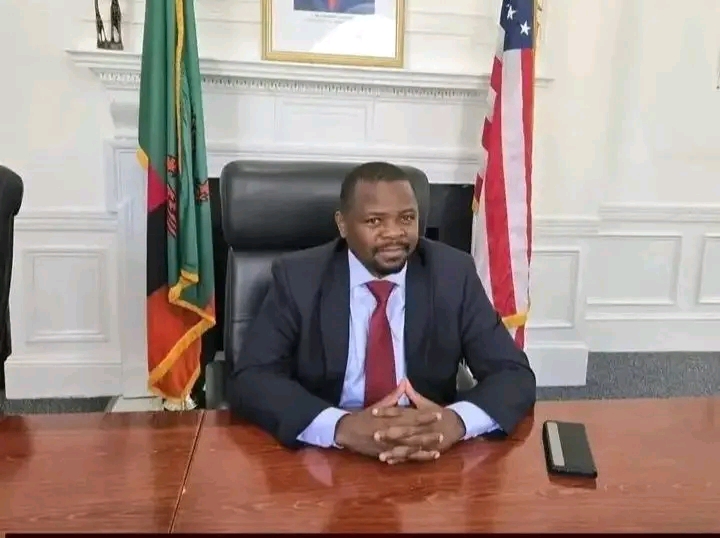

🇿🇲 EXPLAINER | Meaning of Kabwe High Court Ruling for PF and the 2026 Elections
The Kabwe High Court has placed the Patriotic Front under a legal freeze, with direct consequences for its leadership contest, candidate adoption process, and readiness for the 2026 general elections.
In a ruling dated 27 January 2026, High Court Judge Kelvin Hancubwili Limbani upheld an injunction he first granted in November 2025 in favour of Morgan Ng’ona. The order restrains the Patriotic Front faction led by Given Lubinda from holding a General Conference, convening meetings, occupying the PF Secretariat, using party materials, or purporting to act in the name of the Patriotic Front until the matter is heard and determined at a full trial.
The judge’s reasoning was unambiguous. He held that the plaintiff had demonstrated “a clear right to the relief sought” and that “there is a serious question to be tried.” On that basis, the court found that “the balance of convenience tilts in favour of granting the injunction,” warning that irreparable injury could occur if the Lubinda-led faction was not restrained from acting as the Patriotic Front while the dispute remains unresolved.
Most significantly, the ruling expressly bars the holding of any elective convention of the Patriotic Front pending final determination of the case.
That finding immediately invalidates recent public statements by PF officials that the party is preparing for a February 2026 General Conference. Legally, such a conference cannot take place. Any attempt to proceed would amount to contempt of court and expose organisers and participants to sanctions.
The political consequences are severe.
With general elections scheduled fo August 13 and Parliament expected to dissolve in May, political parties are already entering the decisive phase of candidate selection and mobilisation. Adoption papers, endorsements, and authorisations must come from legally recognised party structures. The court order now raises a basic but destabilising question for PF MPs and aspiring candidates: who has the authority to adopt candidates on behalf of the Patriotic Front?

The ruling places the Lubinda-led faction in a constrained position. Regardless of its grassroots strength or historical claim to legitimacy, it is legally barred from acting. At the same time, the injunction protects the position of Morgan Ng’ona, from the Robert Chabinga-led faction, as the party figure whose rights the court has chosen to preserve pending trial.
This does not amount to a final declaration of who leads PF. Courts do not settle internal party politics at interlocutory stage. What the ruling does is determine who must pause, and who cannot be interfered with, while the dispute is being resolved. Practically, control follows restraint. The faction that is restrained cannot act; the faction whose position is protected gains procedural advantage.
For sitting PF Members of Parliament, the situation is precarious. Aligning with a faction that is restrained by court order risks invalidating future political actions, including adoption and nomination. Aligning with a faction perceived as holding interim legal standing may be politically uncomfortable but offers procedural certainty in an environment where electoral timelines are unforgiving.
The ruling also exposes a deeper contradiction within PF’s current strategy. Public messaging speaks of unity, conferences, and readiness for government, but the party is immobilised by unresolved leadership litigation. At the same time, PF figures are actively campaigning in by-elections and Tonse Alliance platforms, even as the party’s own legal capacity to organise remains contested.
Electoral reality is unforgiving. Zambia now has 226 elective parliamentary seats. Campaign costs have risen sharply under the new legal framework. Candidate filing deadlines are strict. Parties that fail to resolve internal legitimacy disputes early are often eliminated not by voters, but by procedure.
This judgment does not decide who will lead the Patriotic Front into 2026. It decides who cannot act now. Until the substantive case is heard and determined, PF remains legally constrained, internally divided, and strategically exposed.
For its MPs, candidates, and supporters, clarity will not come from rallies or press statements. It will come from the courts. Whether that clarity arrives in time to meaningfully contest the 2026 elections is now the defining question hanging over the Patriotic Front.
© The People’s Brief | Editors
Stuck
This is what happens when a leader who has lost elections cling to his party in Zambia. The party dies. UNIP, MMD and now PF. Reaping the fruits of one Edgar Chagwa Lungu and confused Miles Sampa
What happens between now and the direction going Forward after this judgement will determine what kind of leadership the disabled faction has because this is a swim or drown reality check
The Judiciary is playing games, and becoming a big embarrassment.
Hon Judge Conceptor Chinyama already conducted a Full trial. The parties to the case made submissions on the illegalities surrounding the 24th October,2023 so called PF Conference. Robert Chabinga was nowhere to even make a Submission.
And his Secretary General stated that indeed something was amiss with the so called PF Conference, and he didn’t even know how Robert Chabinga became PF. This is on record and before Hon Judge Conceptor Chinyama.
But the Judge has reserved ruling indefinitely!
Meanwhile another High Court, laterally structured, under Hon Judge Hancuubili orders a full trial, on a substantively similar matter, with the same facts , as were before the Hon Judge Conceptor Chinyama!!!!
Hakainde’s Zambia has become a Joke.
Typo. ”How Robert Chabinga became a PF President ”