
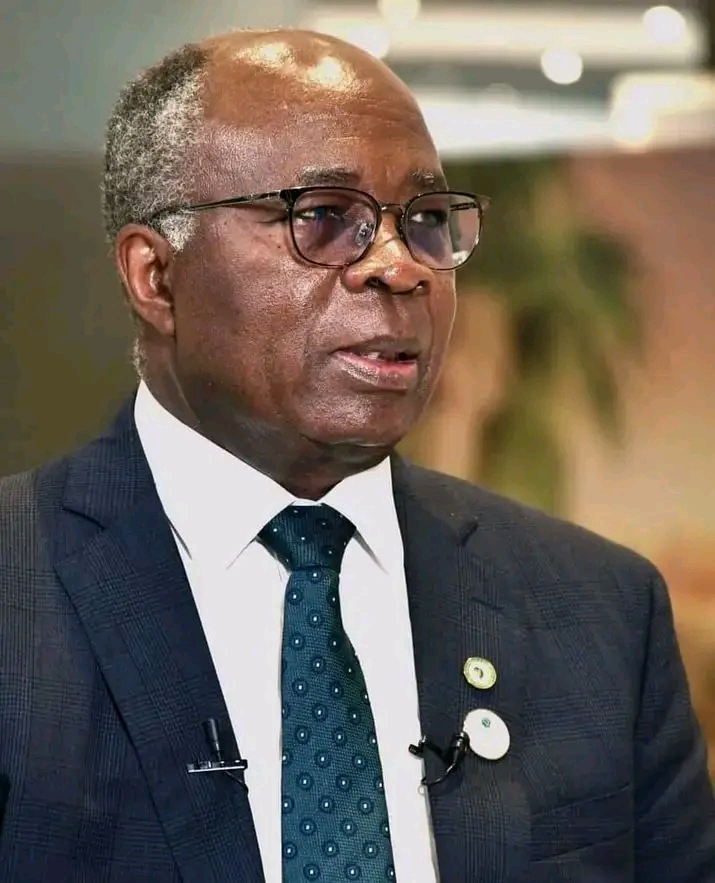
🇿🇲 EXPLAINER | Musokotwane’s IMF Update: What Numbers Say About Zambia’s Economic Turnaround
Finance Minister, Dr. Situmbeko Musokotwane, has issued one of the clearest economic snapshots yet of where the country stands after years of debt distress and instability. Speaking in Parliament, the Minister said that as at December 31, 2025, the central story is that Zambia has moved from emergency stabilisation to the early stages of growth, with macroeconomic indicators now beginning to improve in a visible way.
Musokotwane framed the statement as an effort to “address you directly” and ensure that “with this accurate information, it will become harder for some people to misinform and mislead the nation.”
This line matters, because economic reform is not only about policy, it is also about public trust in facts.
The minister stated that when the New Dawn administration took office in 2021, Zambia faced “heavy debt distress, high inflation, exchange-rate instability, low reserves, and reduced investor confidence.” That was the baseline. The question now is whether the recovery is real or just political messaging.
His data suggests a measurable shift: preliminary GDP growth for 2025 is projected at 5.2%, up from 3.8% in 2024, driven mainly by agriculture, mining, and ICT. This is the core engine of the current turnaround, a return of production rather than mere consumption.
Mining remains the anchor. Copper production rose by 7.8% to 890,345 metric tonnes in 2025, supported by increased output at KCM, Mopani, Kansanshi, and Lubambe. At the same time, the agricultural rebound has been significant, with a 3.66 million metric tonne maize harvest, easing food price pressures. These are not abstract numbers.
Food and copper are Zambia’s two most powerful economic levers: one stabilises households, the other stabilises foreign exchange.
Households, however, feel the economy through prices and the currency, not through GDP charts. Musokotwane pointed to inflation falling to 11.2% by end-2025, before returning to single digits in January 2026 at 9.4%, “the first time since early 2024.” The Kwacha’s movement has been even more politically visible.
The Minister said it appreciated by 21.07% between December 2024 and December 2025, averaging about K22.13/US$, and strengthened further in January 2026, trading around K18.8/US$. The drivers, he argued, are stronger forex inflows from mining and renewed confidence, including inflows into government bonds.

That is why the bond market surge matters: confidence is now showing up in capital flows.
Economic stabilisation has also been linked to energy reforms, an area where Zambia’s constraints have historically limited growth. The minister highlighted frameworks such as Electricity Open Access and Net Metering, saying these are opening space for private investment.
Electricity generation increased by 7.8% to 14.36 million MWh in 2025. Power supply is not a side issue. Without reliable energy, mining expansion, industrial growth, and job creation remain promises rather than realities.
The fiscal picture is equally important because growth collapses quickly when government spending runs ahead of revenue. Musokotwane reported total revenues and grants of K187.85 billion, above target, while expenditure came in below projection at K223.73 billion. The deficit closed at 3.4% of GDP, better than the expected 4.6%, due to tighter spending control.
He detailed major spending priorities including K5.63 billion for CDF, K2.48 billion for Free Education, and K9.34 billion for Social Cash Transfers. This is the government’s argument that fiscal discipline is not austerity alone, but also protection of core social programmes.
Debt remains the long shadow. As at end-December 2025, total public sector debt stood at US$28.9 billion, including US$16.1 billion in central government external debt and domestic debt of K253.7 billion. The minister emphasised that domestic borrowing has stayed consistent with the Parliament-approved Annual Borrowing Plan, an attempt to reassure markets and citizens that borrowing is now structured rather than chaotic.
“Borrowing must never be casual,” he said, insisting it must be “anchored in transparency and accountability.”
One of the most significant announcements is that Zambia has successfully concluded the 38-month IMF Extended Credit Facility programme, which began in August 2022. The programme closed with an immediate disbursement of US$190 million, bringing total IMF support to US$1.7 billion.
Musokotwane said Zambia will not seek a one-year extension, but instead will engage on a successor programme focused on “growth, investment, job creation, and expanding productive capacity.”
Government claims that 94% of external debt has been restructured, a figure that, if sustained, marks one of the most important turning points in Zambia’s debt narrative.
The question however remains simple: when does this translate into jobs, cheaper living, and opportunity? Musokotwane’s message is that falling inflation and a stronger Kwacha reduce pressure on imported essentials over time, higher mining and agricultural output support jobs and exports, and stronger reserves, now at US$5.5 billion or 5.2 months of import cover, give Zambia more protection against shocks.
The macro story is improving, but the lived economy will depend on whether investment becomes factories, jobs, and value addition, not just export volumes.
Musokotwane’s final framing is political but also economic: Zambia is moving “from economic repair to growth,” but must do so with discipline.
The real test of this new phase will not be whether the numbers look better in Parliament, but whether stability becomes prosperity that reaches households, markets, and communities beyond the headlines.
© The People’s Brief | Ollus R. Ndomu