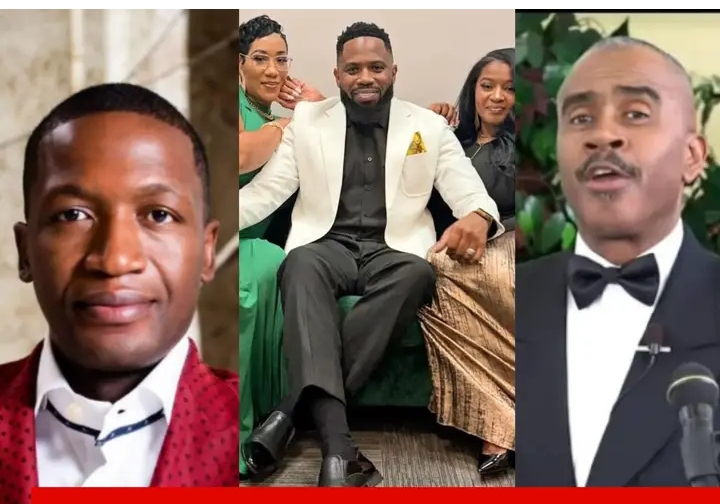

pastors differ over polygamy as prophet israel ford introduces second wife
prophet Angel and Pastor Gino Jennings have presented arguments against polygamy, drawing attention to biblical teachings on marriage following Prophet Israel Ford’s introduction of his second wife to his congregation.
Speaking during a question-and-answer session, Prophet Angel addressed the situation of men who already had multiple wives before joining a church. He acknowledged that some of these men attended his ministry, including one who had four wives, but argued that church leaders should not necessarily instruct them to divorce some of their wives.
He then turned to the biblical qualification for church leaders, which states that a bishop must be the husband of one wife.
Angel questioned why Christians would accept the other qualifications listed in the passage, including being blameless, sober, hospitable and able to teach, but dispute the requirement concerning the number of wives.
He maintained that his ministry had established monogamy as part of its doctrine. According to him, people in polygamous marriages could attend the church, but practising polygamy would put them outside the ministry’s established doctrine.
He further argued that apostles and prophets have a responsibility to establish rules governing their religious communities and would eventually give an account to God concerning the people under their leadership
Pastor Gino Jennings approached the subject differently, focusing on the distinction between Old Testament accounts of men with multiple wives and Jesus’ teachings on marriage.
During his sermon, Jennings acknowledged that biblical figures had multiple wives and concubines but argued that these accounts should not automatically be used to justify polygamy among Christians.
Referring to Mark 10:6–9, he emphasised Jesus’ teaching that God made them male and female, and that a man would leave his father and mother and be joined to his wife, with the two becoming one flesh.
Jennings argued that Christians should pay attention to Jesus’ teaching rather than rely on examples of men who had multiple wives in earlier biblical accounts.
He also challenged the argument that having sexual relations with a woman automatically makes her a man’s wife, questioning the implications of such an interpretation.

Citing Mark 10:11–12, Jennings further argued that Jesus’ words concerning divorce and remarriage should guide Christians’ understanding of marriage.
The contrasting arguments come amid reactions to Prophet Israel Ford’s decision to introduce his second wife, Minister Shaquaya, to his congregation.
During the introduction, Ford’s first wife, Ladyia Ford, presented Shaquaya as her sister in marriage. Shaquaya, who said she had been married to the prophet for almost three years, maintained that she had not been treated unfairly and described their arrangement as the will of God.
She also described the household as a united family, saying that they had continued to grow together spiritually and had received encouragement from others who wanted to live according to their understanding of Scripture.
Her remarks have attracted criticism from Christian commentators who believe that polygamy conflicts with New Testament teachings on marriage and pastoral leadership.
The disagreement ultimately raises a question that continues to divide Christians: do biblical accounts of men with multiple wives justify the practice today, or should Jesus’ teachings and the New Testament’s instructions on marriage determine the standard for Christian families and church leaders?