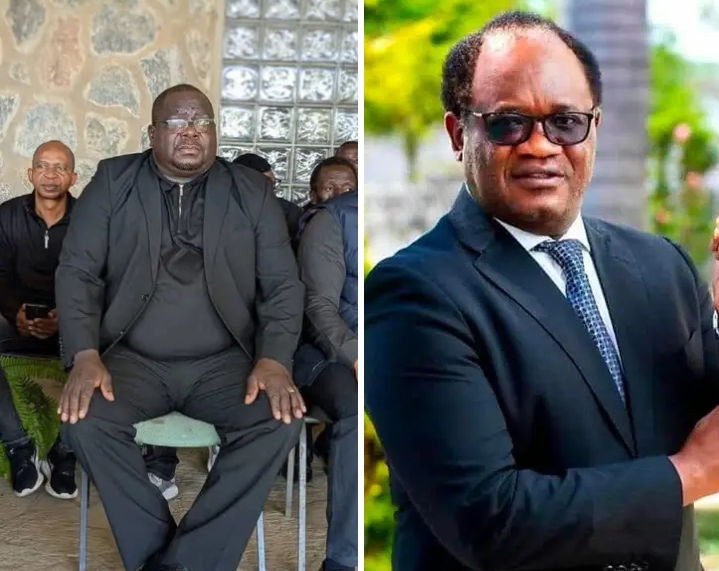

🇿🇲 READER OPINION | PF’s Factional Cold War Becoming Civil War
What the Patriotic Front is experiencing today is not a sudden implosion. It is the violent surfacing of a conflict that has existed beneath the surface for more than a decade.
The PF has never been a unified political organism. It has always been a coalition of factions held together by power, patronage, and proximity to State House. While Michael Sata lived and later while Edgar Lungu controlled the instruments of the State, those factions were managed, silenced, or bribed into temporary coexistence. Out of power, the glue has dissolved.
The current hostility between Chishimba Kambwili and Brian Mundubile is therefore not personal. It is structural. It reflects unresolved ownership disputes about what PF is, who owns it, and who is entitled to lead it.
At the heart of the crisis is a long-standing factional map.
First are the True Greens, largely associated with Chishimba Kambwili and early PF mobilisers. This group derives legitimacy from founding history. In their view, PF was built in markets, compounds, and streets long before defectors arrived. They see later entrants as tenants, not heirs.
Second are the Blood Greens, those linked to Michael Sata by family or close personal ties. Figures such as Miles Sampa and other relatives have historically viewed PF as an inheritance. This faction’s claim is emotional and symbolic rather than organisational, but it has consistently complicated leadership transitions.
Third are the Blue Greens, former MMD figures who crossed over during PF’s rise and consolidation. Brian Mundubile and others fall into this category. Despite holding senior portfolios and shaping policy, this faction has always faced suspicion from founding members, who see them as technocrats without revolutionary credentials.
Fourth are the “Wako ni Wako” Greens, politicians absorbed into PF during Edgar Lungu’s consolidation of Eastern Province, following his alliance with Rupiah Banda. Their loyalty has largely been transactional, tied to appointments rather than ideology.
Fifth are the Barotse Greens, a smaller but distinct bloc associated with Given Lubinda and former ULP structures. Their influence has been narrow and personality-driven, never fully institutionalised beyond Lubinda himself.
Sixth are what critics label Useful Idiots, late entrants from other parties who joined PF for ministerial advantage or parliamentary survival. Their role has been numerical and symbolic rather than strategic, often to create ethnic balance or legislative votes.
Finally are the Independent Greens, MPs and figures with PF roots who lost party adoption in 2021 and now operate without firm allegiance, negotiating survival issue by issue.
This architecture explains why PF struggles to agree on a convention, a leader, or even a shared strategy. Each faction is fighting a different war. Some are fighting for history. Others for relevance. Others for survival.

The Kambwili–Mundubile clash must be read in this context. The hostility reflects deeper resistance to a Blue Green figure potentially capturing party leadership. That resistance is not new. It has merely become louder.
At the same time, factional suspicion does not exempt any aspirant from scrutiny. Calls for accountability around public contracts, governance records, or political conduct apply equally to all. Leadership in a post-State House PF cannot be based on factional immunity.
What has changed now is that there is no referee. No presidency to arbitrate. No money to pacify. No authority strong enough to silence dissent. The result is a civil war conducted through audios, press statements, accusations, and public threats.
For voters, the signal is damaging. The PF narrative is no longer about policy or alternative governance. It is about ownership battles and unresolved egos.
Unless these factions confront their history honestly and agree on rules that transcend personalities, the PF’s internal war will continue to consume whatever remains of its electoral capital.
What is playing out is not betrayal. It is exposure.
🔖 Credit: Analytical framework submitted by Richard Waga, Political Observer.
© The People’s Brief | Reader Opinion
Fully blown pf civil catastrophe