
🟥 PRESIDENT HICHILEMA DETAILS MAIZE PAYMENTS, ENERGY REFORMS, EXPORT STRATEGY, AND DISPENSES WITH HEALTH RUMOURS IN LIVE TV CALL
President Hakainde Hichilema has provided a detailed explanation of delayed farmer payments, Zambia’s food security strategy, power supply stabilisation, fuel logistics, and mining sector reforms during a live phone-in on Diamond TV, while dismissing speculation surrounding his health as irresponsible and misleading.
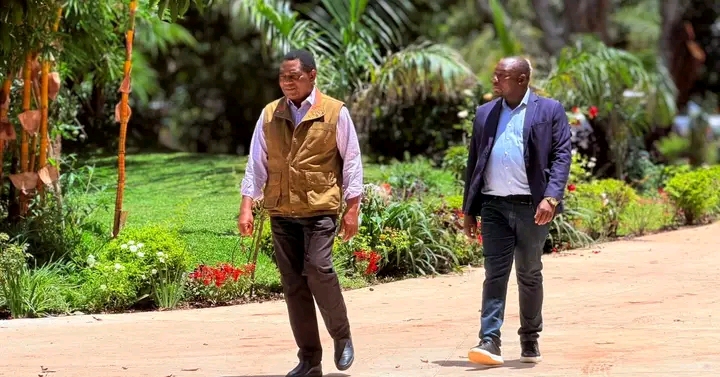
Speaking while on official leave at his farm, President Hichilema said governance continued uninterrupted, describing his leave as “working time out” rather than disengagement from national affairs.
On maize payments, the President explained that government initially planned to purchase 500,000 metric tonnes of maize through the Food Reserve Agency. However, following a drought period and a national call for increased food production, farmers exceeded expectations. Government then decided to raise the purchase target to 1.6 million metric tonnes to avoid leaving farmers exposed to exploitative buyers.
He said this expansion created a funding gap, but confirmed that the necessary resources had since been mobilised and deposited with commercial banks. Payments, he said, were ongoing but slower than expected, largely due to logistical constraints.
President Hichilema acknowledged delays and issued an apology to farmers, stressing that all those who delivered maize would be paid. He said banks had been instructed to accelerate electronic transfers, noting that challenges remained for farmers without bank or mobile money accounts.
He emphasised that protecting farmers was a deliberate policy choice, aimed at ensuring producers received fair value for their maize rather than being forced to sell at reduced prices to briefcase traders.
On food security, the President said Zambia’s annual maize consumption, including human and animal use, stood at approximately 2.6 to 2.7 million tonnes, compared to a production target of about 10 million tonnes. He said this reality made structured export markets essential.
He named the Democratic Republic of Congo, Malawi, Sierra Leone, and other countries as export destinations, explaining that government policy favoured exporting value-added products such as mealie meal and stock feed rather than raw grain.
President Hichilema described Zambia as a land-linked country whose economic growth depended on producing, processing, and exporting surplus output, noting that exports were critical for foreign exchange earnings.
The President also addressed energy supply, stating that electricity availability had improved following increased import capacity through Zimbabwe under the Southern African Power Pool. He said transmission capacity had risen from about 200 megawatts to approximately 400 megawatts.
He added that government had accelerated solar power projects and diversified energy sources to ensure resilience against drought-related hydroelectric shortages. He said the improvements delivered by December 2025 were the result of methodical planning rather than election-driven activity.
On fuel logistics, President Hichilema disclosed that Zambia had secured structured berthing arrangements at the port of Dar es Salaam through agreements with the Tanzanian government. He said these arrangements ensured predictable offloading windows each month, reducing fuel supply instability.

Turning to mining, the President said government anticipated rising global copper prices and therefore prioritised restoring dormant mines soon after taking office. He cited Mopani, Konkola Copper Mines, and Kalengwa Mine as examples, stating that improved production was the result of consistent policy implementation.
Responding to rumours about his health, President Hichilema said he was healthy and criticised attempts to politicise life and death. He said such conduct undermined seriousness in national discourse.
He concluded by stating that government reforms in agriculture, energy, mining, education, and infrastructure were intended to deliver tangible benefits to citizens and required patience and sustained effort.