President Hichilema is bad for Zambia but good for Dr Sishuwa’s career
By Ambassador Emmanuel Mwamba
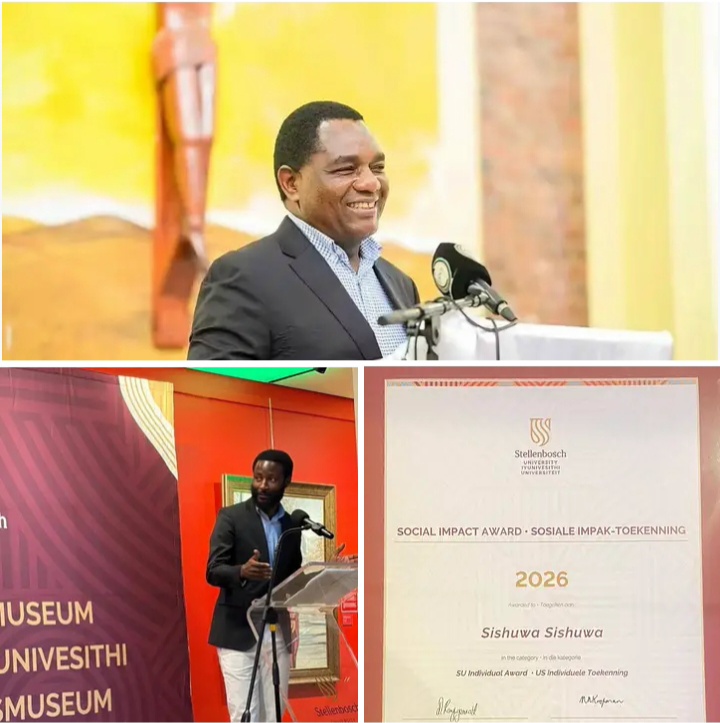
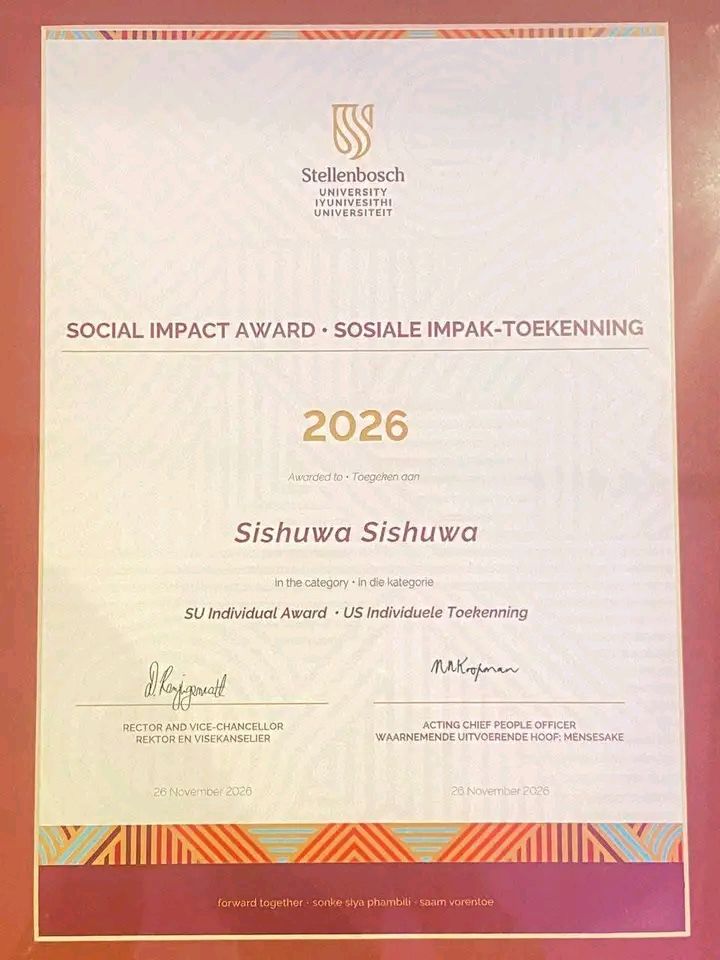
I congratulate Dr Sishuwa Sishuwa for being awarded the 2026 Stellenbosch University Social Impact Award. This award is well deserved and a no mean achievement, especially given what he has been subjected to this year by the administration of President Hakainde Hichielma. After they sponsored people to write to Stellenbosch University to fire Dr Sishuwa, the government then cancelled his passport in apparent retaliation for his criticism of the conduct of the 13 and criticism of the leadership of President Hichilema.
Dr Sishuwa and I have had our differences, but I have since come to appreciate him as a principled person with adeep sense of patriotism and an abiding conviction that public office must be exercised transparently, accountably and in the service of the people. And I am not the only one who has changed is views about him. Even late former President Edgar Lungu, whose administration had threatened to arrest the academic for his critical writings, subsequently became one of Dr Sishuwa’s most prominent supporters.
After losing power, he met his nemesis for the first time in 2023 when Dr Sishuwa was conducting research on Zambia’s 2021 election. Following the meeting, the former president publicly regretted not having listened to his critic when he was in office and acknowledged Dr Sishuwa’s piercing criticism of his leadership as one that was inspired by true patriotism, not malice. He wrote in a letter to Dr Sishuwa, published on 6 April 2023:
“In retrospect, we should have met much earlier, maybe I could not have taken you as a hired gun. Otherwise, I read all your writings, although I had difficulties appreciating the motive for the reason I referred to. My interactions with you however, revealed you as a principled critic. There are many lessons, and we will continue to learn and perfect”.
For me, Dr Sishuwa represents the courage of the individual who is prepared to stand up peacefully against the abuse of state power. His commitment is not to any political personality or faction, but to the larger principles of constitutional democracy, good governance and the dignity of the ordinary citizen. He has consistently demonstrated that speaking truth to power must not be conditional upon financial reward, political favour or personal security.
At a time when public life is increasingly characterised by self-interest, political expediency and the reluctance to challenge those in authority, Dr Sishuwa stands out as an example of intellectual integrity, moral courage andextraordinary selflessness. His willingness to speak on behalf of the millions whose voices might otherwise go unheard is precisely the kind of public-spirited leadership that deserves recognition and encouragement.
This is why I am happy that he has been recognized and awarded by Stellenbosch University, one of South Africa’s leading research-intensive universities that regularly ranks in the top 300–350 globally and among the top 3–4 in South Africa and Africa on major rankings, with strong research output. Recognition from such an institution therefore carries real weight in South African and broader African academic circles, especially for engaged scholarship.
The Stellenbosch University’s official Social Impact Award is a highly competitive and distinguished honour presented by the University to recognise the remarkable social impact achievements of its academic and professional administrative support services staff. Stellenbosch University’s official Social Impact Awards regulation explicitly describes the award as “the highest form of honour granted by the University community to staff for achievements in relation to social impact.”
It is given annually in Individual and Team categories for outstanding public engagement, partnerships, and measurable social change. Recipients receive a certificate and a financial reward (around R25,000 for individuals and R30, 000 for teams). The awards recognise the sustained contributions of staff who, together with societal and community partners, advance meaningful and measurable social impact. As the institution’s highest form of recognition for staff achievements in this area, they affirm the importance of collaboration between the University and society in addressing societal challenges. Previous winners have mainly been recognised for concrete local South African community work, such as HIV support for children, rail safety education, biodiversity programmes, and homelessness advocacy.

For Dr Sishuwa specifically, the award cites his public engagement and sustained contribution to promoting public accountability, advancing democracy, and protecting human rights in Zambia and southern Africa more generally. The award comes against the backdrop of the Zambian government’s decision to revoke his passport in September 2026 (along with several other critics including myself), which drew statements of concern from, among others, Scholars at Risk, Amnesty International, and almost 2000 academics. The award functions as institutional affirmation of his public intellectual role at a moment of political pressure.
Dr Sishuwa was born in Senanga district in Zambia’s Western Province, attended primary school at Luandui and then Mukoko before proceeding to Malengwa Basic school and finally Kambule Secondary School. He studied history at the University of Zambia where he graduated with a distinction in 2009. He was then awarded a Rhodes scholarship that took him to the University of Oxford in the United Kingdom where he completed his master’s and doctoral studies. Dr Sishuwa then returned home to work at his alma mater from 2016 until early 2023 when he resigned to join Stellenbosch University. In between, he was awarded a postdoctoral fellowship at University of Cape Town where he conducted research on elections and political parties in southern and eastern Africa. During the first half of this year, Dr Sishuwa was a visiting Scholar at Harvard University in the United States of America.
He has regularly explained that his public commentaries on governance concerns are shaped by his rural upbringing and social responsibility of intellectuals.
“I engage in public scholarship, focusing on highlighting human rights violations and governance concerns, to fulfil the social responsibility of intellectuals and in protest against the degrading conditions in which many ordinary people continue to live and from which I narrowly escaped by chance.
Having managed to bootstrap my way from an impoverished childhood in the bush in rural Zambia to a BA at the University of Zambia, a Rhodes Scholarship, and a DPhil from Oxford, I consider it my responsibility to hold to account governments that implement policies that undermine the common good and violate human rights. I have carried out this activism since 2009 in a peaceful way and completely free of any financial, material or political interest or benefit”, he wrote on X recently.


Nonsensical reasoning.
Just go back to Zambia and attend to your court issues.