
REBUTTAL TO SISHUWA SISHUWA’S ARTICLE:
“Why are Tongas, Lozis, and Zambians from Northwestern Province reluctant to publicly criticise Hichilema’s leadership failures?”
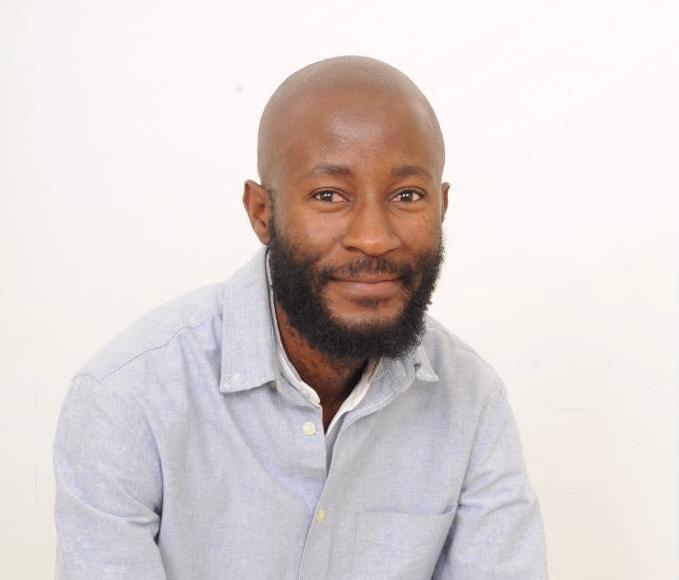
By Kunda Diana
Dr. Sishuwa Sishuwa’s recent article raises pointed questions about civic silence and ethnic allegiance in the context of President Hakainde Hichilema’s administration. His commitment to accountability is not in question — but the framing, tone, and implications of his argument warrant serious scrutiny. Beneath the surface of a call for moral courage lies a troubling pattern of overreach: overgeneralization of ethnic groups, assumptions of moral superiority, and subtle self-aggrandizement.
1. On the Overgeneralization of Ethnic Silence
Dr. Sishuwa paints the peoples of Southern, Western, and Northwestern provinces with a broad brush, suggesting that their reluctance to critique the president stems from narrow ethnic loyalty or personal gain. But this claim overlooks the complexity of public discourse in a politically sensitive environment.
It is inaccurate — and dangerous — to suggest that entire regions are silent, complicit, or morally compromised. Political expression takes many forms. Some citizens choose quiet diplomacy, community-based dialogue, or anonymous engagement due to fear of retaliation or genuine lack of platform. To conflate silence with cowardice or betrayal is to erase these realities and disregard the risks many ordinary citizens face.
2. On the Assumption of Moral Superiority
There is an unmistakable tone in the article that elevates the author’s voice as the singular standard of moral clarity. While it is commendable that Dr. Sishuwa has consistently challenged successive governments, the suggestion that he alone has retained integrity, while others have sold out or bowed to ethnic pressure, is reductive.
Not everyone who has chosen a different path is a tribalist or opportunist. Intellectual humility demands that we recognize multiple ways of doing good — not only those that resemble our own.
3. On Personal Martyrdom and the Erasure of Others
The piece strongly centers the author’s experience of alienation, betrayal, and state harassment. These are real and troubling events that deserve sympathy. But by making himself the focal point of civic virtue, he risks overshadowing many other brave individuals — including from the Zambezi region — who have consistently worked for justice, accountability, and transparency.

A more inclusive approach would have amplified such voices rather than suggesting that they have vanished or become morally compromised.
4. On Dismissing Political Loyalty as Primitive Instinct
Dr. Sishuwa likens uncritical support of the president to an “animal instinct” — a savage impulse to feed, even at the expense of principle. This metaphor, while rhetorically sharp, is ethically fraught. It strips agency from political actors and implies that any support for Hichilema is intellectually or morally inferior.
This view ignores the deeply human motivations that often shape political loyalty: historical marginalization, hope for regional inclusion, or belief in a leader’s potential. To reduce all of these to instinctive tribalism is to miss the heart of Zambia’s democratic plurality.
5. On the Risks of Polarization
Perhaps most ironically, an article that seeks to critique ethnic loyalty ends up deepening regional fractures. By placing an entire region under moral suspicion and attributing silence to groupthink, the article reinforces the kind of ethnic essentialism it claims to oppose.
If citizens from the Zambezi region feel further alienated by such narratives, future efforts to build inclusive national politics will be even more difficult.
Conclusion: Towards Accountable, Inclusive Citizenship
There is no question that Zambia needs watchdogs. Dr. Sishuwa is one of them. But the work of accountability cannot be claimed by one voice alone — nor should it dismiss, diminish, or moralize the choices of others.
Let us reject both blind loyalty and moral elitism. Zambia’s democracy is healthiest not when one voice shouts in isolation, but when many speak — differently, diversely, and without fear of being branded traitors for choosing another way.
Kunda Diana
Writer & Policy Commentator
Lusaka, Zambia
At last, a more polished and intellectual rebuttal to a man who has become so obsessed with himself. I would like to think part of his obsession is lack of attention. This is a clear case of crying for attention. He is and has not gotten one from his target.
You write that he has criticized every regime and that should be a plus? His friend Dr Membe has done just that and finally he has stepped forward as a savior! May be that is what we expect from this Dr as well. The article he has written is so low beneath his intellectual capacity. You can’t brand those who do not believe in your divisive retoric as non thinkers. Tribal talk should be for us who aren’t educated. The fact that you ought to know better but still raising tribal issues means you are just a tribal maker and you will do well to stay away. We love Zambia. We shall remove this president not on tribal lines but for his lack of performance. This far, us the 2.8m we are ok with him. Write all you like!