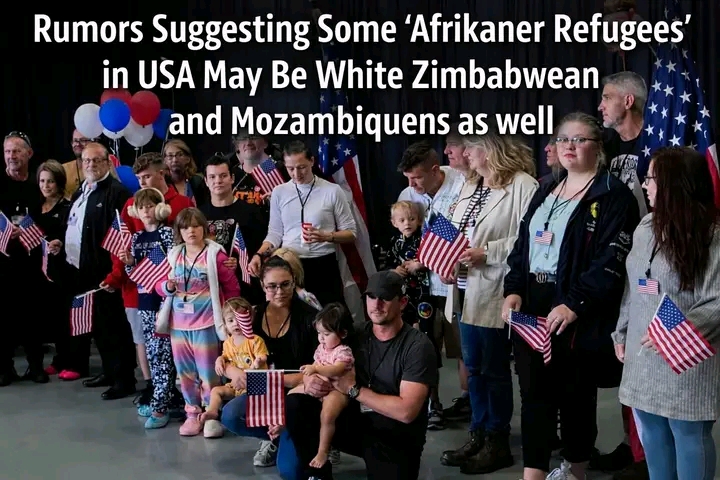

Rumours Emerge Claiming Some “Afrikaner Refugees” in the USA May Be Zimbabwean and Mozambican Nationals – Social Media Debate Explodes
A fresh wave of debate has erupted online amid claims that some of the Afrikaans-speaking individuals who recently relocated to the United States may not be South African-born citizens, but could instead be originally from Zimbabwe and Mozambique.
The allegation, which is currently circulating widely on social media, suggests that among those who left South Africa for the US, there may be individuals who were born in neighbouring countries but later settled in South Africa and identify as Afrikaners.
⚠️ At this stage, there has been no official confirmation from US authorities or the South African government to support these claims.
However, the discussion has gained traction as questions are raised about:
• How refugee or resettlement vetting processes are conducted
• The difference between ethnicity, language, and nationality
• Whether documentation is based on citizenship or country of birth
• The historical migration patterns within Southern Africa
It is worth noting that Southern Africa has long experienced cross-border movement. Afrikaans-speaking communities exist beyond South Africa’s borders, and many families have lived across Zimbabwe, Namibia, Mozambique, and South Africa over generations.
Immigration analysts say US refugee and resettlement programmes generally require background checks and documentation verification before approval. But until official data is released, the claims remain unverified and speculative.
The debate now raises bigger questions:
Are these rumours politically motivated? Is there confusion between identity and nationality? Or is this something that warrants official clarification?
The conversation is growing rapidly online — and many are demanding transparency.
It doesn’t matter to Mr. Trump whether they are from Mozambique or Zimbabwe or whatever, as long as they are white.
The idea is to boost the white population in the USA. There is nothing to debate here.
100% !