
SEVEN YEARS BEFORE THE STATE RAN OUT OF TOMORROWS:
(Marry Mubaiwa, Constantino Chiwenga and the Attempted-Murder Case That Ended Without Answering Its Central Question)
By Reason Wafawarova
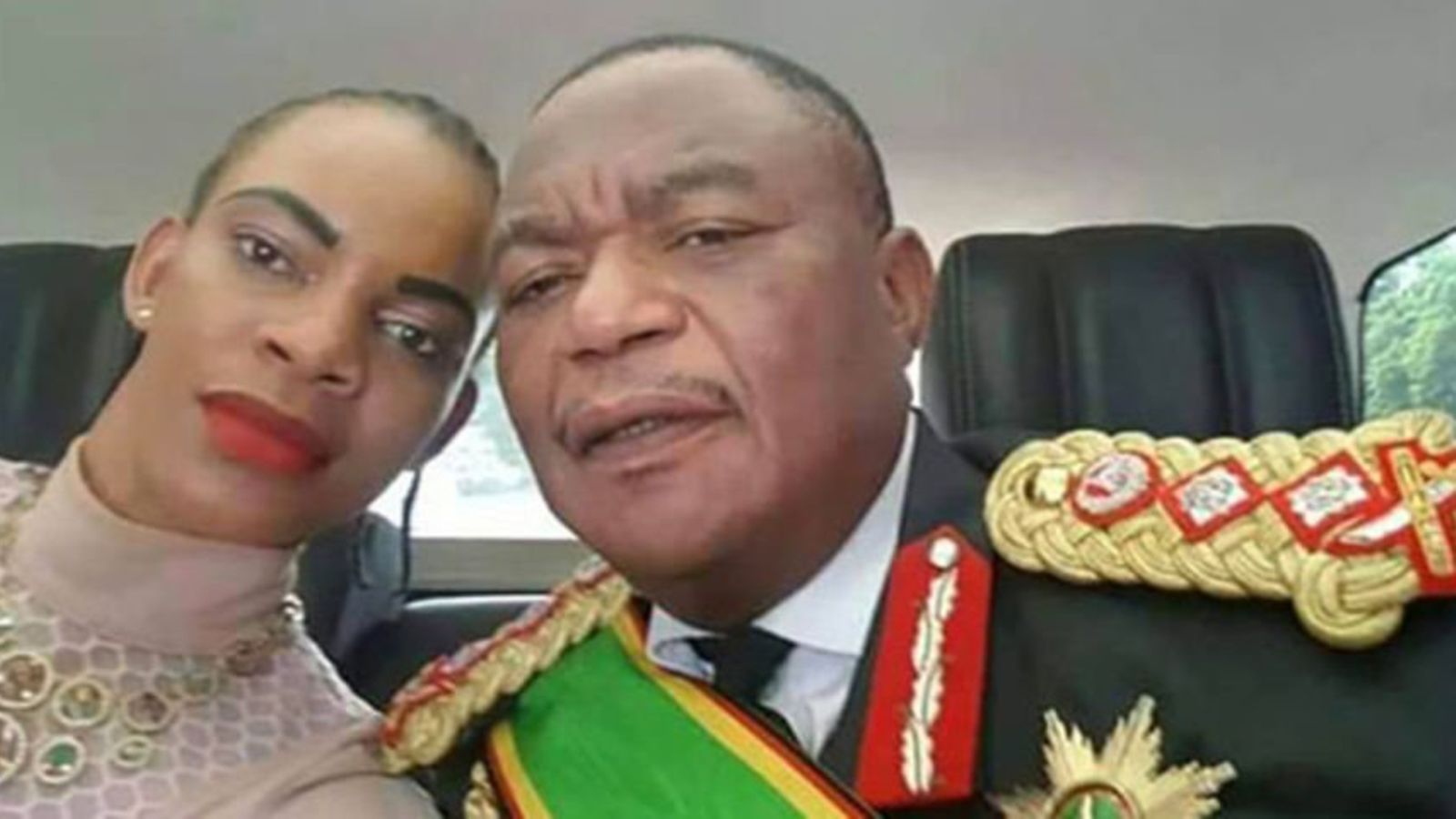
Marry Mubaiwa has been removed from remand after almost seven years of facing an allegation that she attempted to murder her then husband, Vice-President Constantino Chiwenga.
She understandably celebrated outside court. But the precise legal result matters. She was not acquitted after a court examined all the evidence and found her not guilty. Neither was she convicted. The magistrate refused to keep her within the remand machinery while the State requested yet another postponement.
Zimbabwe has therefore produced a peculiarly unsatisfactory conclusion: an accused person has endured seven years under an attempted-murder charge, while the alleged victim and the public still have no judgment declaring whether the accusation was proved or disproved.
The State used seven years without completing one trial. Time eventually became the only witness it could produce reliably.
THE HUMAN HISTORY BEHIND THE CHARGE:
In 2019, Chiwenga was gravely ill. His physical decline was publicly visible. He appeared dramatically emaciated and almost unrecognisable before being transferred from South Africa to China, where he spent approximately four months receiving treatment.
After returning in November 2019, he disclosed that he had suffered from idiopathic oesophageal stricture. He thanked President Mnangagwa for arranging the Chinese intervention and said he might not have survived without it.
This was plainly a period in which any seriously ill person would ordinarily need trusted family and medical support. Unfortunately, reports of suspicion, marital conflict and third-party influence emerged around the same period. Mubaiwa was absent from the public welcome upon his return, and their relationship subsequently collapsed into divorce proceedings, property disputes and several criminal cases.
That chronology invites questions. It does not answer them.
It would be unfair to infer that Chiwenga fabricated an attempted-murder complaint merely because the marriage disintegrated. It would be equally unfair to assume Mubaiwa’s guilt because the alleged victim was powerful and had genuinely been close to death.
Serious illness is not proof of attempted murder. A bitter separation is not proof that an allegation is false.
That is why a trial was necessary.

WHAT THE STATE ALLEGED:
The prosecution alleged that, while Chiwenga was hospitalised in South Africa, Mubaiwa removed an intravenous line and central venous catheter, causing him to bleed, and attempted to lead him from the ward.
Security officers testified that they encountered Chiwenga near the ward door without the tubes attached and saw blood on his clothing and the floor. His doctor, John Mangwiro, alleged that Mubaiwa pulled out a line inserted into Chiwenga’s chest and that staff intervened before greater harm occurred.
The defence challenged this evidence. Beatrice Mtetwa questioned why the alleged attempted murder was reportedly absent from some contemporaneous hospital statements, why other witnesses had not initially described it in that way and what happened to expected forensic evidence concerning blood on Chiwenga’s shirt. She argued that the accusation emerged as an afterthought following the collapse of the relationship. The witnesses disputed that suggestion.
These were questions for cross-examination, medical records, South African hospital personnel, forensic evidence and, crucially, Chiwenga’s own testimony.
The case had reached an advanced stage, with Chiwenga expected to testify. Then the presiding magistrate, Feresi Chakanyuka, was elevated to the High Court. The State said the trial had to begin again before another magistrate and requested time to relocate witnesses and reissue summons.
The case did not disappear because a court found the accusation inherently impossible. It collapsed because the justice system failed to bring the trial to a lawful conclusion.
WHY NOT ORDER THE STATE TO PROCEED?
This is the obvious public question. Why did the court not simply provide a final trial date and tell prosecutors: present your witnesses or close your case?
In substance, that is what the magistrate’s refusal accomplished.
A court can control its roll, reject an unjustified postponement and refuse further remand. It cannot manufacture missing witnesses, become the prosecutor or force the State to lead evidence it says it is not ready to present.
According to Mtetwa, the matter had failed to progress for approximately 22 months because the complainant had not attended, despite warnings that his testimony was required. The defence questioned why ordinary coercive measures were apparently unavailable merely because the complainant was Vice-President. The State then sought a further postponement to November 25. Magistrate Musaiona Shotgame refused, citing Mubaiwa’s mental, physical and financial prejudice.
Zimbabwe’s Constitution guarantees an accused person a fair and public trial within a reasonable time. The Criminal Procedure and Evidence Act requires courts assessing delay to consider its length, causes, responsibility, the accused’s objections, the seriousness and complexity of the charge, prejudice and the interests of victims and the public.
Attempted murder is serious. But seriousness cannot become a licence for permanent remand.
The State had nearly seven years. At some point, “we are still engaging witnesses” stops being an explanation and becomes the case itself.
REMOVAL FROM REMAND IS NOT ACQUITTAL:
Some reports described the outcome as an acquittal. That appears legally inaccurate.
Zimbabwean case law distinguishes refusal of further remand from dismissal of a charge. Removal from remand ends routine court appearances and associated conditions, but the charge may remain capable of revival. If prosecutors later become ready, they may ordinarily proceed by summons, subject to any limitation, fair-trial or abuse-of-process objections.
Mubaiwa has therefore won freedom from indefinite remand, not necessarily final immunity from prosecution.
The distinction protects both sides. She cannot properly be described as judicially cleared on the merits. The State cannot pretend that keeping an allegation technically alive is equivalent to proving it.
ZIMBABWE’S REMAND GRAVEYARD:
Mubaiwa’s experience is exceptional in duration but not alien to Zimbabwean criminal procedure.
Former minister Prisca Mupfumira was removed from remand in 2024 after nearly five years without completion of a fresh trial. Prosecutors cited the pandemic, the death of a witness and the promotion of the trial magistrate. The court held that elevation of a magistrate could not justify indefinite prejudice to the accused.
Former minister Ignatius Chombo also had corruption and fraud matters removed from remand after prosecutors failed to bring him to trial. In one case, the State could not obtain a policy document central to its allegations; the magistrate refused another postponement but expressly left open prosecution by summons.
Former intelligence official Lovemore Mukandi and co-accused were charged in 1996 and removed from remand in 2000 after no trial occurred. When the State summoned them again in 2011, they sought a permanent stay of prosecution.
Custodial examples are even more troubling, although not procedurally identical. Job Sikhala spent 595 days in pretrial detention before release. His cases eventually proceeded to judgment and his convictions were later quashed, so his was not a matter that simply never reached trial. It nevertheless demonstrates how remand can inflict much of the punishment before appellate vindication arrives.
The common problem is institutional: arrest first, investigate indefinitely, postpone repeatedly and allow the accusation itself to perform the social work of a conviction.
CAN MUBAIWA SUE?
She can explore litigation, but compensation is not automatic.
A malicious-prosecution claim ordinarily requires proof that the defendant instigated the prosecution, that it ended in her favour, that there was no reasonable and probable cause, and that the prosecution was motivated by malice. An acquittal alone would not establish those elements; removal from remand is weaker still because the State may revive the case.
The fact that prosecutors presented witnesses also complicates any immediate assertion that absolutely no reasonable basis existed. Their evidence was challenged but never finally evaluated.
She might instead seek constitutional relief for violation of her right to trial within a reasonable time, potentially including a permanent stay preventing revival. Such relief would require a court to consider the seven-year delay, its causes, her repeated assertion of her rights, her extraordinary medical hardship, the possible loss or deterioration of evidence and the public interest in trying a grave allegation.
Compensation for unlawful arrest or detention is also constitutionally recognised, but lengthy remand while out of custody is not automatically unlawful detention. She would need to identify a legally actionable wrong and prove responsibility and loss.
LITIGATE OR LET SLEEPING DOGS LIE?
Strategically, removal from remand gives Mubaiwa immediate relief. A damages action could invite years of further litigation and require allegations of malice that may be difficult to prove. Demanding a trial now could paradoxically help revive the very prosecution from which she has just been released.
Her prudent course may be to preserve every record, obtain the complete written ruling and await the State’s decision. If summoned, she can seek a permanent stay and argue that a fair retrial is no longer possible. If prosecutors formally abandon the charge, the prospects of constitutional or civil litigation can then be assessed on firmer ground.
There is no public evidence establishing that Chiwenga personally manipulated the courts. His power, the timing, his reported non-attendance and the surrounding marital conflict inevitably create perceptions. Perception justifies scrutiny; it does not justify a verdict unsupported by evidence.
The final injustice is that seven years have left everyone without resolution.
Mubaiwa deserved a prompt trial. Chiwenga, if he was the victim of an attempted murder, deserved a prompt judgment. The public deserved to know whether the State could prove what it alleged.
Instead, the remand system delivered neither conviction nor acquittal—only exhaustion.
The State may still possess a case. What it no longer possesses is a convincing excuse for having taken seven years to state it.