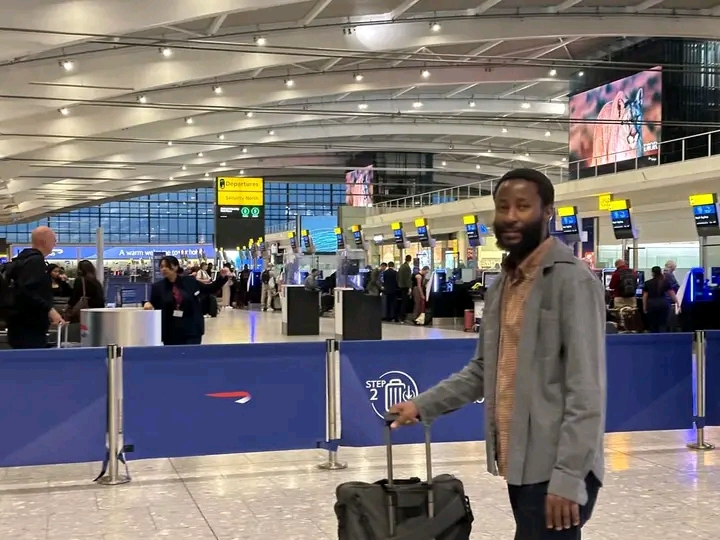

Historian and political commentator Dr Sishuwa Sishuwa has broken three months of public silence, thanking those who stood with him after Government cancelled his Zambian passport in September.
In an article titled “Thank You”, posted on his X account, Dr Sishuwa says he is very well and appreciates everyone who has worried about his safety since his last public comment on 24 August.
His passport was one of six cancelled through Gazette Notice No. 1421 of 2026, dated 11 September, while he was in the United Kingdom on academic business from his base at Stellenbosch University.
He says he was left stranded without a valid travel document and only returned to Cape Town after the South African government assisted him, following intervention from Stellenbosch University. He thanks South Africa’s Department of Home Affairs and its mission in London.
Dr Sishuwa also thanks Amnesty International, nearly 2,000 academics worldwide, Scholars at Risk, and individuals including journalist Hopewell Chin’ono, economist Professor Grieve Chelwa and Professor Thuli Madonsela.
In the same article, he repeats his criticism of President Hakainde Hichilema’s administration, describing the 13 August election as flawed and claiming that a government source told him the President ordered the cancellation. Government has not responded to the claims.
“My silence over the past few months should not be mistaken for acquiescence,” he writes, adding that his commitment to a democratic Zambia remains undiminished.
Dr Sishuwa, a Senior Lecturer in History at Stellenbosch University and a former Rhodes Scholar, says ordinary Zambians without his privileges or international support are the ones most affected by what he calls rising authoritarianism.

He writes
The subsequent decision by the government of Zambia, my country of birth, to cancel my passport, along with those of five other citizens, three weeks later, on 11 September 2026, has only intensified the concern of many about my silence, whereabouts, and safety. I am very well and I truly appreciate the concern of everyone who is worried about me.
The second group is made up of several institutions and individuals who helped secure my safe return home. When my passport was revoked, I was visiting the United Kingdom from my base at Stellenbosch Universityfor about a week on official academic business. The arbitrary cancellation of my passport left me without a valid travel document to get back to South Africa and fulfil my teaching obligations. Stranded, I only managed to return to Cape Town after the South African government graciously assisted me, following intervention from, among others, my employer, Stellenbosch University.
I am particularly deeply grateful to the Department of Home Affairs and the South African mission in London, who gave practical expression to the principle that a nation’s commitment to and respect for the protection of human rights is expressed by how it treats the rights of an individual human being, not simply the many.
I am also deeply grateful to the Rectorate of Stellenbosch University, the Deanery of the Faculty of Arts and Social Sciences, and the Department of History, led by Professor Sandra Swart, for going above and beyond to secure my safe return. Their teamwork, dedication, and sense of urgency towards the resolution of my plight made me feel truly valued.
The third group, to whom I am most grateful, comprises institutions and individuals who have supported me in defence of two fundamental principles that have been directly attacked by the cancellation of my passport: freedom of expression and academic freedom.
These include, among others, Amnesty International, nearly 2000 academics from across the world, Scholars at Risk, the Journal of Southern African Studies, the African Studies Association of the United States, the South African Historical Journal and the Southern African Historical Society.
Among the individuals to whom I retain special gratitude are award-winning Zimbabwean journalist Hopewell Chin’ono, prominent Zambian economist Professor Grieve Chelwa, South African Law Trust Chair Professor of Law in Social Justice Studies at Stellenbosch University Thuli Madonsela, University of Cape Town Professor of Political Studies Jeremy Seekings, Birmingham University Professor of Democracy Nic Cheeseman, and Harvard University Ellen Gurney Professor of History and Professor of African and African American Studies Emmanuel K. Akyeampong. Others include Professor Adam Habib, Vice-Chancellor of University of London, and Stephen Chan, Professor of World Politics at SOAS.
In a sense, the revocation of my passport did not come as a complete surprise. A few weeks earlier, my employer received a formal petition from supporters of the Zambian president asking the university to silence my public commentaries on the grounds that my media criticism of his undemocratic leadership was undermining democratic institutions and denting Zambia’s international image! Tellingly, the email carrying the petition was copied to State House in Zambia. Fortunately, Stellenbosch formally rejected the request and reaffirmed its commitment to academic freedom and freedom of expression.
The democratic backsliding in Zambia is real and will likely only intensify. Even before the recent general election, which attracted international headlines for all the wrong reasons, I had been insisting, for quite a long time and against other people’s analysis, that Zambia had been moving in a highly repressive direction, driven by the executive’s deliberate efforts to dismantle the formal guardrails and norms that have long kept presidential power in check. Over the course of the last five years, these efforts found expression through four key steps that seemed designed to undermine accountable democratic governance.
The first was undermining the sources of horizontal accountability. This found expression in the installation of a legislative leadership that was subservient to the presidency; the use of coercion, bribery, and other incentives to lure opposition and independent MPs into positions that reduced parliament to effectively operating as an extension of the executive; the dismissal of judges who were seen as a threat to the interests of the ruling core; and the staffing of the superior courts with loyalists who defer to executive political interests.
The second step was dismantling social accountability. This found expression through the co-optation into government bodies of most of the critical voices from civil society and academia that challenged the authoritarian tendencies of previous presidents; the arrest, harassment, and vilification of the remaining voices for criticising government actions; and the application of new and existing anti-democratic legislation to cultivate a climate of fear that left many citizens unable to express themselves freely.
The third step involved crippling the political opposition. The executive repeatedly used the police to prevent opposition parties from holding public rallies and to arrest their leaders on a variety of charges relating to sundry political offences ahead of the 13 August 2026 general election.
Xavier Chungu, the validly nominated presidential candidate of the opposition Liberal Democratic Party, was arrested on 28 May after he confidently predicted the incumbent president’s defeat during a podcast four days earlier.
Chungu remains in detention to date, as trial in his case is yet to commence, six months later. As noted by Amnesty International, the former Director General of the Zambia Intelligence and Security Services has been “denied bail after the Director of Public Prosecutions issued a ‘No Bail Certificate’ limiting meaningful judicial oversight and undermining the requirement that pretrial detention must have a legal justification and be necessary and proportionate.” State institutions and actors were also employed to frustrate the registration of new political parties
The fourth step was assaulting vertical forms of accountability to undermine the fairness and competitiveness of elections. This found expression through a variety of mechanisms. These include the appointment of loyalists of the executive to the Electoral Commission of Zambia, the exclusion of rival candidates from the ballot, the redrawing of electoral districts to enable gerrymandering (which resulted in the creation of 70 new constituencies, mostly in the ruling party strongholds), a 30 percent increase in the number of nominations that the president can appoint to parliament, and changing the mechanism by which votes are converted into seats in the legislature (for instance, proportional representation seats became tied to the votes received by a presidential candidate rather than having a separate ballot for each political party).
This systematic effort to weaken the very institutions that offer the long-term hope for democratic consolidation – elections, the judiciary, the Constitution, etc. – greatly benefited from the growing disinterest in promoting democracy among great powers such as the United States of America and the European Union as well as organisations such as the African Union.
As a result, and ahead of the general election, Zambia’s democracy was already hollowed out through incremental institutional capture, in which the executive weakened oversight bodies, tilted the playing field, and entrenched its power.
The outcome of this process was a flawed outcome of the 13 August election that saw the unprecedented nationwide suspension of vote counting, the deployment of soldiers into polling stations where they reportedly swapped ballot boxes and dismissed opposition polling agents, the killing of former cabinet minister Mutotwe Kafwaya, the arrest of the leading opposition presidential candidate Brian Mundubile, his running mate Makebi Zulu and 16 others on what the United Nations Special Rapporteur on the right to peaceful assembly and association called “concocted charges” of treason, and the nationwide closure of all courts to prevent the opposition from filing a legal challenge against the re-election of the incumbent president within the seven-day period prescribed by law.
After I wrote about these developments and appeared on international media channels to discuss the conduct of the election, the government moved to cancel my passport through a Gazette Notice No. 1421 of 2026 dated 11 September.
I had some prior notice about the government’s retaliatory action. A well-placed source in government texted me through Twitter’s Direct Message feature that President Hakainde Hichilema had directed his officials to cancel my passport so that I could be deported to Zambia for persecution:
“Doc, just to let you know that HH [Hakainde Hichilema] has ordered the immediate cancellation of your passport. The purpose is…to facilitate your deportation to Zambia. HH is angry with your commentaries on the election, but he also wants to make sure that when the issue of [presidential] term limits comes up, you will be in detention. Once you are here, their plan is to arrest and detain you indefinitely on trumped-up charges.”
Any illusions I entertained that the Hichilema would reconsider his directive vanished when I learnt about the cancellation of my passport in the media.
The Gazette Notice identified me by name and listed details of my passport alongside those of five other critics and opposition figures whose travel documents were also invalidated.
It further stated that “The cancelled documents are no longer valid for identification, travel, or any official purpose. The public, Government institutions, financial institutions, border control authorities, law enforcement agencies, and all other relevant institutions are accordingly advised not to accept, recognise, or rely upon the said documents.” It added that “Any person in possession of any of the cancelled documents is required to surrender the document immediately to the Department of National Registration, Passports and Citizenship, Immigration, or Zambia Police.”
The disconcerting and psychosocial effect of suddenly finding oneself stranded abroad, however briefly, hit me. I have usually analysed injustice as it affects other people, but this time I was the victim. Even more ironically, I have written extensively about how successive governments in Zambia have tried to silence critics by removing identity documents. Now I was subject to those very tactics. Fortunately, the above-mentioned individuals and institutions immediately came in and stood with me at a critical time.
Ultimately, however, this is not about me; I enjoy certain privileges and have benefited from institutional and individual support, which is not available to many of my fellow citizens. The people who are worst affected are the millions of ordinary Zambians who must confront rising levels of authoritarianism without the protection of influential institutions, international networks, or a public profile. It is their plight, rather than mine, that should call for our greatest attention.
The solidarity extended to me over the past few months has solidified my conviction that the defence of democracy and human rights is a collective responsibility that transcends national boundaries and narrow identities. Freedom of expression, academic freedom and the right to hold those who exercise public power to account are not privileges to be granted or withdrawn at the pleasure of those in government. They are fundamental rights whose protection is indispensable to the preservation of a free and democratic society.
My silence over the past few months should not be mistaken for acquiescence. The cancellation of a passport may have briefly restricted my movements, but it cannot extinguish my ideas, invalidate my principles, or diminish my obligation to speak against injustice. My commitment to a democratic Zambia, governed by the rule of law and in which citizens can exercise their fundamental rights without fear of persecution, remains undiminished.
Having managed to bootstrap my way from an impoverished childhood in the bush in rural Zambia to a BA at the University of Zambia, a Rhodes Scholarship, and a DPhil from Oxford, I consider it my responsibility to hold to account governments that implement policies that undermine the common good, erode democracy, and violate human rights. At great personal sacrifices and risk, I have carried out this activism since 2009 in a peaceful way and completely free of any financial, material or political interest or benefit.
To all those who have stood with me, I say thank you. The greatest tribute we can pay to the solidarity you have shown me is to extend it to those whose suffering goes unnoticed, whose voices are suppressed, and whose circumstances deny them the opportunity to tell their own stories. No citizen should have to depend on the goodwill of another country to enjoy the rights that their own country has a duty to protect.
Source: https://x.com/ssishuwa/status/2125630741547774090?a=lHYlXl4XNBr8zp6hNNc&s=20
He can break his silence, who cares? The country has moved on with grow Zambia agenda.