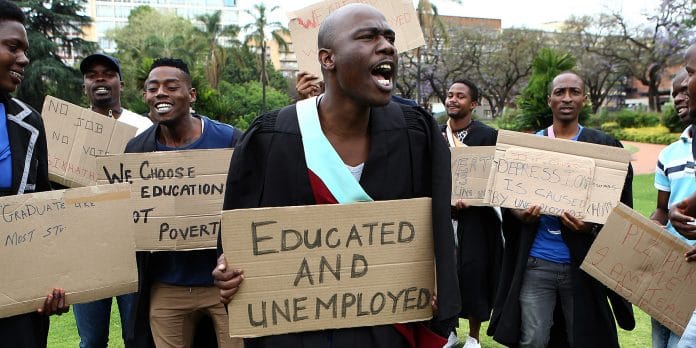

South Africa’s unemployment rate climbed to 33.2% in the second quarter of 2025, up from 32.9% in the previous quarter, marking the third consecutive increase and the highest level since Q2 2024, according to Statistics South Africa. The labour force grew by 159,000, with 19,000 more employed (reaching 16.8 million) and 140,000 more unemployed (totalling 8.4 million). The labour force participation rate rose slightly to 60.2%, while the absorption rate fell to 40.2%.
Employment gains were recorded in four of ten industries, notably the formal sector (up 34,000), private households (28,000), construction (20,000), and mining (3,000). However, significant losses occurred in community and social services (42,000), finance and agriculture (24,000 each), and transport (15,000), with the informal sector shedding 19,000 jobs.
Analysts expressed concern over the figures. Shawn Duthie of Control Risks noted that the rise, despite optimism following the 2024 government of national unity, signals low investor confidence and reluctance for long-term business investments. Casey Sprake of Anchor Capital highlighted that many South Africans remain in low-skilled, precarious jobs, with meaningful job creation requiring GDP growth near 3%. Ongoing loadshedding and modest 0.1% economic growth in Q1 2025 further strain employment prospects.
The expanded unemployment rate— including discouraged work seekers—eased slightly to 42.9% from 43.1%. However, economists argue the true joblessness rate is higher, as informal and underemployed workers are often excluded. A recent 30% US tariff on South African goods, impacting agriculture, vehicle, and steel industries, is expected to exacerbate job losses in Q3. Duthie warned that unemployment may rise further, with reducing it below 30% and achieving over 2% economic growth remaining challenging without increased formal sector investment.