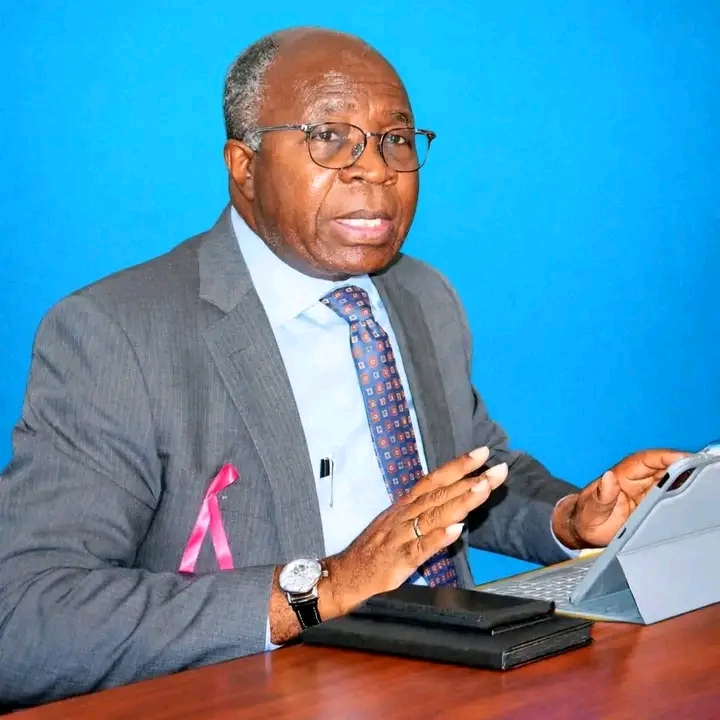

State of the Economy & IMF Extended Credit Facility (ECF) Programme Update — as at December 31, 2025
– By Hon. Dr. Situmbeko Musokotwane, MP, Minister of Finance and National Planning
Fellow citizens, this afternoon in Parliament, I delivered a ministerial statement on where the economy stands, what has improved, what remains challenging, and what the Government is doing next.
1)
The big picture: Zambia is stabilizing—and now pivoting to growth
When the New Dawn Administration took office in 2021, Zambia faced heavy debt distress, high inflation, exchange-rate instability, low reserves, and reduced investor confidence. Since then, reforms have been implemented to restore credibility, stabilize the macroeconomy, and protect livelihoods. The results are now showing—more clearly in 2025 and into January 2026. The Ministerial statement was also about transparency: we believe that with this accurate information, it will become harder for some people to misinform and mislead the nation.
2)
Growth is picking up: the economy expanded faster in 2025 – GDP growth for 2025 (Preliminary): 5.2% (up from 3.8% in 2024).
The improvement in 2025, came mainly from:
• Agriculture (a rebound supported by improved rainfall, extension services, and full rollout of the e-voucher FISP system);
• Mining (higher output and a more predictable operating environment); and,
• ICT (via continued expansion).
Copper production rose by 7.8% to 890,345.79 metric tonnes in 2025 (from 826,000 metric tonnes in 2024), supported by increased output from major mines including KCM, MOPANI, KANSANSHI, and LUBAMBE.
Maize harvest: 3.66 million metric tonnes (bumper harvest) was produced, thereby strengthening food security and easing food-price pressure.
3)
Inflation and the Kwacha: real relief is beginning to show
Here’s what many households feel directly—prices and currency stability:
• Inflation fell to 11.2% by end-2025 (from an average 15% in 2024);
• January 2026 inflation returned to single digits: 9.4% (first time since early 2024);
• The Kwacha strengthened in 2025: It appreciated by 21.07% from December 2024 to December 2025, averaging about K22.13/US$ in December 2025; and,
• January 2026: The Kwacha has strengthened further, trading around K18.8/US$,
What’s driving this? Stronger foreign exchange inflows—especially from mining—and renewed confidence, including inflows into Government bonds.
4)
Energy reforms are raising supply and opening space for private investment
Government reforms—like the Electricity Open Access Framework, Net Metering, and the Energy Single Licensing System—are enabling more private sector participation. Electricity generation increased by 7.8% to 14.36 million MWh in 2025 (from 13.32 million MWh in 2024), with additional solar and thermal generation of 149,761 MWh recorded in 2025.
5)
The 2025 Budget: stronger revenues, tighter spending, smaller deficit
Total revenues and grants: K187.85 billion (above the target of K185.46 billion).
• Domestic revenues were above target, with solid income tax performance.
• Grants underperformed due to lower remittances and delays—especially affected by reduced USAID-related health inflows.
Total expenditure: K223.73 billion (below the projection of K232.98 billion). Key spending included:
• Debt payments: K58.13 billion (K40.90 billion domestic; K17.22 billion external);
• Transfers: K31.04 billion (including CDF K5.63 billion, Free Education K2.48 billion, Cash-for-Work K1.56 billion);
• Social benefits: K13.37 billion (including Social Cash Transfer K9.34 billion, Pensions K3.03 billion);
• Assets/capital spending: K25.49 billion (roads, aerodromes, strategic reserves, and other capital investments); and,
• Arrears/liabilities clearance: K17.34 billion (to inject liquidity and reduce accumulated arrears).
The Budget deficit closed at 3.4% of GDP—better than the projected 4.6%—because revenues were stronger and spending was more controlled.

6)
Public debt: position and what it means
As at end-December 2025, total public sector debt stood at US$28.9 billion, made up of:
• US$16.1 billion Central Government external debt;
• US$1.4 billion Government-guaranteed external debt; and,
• K253.7 billion domestic debt.
Domestic debt rose slightly (about 0.4%) and is consistent with programmed financing needs under the Parliament-approved 2025 Annual Borrowing Plan.
7)
External sector: reserves strengthened, current account improved
• The current account deficit narrowed sharply to US$25.1 million (from US$541.6 million earlier in 2025), supported by stronger exports.
• Gross reserves rose to US$5.5 billion by end-December 2025, equivalent to 5.2 months of import cover.
8)
IMF ECF Programme: concluded successfully—moving to a successor programme
The Government successfully concluded the 38-month IMF ECF programme (which began in August 2022), with an immediate disbursement of US$190 million, bringing total programme support to US$1.7 billion.
The Government will not request a one-year extension. Instead, Zambia will engage the IMF on a successor programme focused on:
• Growth;
• Investment;
• job creation; and,
• expanding productive capacity.
Key achievements under the programme include:
• stronger fiscal discipline (deficit reduced significantly compared to 2021);
• major progress on debt restructuring (Government indicates 94% of external debt restructured);
• improved investor confidence and new/expanded investments;
• better access to concessional financing and cooperating partner support; and,
• strengthened governance and public financial management systems.
What this means for citizens
• A stronger Kwacha and falling inflation reduce pressure on prices over time (especially food and imported essentials);
• Higher agricultural and mining output supports jobs, exports, and Government revenue;
• Better reserves are strengthening Zambia’s ability to manage shocks; and,
• The sustained budget discipline is protecting critical services like free education and social protection while reducing the risk of future instability.
Final message: growth with discipline—and borrowing with accountability
Zambia’s direction is clear: from economic repair to growth, investment, and job creation—but we will do it with discipline.
And let me be direct: borrowing must never be casual. It must be anchored in transparency and accountability. That is why the Government will continue to strengthen debt management through the Parliament-approved Annual Borrowing Plans—so that every new loan is justified, planned, and aligned with national priorities that citizens can track.
Together, we will build a stable, productive, and more inclusive economy—where the benefits of stability reach every communit