
STRASBOURG RUSHED VERDICT
…Europe’s premature censure of Zambia undermines African sovereignty
By DAVID KANDUZA
BY jumping the gun on the post-election investigation and the tragic death of Mutotwe Kafwaya, the European Parliament has exposed a familiar, one-sided paternalism that disregards domestic due process.
The European Parliament’s adoption of the resolution ‘Post-electoral repression in Zambia and the killing of Mutotwe Kafwaya’ on September 17, 2026, marks a troubling return to a familiar geopolitical script.
Following a roll-call vote in Strasbourg, European lawmakers officially codified their stance on Zambia’s complex post-election landscape.
While the EU frames this as a defense of democratic values and human rights, the reality on the ground tells a vastly different story—one of a rushed, half-baked intervention that undermines Zambia’s sovereign institutions.
By passing judgment before national investigations are complete, the European Union has chosen political posturing over rigorous fact-finding.
This premature censure not only disrespects Zambia’s independence but also threatens to compromise the very accountability the EU claims to champion.
At the heart of the EU’s outrage is the tragic death of former Cabinet Minister Mutotwe Kafwaya, who was fatally shot on August 14, 2026, during a security operation at a property linked to opposition leader Brian Mundubile.
The circumstances surrounding the incident are highly contested.
State authorities have explicitly noted that law enforcement officers encountered armed resistance while executing the operation while the opposition figures have disputed this account, labeling the event as politically motivated repression.
In the midst of these conflicting claims, the only responsible path forward is a thorough, forensic and independent local investigation.
Yet, the European Parliament—sitting thousands of miles away in Strasbourg—has effectively validated one side of the narrative.
By elevating the issue to an official parliamentary resolution before ballistic, forensic and judicial processes in Zambia have concluded, the EU has laid a half-baked case on the table.
If the final, evidence-driven outcome of the domestic investigation reveals a completely different reality, the EU Parliament will be left in an embarrassing rhetorical corner, having debated and codified assumptions rather than verified facts.
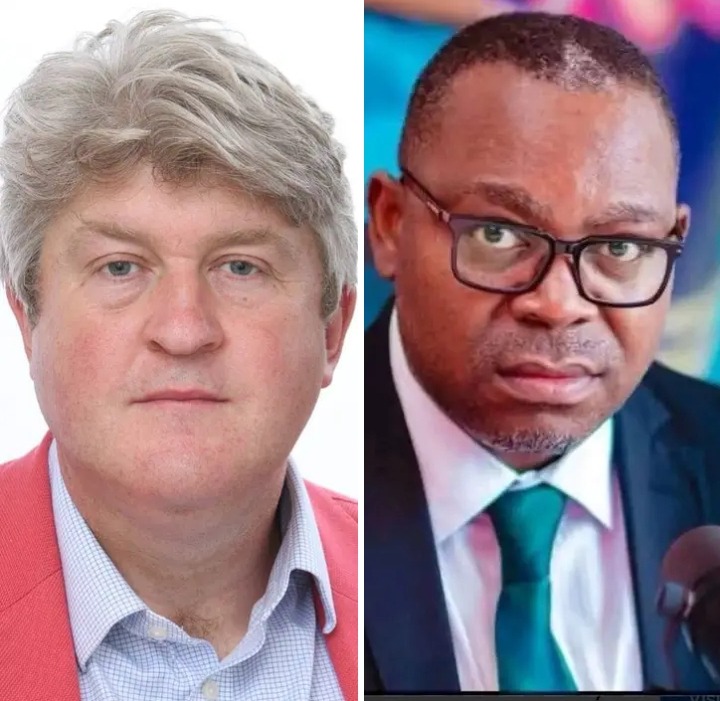
During the debate, Michael McNamara, head of the EU Election Observation Mission to Zambia, expressed a profound shock regarding the post-election period, demanding speedy trials for those facing treason charges and unimpeded legal access.
While transparency and adherence to human rights are universal principles that Zambia respects, the EU’s execution of these demands feels inherently one-sided.
A truly objective international partner would wait to hear all testimonies, allowing the State’s legal and security apparatus to present their findings alongside the grievances of those detained.
Instead, the EU’s recommendations read like a pre-written verdict.
They ignore the State’s fundamental duty to maintain law, order and national security during highly volatile post-election periods.
By rushing to judgment, the EU signals that it trusts opposition rhetoric more than it trusts the institutional capacity of a sovereign African nation to investigate its own tragedies.
Zambia is a sovereign republic.
Its independence, hard-won and fiercely protected, means that its judicial system, law enforcement agencies and domestic oversight bodies must be afforded the respect and space to operate without external dictation.

The historical paternalism where European capitals look down upon African nations, treating them as dynamic experiments requiring immediate Western oversight, must end.
When international bodies intervene prematurely, they do not help; instead, they polarise domestic politics and compromise the neutrality of local judicial processes.
International solidarity should mean supporting domestic institutions as they carry out their mandates, not superseding them with half-baked resolutions passed in foreign chambers.
The European Union must learn to pause, exercise diplomatic patience and allow African sovereign States the dignity of finding the truth for themselves.