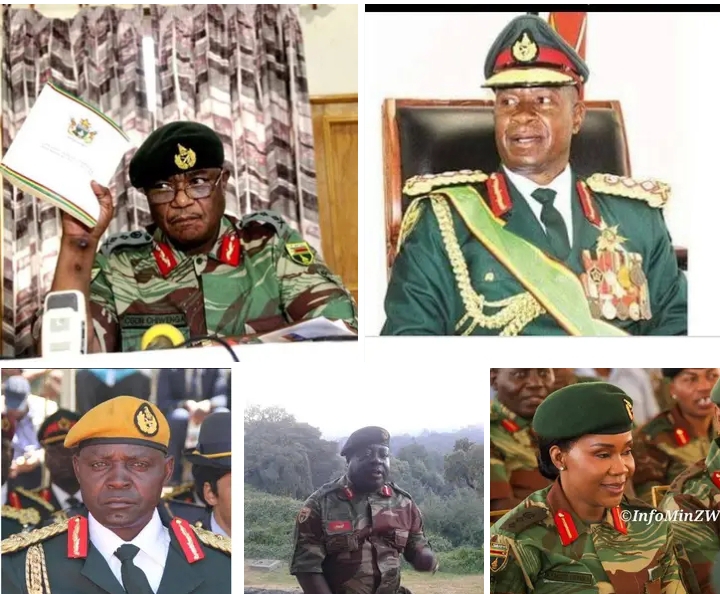

TEAM CHIWENGA BOYCOTTED THE CHIVAYO FUNERAL: ZIMBABWE AT A DANGEROUS POLITICAL CROSSROADS AS ZANU-PF FACTIONAL WARS, MILITARY LOYALTY AND THE STRUGGLE FOR SUCCESSION LAY BARE!
I have been watching the unfolding political drama within ZANU-PF, and one thing is becoming increasingly difficult to ignore: the factional wars are reaching a dangerous stage and now a threat to national security.
Team Chiwenga boycotted Chivayo’s funeral, while the flamboyant Zvigananda faction, formerly known as Lacoste, turned out in their numbers to mourn one of their own. To me, this was more than a funeral. It was a political statement, whether deliberate or otherwise, and it raises serious questions about the balance of power within ZANU-PF.
I see a dangerous succession battle taking shape between Vice-President Constantino Chiwenga, a former powerful commander of the country’s defence forces, and President Emmerson Mnangagwa, who is reportedly backed by wealthy business interests with ambitions to shape Zimbabwe’s political future.
Those pushing for an extension of ED’s power through CAB3, amid allegations that Kudakwashe Tagwirei is being positioned for eventual succession, must understand that Zimbabwe is not a company that can be handed over to the highest bidder. These are serious political allegations that deserve scrutiny, but the fundamental question remains: who determines Zimbabwe’s future — the Constitution and the people, or money and political connections
HERE IS WHERE IT GETS REALLY INTERESTING!
I cannot ignore Zimbabwe’s history. The events of November 2017 demonstrated just how decisive the military can be in determining the country’s political direction. ED came to power following a military intervention that ended Robert Mugabe’s rule. Today, the very question of succession threatens to expose the contradictions within the political arrangement that followed.
Before, it was possible to remove a civilian vice-president like Joyce Mujuru from the political equation. But Chiwenga is not simply another vice-president. He is a former commander of the Zimbabwe Defence Forces with a long history in the security establishment and connections to the liberation war veterans , the historic vanguard of ZANU PF.
I find it politically reckless for anyone to assume that the military command will automatically abandon Chiwenga in favour of a wealthy businessman or a candidate whose influence is perceived to rest heavily on money and political patronage. Military loyalties cannot simply be assumed, but neither should the historical role of the security establishment be underestimated.
THE ZVIGANANDA FACTION MAY HAVE MISREAD THE POLITICAL TERRAIN.
Although President Mnangagwa is frequently characterized as a political strategist and nicknamed ‘The Crocodile,’ his core authority historically rests on his deep connections within the military hierarchy. Consequently, alienating his security base would constitute a significant strategic miscalculation.
The allegations of corruption and the reported circulation of a dossier implicating business interests associated with the faction have added another dimension to this struggle. When former senior military figures and war veterans publicly raise concerns about corruption, I believe those allegations deserve serious investigation rather than political dismissal.
But let me be clear: allegations are not convictions, and the evidence must speak for itself.
My concern is that Zimbabwe is witnessing a dangerous convergence of money, political ambition, constitutional manoeuvring and competing centres of influence. If these factions are fighting over who controls the state rather than how to serve the people, then the entire nation is being placed at risk.

CAB3, TAGWIREI AND THE QUESTION OF SUCCESSION
I am particularly concerned about the allegations that constitutional changes and political appointments could be used to facilitate a succession arrangement favouring Tagwirei. If anyone believes that wealth alone can manufacture grassroots support, command political legitimacy or settle the question of succession, they are seriously underestimating the complexity of Zimbabwean politics.
No businessman should be allowed to purchase the presidency, and no political faction should be allowed to manipulate the Constitution for personal gain. Zimbabwe belongs to its people, not to a network of politically connected businessmen.
The real test is whether our constitutional institutions can withstand pressure from powerful political and financial interests.
COULD ZIMBABWE FACE ANOTHER MILITARY INTERVENTION?
This is the question many Zimbabweans are asking, and I refuse to dismiss the danger of escalating tensions. However, nobody can responsibly declare that another coup is inevitable. What I can say is that any attempt to resolve a succession dispute by sidelining powerful political actors outside constitutional processes could deepen instability and create serious national security risks.
If ED’s camp miscalculates by turning a succession dispute into an open confrontation with Chiwenga and his allies, the consequences could extend far beyond ZANU-PF. The country cannot afford a political crisis that threatens peace, security and economic stability.
Chiwenga’s absence from Chivayo’s funeral, while attending other events, has inevitably fuelled speculation. Whether it was a deliberate boycott or not, the political symbolism is now part of the wider debate. The question is what happens next — and whether those involved understand the consequences of escalating this confrontation.
MY POSITION IS SIMPLE: ZIMBABWE MUST NEVER BECOME A CASUALTY OF ZANU-PF’S SUCCESSION WARS.
I will continue to question the concentration of political power, the influence of wealthy business interests and any attempt to manipulate constitutional processes. I will also insist that allegations of corruption be investigated fairly and that the Constitution remains above every faction, every businessman and every political leader.
The question now is: WHO WILL MAKE THE FIRST MOVE?
Will the competing factions find a constitutional way out, or will their struggle for power push Zimbabwe into another period of dangerous uncertainty?
I do not claim to know the outcome. But I know that when personal ambition, money and political power collide, ordinary Zimbabweans are often the ones who pay the price.
The future of Zimbabwe must be defined by institutional integrity, constitutional democracy, and the collective will of its citizens—not by factional bargaining or the influence of elite capital. The presidency cannot be bartered, bought, or designated through oligarchic patronage.
Constitutional term limits and democratic processes must be upheld without exception, and allegations of corruption must face uncompromising judicial review regardless of who is involved. Ordinary Zimbabweans must not be made to pay the price for elite political ambition.
We have been here before. We cannot afford to repeat our darkest chapters.
MAY GOD SAVE ZIMBABWE!
By Elijah Magwegwende