
The good news is creditors have all
agreed we must talk – Musokotwane
By Fanny Kalonda
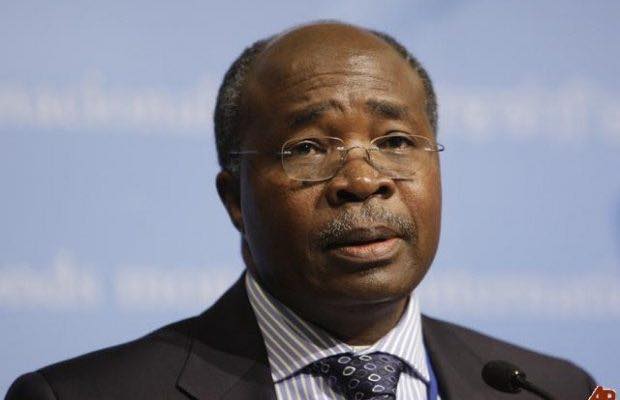
FINANCE minister Situmbeko Musokotwane says government is expected to have a second meeting with creditors this month.
Speaking to journalists, Dr Musokotwane said the debt restructuring process has delayed because it has not been easy to bring creditors together and making them agree.
“Debt restructuring is something that number one we need ourselves because our debt is unaffordable. So we need to restructure it so that it is affordable together with the creditors. Number two, debt restructuring is the gateway to getting into an IMF programme. The IMF says ‘yes we can give you a programme, but we need as assurance that your debt is sustainable. So discuss with the creditors’. There is no more discussion between us and IMF. We have concluded the discussion. We have agreed no more discussions. We all agreed on everything. What is now just awaiting us is to have this debt restructured then immediately it is IMF programme,” he said. “Now the debt restructuring, remember there are so many people that we owe money. All the Eurobond holders, all the Chinese, all the Israelis, all the Indians, many people. Now when you owe so many people money, you need to bring them all in one room and tell them guys it is not possible to pay you on the basis of the current… Let’s agree on the restructuring of the debt and the basic issue about that agreement is that the way I pay him he should not feel that he is better off or worse off compared to the way am paying off other creditors. The way I pay him, there should be equity in the manner I pay all otherwise some creditors will say that ‘we cannot agree to restructure your debt because this one you are favouring, me you are not favouring’. So I must bring everybody together and ask the question, what is the formula that we are going to use so that everyone feels like they are being treated equally as we restructure the debt? Now it is this process that has delayed because as you can imagine bringing several creditors together, making them agree. It is not something that is easy. We had hoped that by March, April, we would have been done but you know what has happened. Some creditors were slow, others were fast. But the good news is that they have all agreed that we must talk.”
Dr Musokotwane said the first meeting was on June 16.
“We are hoping that very soon we will be having the second meeting of creditors. My prayer is that this second meeting and we are hoping that this will be done. I don’t want to give a date again but hopefully next month or this month that they all agree that the way you pay this one, there is equity therefore all of us together we can agree to restructure the debt. Then we will done. From there we go to the IMF,” he said.
And Dr Musokotwane said the cost of living is where it is today because at one point, inflation was even higher at 24 per cent.
He said at the moment inflation is coming down, “therefore the rate at which the cost of living is going up is getting less and less”.
“Please understand this very carefully, it’s like driving a car. Yes, it is moving. Two cars are moving. One is moving faster than the other one. So they are both moving but one is moving at a slower pace than the other. Inflation was at 24 per cent one year ago. Now it’s less than 10 per cent which means that yes, prices are rising but rising at a slower pace, and if you look at the data, its pace is getting smaller, smaller, smaller and smaller. We are getting to a situation whereby we will soon reach something like four or five per cent or less. So there is no contradiction at all. The people who are saying the cost of living is high, I appreciate that,” Dr Musokotwane said. “But remember the cost of living is where it is today because at one point inflation was even higher at 24 per cent. Now it’s coming down so the rate at which the cost of living is going up is getting less and less as a difference and this is important. Everywhere else in the world inflation is rising. In many places inflation is rising but in Zambia inflation is coming down. I get surprised when people say inflation is coming down, don’t you want inflation to come down? Are you happier with the inflation being higher? Now I also heard some colleagues saying, ‘but the price of fuel has gone up’. When you are talking about inflation, you are not talking about the price of one commodity. You are talking about the basket of goods and services that the typical consumer consumes, not one item. So the moment you broaden the number of items in the basket which is a reality because none of us lives from fuel alone. None of us lives on bread alone, none of us lives on cabbage alone. We live from a combination of goods and services called a basket. Now in that basket, some items the prices may be rising, others may be coming down. So when you combine the totality of all those, it is not surprising that the price of fuel can indeed go up, but inflation continues to go down because that basket is not considering fuel okay…”
He said the way the country measures inflation is exactly the same way inflation is measured everywhere else in the world.
“So the technicians, the statisticians who designed this and by the way, the way we measure inflation in Zambia is exactly the same way inflation is measured everywhere else in the world. It has been checked by experts around the UN, IMF World Bank. All sorts of experts, exactly the same methodology. So what we are saying is that, yes the price of fuel went up but the price of commodities that are more important in our livelihoods, mealie meal, yes they went up but at a slow pace,” said Dr Musokotwane.