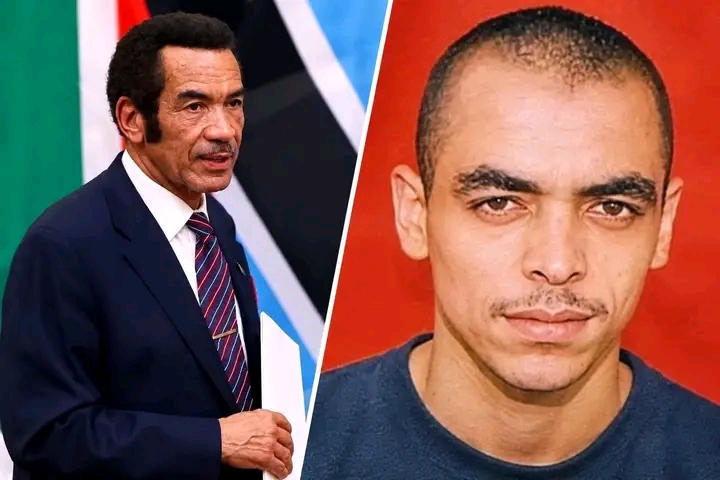

THE JOHN KALAFATIS CASE: WHEN PRESIDENTIAL POWER INTERVENED AFTER SECURITY OFFICERS WERE CONVICTED OF MURDER
In May 2009, Botswana experienced an incident that would become one of the most controversial chapters of former President Ian Khama’s presidency.
A 33-year-old man, John Kalafatis, was shot dead by members of Botswana’s security forces.
But the controversy did not end with his death. It deepened when four military officers were convicted of murder in 2011, only for President Ian Khama to pardon three of them in June 2012.
Let’s look at what happened.
1. THE KILLING
On 13 May 2009, John Kalafatis was shot dead in an operation involving Botswana security personnel.
The circumstances surrounding his death were disputed. His family’s lawyers maintained that he was sitting in a parked vehicle when security officers opened fire.
The government maintained that he was a wanted criminal who had been killed during a lawful arrest
2. THE MURDER CONVICTIONS
Following investigations and prosecution, four members of the Botswana Defence Force were charged with murder.
In June 2011, all four were convicted and sentenced to prison.
This was significant because it demonstrated that members of the security establishment could face criminal consequences for their actions.
3. THE PRESIDENTIAL PARDON
Then came the controversial decision.
In June 2012, President Ian Khama exercised his constitutional prerogative to pardon three of the four convicted officers.
The decision attracted criticism from civil society organisations and human rights observers.
The central concern was straightforward: What happens to public confidence in justice when the head of state grants clemency to security officers convicted of murdering a civilian?
4. THE ROLE OF INTELLIGENCE INSTITUTIONS
The case also raised questions about the Directorate of Intelligence and Security (DIS), an agency established during Khama’s presidency in 2008.
Reports and allegations linked the intelligence establishment to the operation that resulted in Kalafatis’s death.
Khama denied ordering the killing. Importantly, there was no court finding establishing that he personally authorised it.
Nevertheless, the reported involvement of intelligence structures raised broader questions about oversight, executive authority and accountability.
5. THE BIGGER GOVERNANCE QUESTION
The Kalafatis affair goes beyond the circumstances of one death.
It raises fundamental questions about the relationship between the state and its citizens.
Who holds security agencies accountable when they are accused of violating the very rights they are supposed to protect?
How independent is justice when executive clemency intervenes after criminal convictions?
And how should a president balance constitutional pardon powers with the public interest in accountability?
A presidential pardon may be legally authorised. But legality and public confidence are two different considerations.
THE LESSON FOR AFRICAN GOVERNANCE
State security institutions exist to protect citizens, not to operate beyond accountability.
Presidential power also comes with responsibility. The exercise of constitutional authority should be accompanied by transparency, sound reasoning and respect for the rule of law.
Botswana’s experience under Ian Khama provides an important case study for examining how democratic institutions respond when allegations of serious misconduct involve those entrusted with national security.
Ultimately, the question is bigger than Ian Khama or John Kalafatis:
WHO WATCHES THE WATCHMEN, AND WHO HOLDS THE EXECUTIVE ACCOUNTABLE WHEN THE STATE ITSELF BECOMES PART OF THE CONTROVERSY?
That is a question every democracy, including Zambia, must be willing to confront.
Source: ZAMBIAN ANGLE