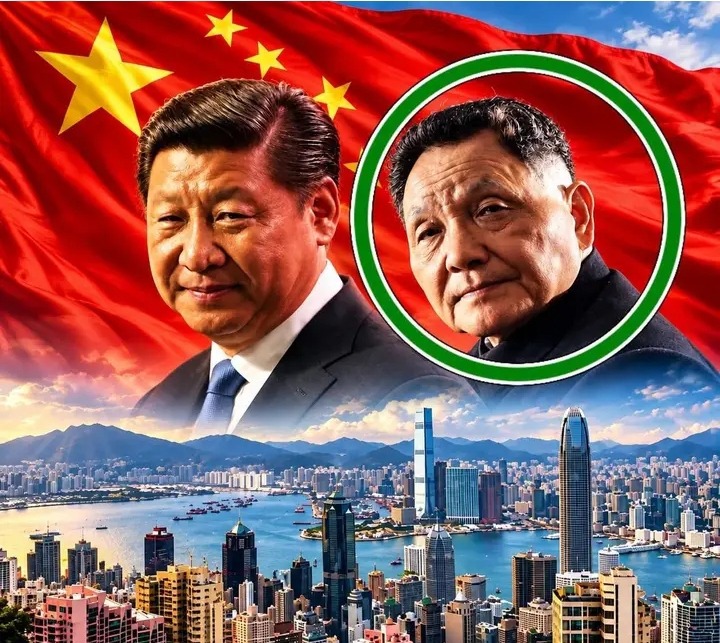

THE MAN WHO TRANSFORMED CHINA — AND THE METHOD BEHIND ITS ECONOMIC RISE
In 1978, China was a poor and largely isolated country, still struggling with the consequences of years of famine and the Cultural Revolution. Mao Zedong had died two years earlier, and few could have predicted the transformation that was about to begin.
Deng Xiaoping emerged as the country’s most influential leader and launched a strategy known as “reform and opening up.” His approach was famously summarized by the phrase: “It doesn’t matter whether the cat is black or white, as long as it catches mice.” The idea was that results mattered more than rigid ideology.
⚫ First came agriculture. Farmers were given greater freedom to manage production and sell part of what they produced. Agricultural output surged.
⚫ Then came the Special Economic Zones. Four coastal areas were designated as experimental zones for foreign investment and market-oriented policies. Shenzhen, then a small fishing community, became one of the world’s major technology and manufacturing hubs, with a population of more than 10 million.
⚫ The decisive step came in 2001, when China joined the World Trade Organization (WTO). Its integration into global trade accelerated dramatically, helping turn the country into a major manufacturing center for the world.
For more than three decades, China recorded exceptionally rapid economic growth, averaging roughly 9–10% annually over long periods.
The result was a historic reduction in poverty. Hundreds of millions of people were lifted out of extreme poverty, while China transformed from a low-income developing country into the world’s second-largest economy by nominal GDP.

Today, China is also the world’s largest merchandise exporter. Its exports span electronics, textiles, machinery, toys, solar panels, electric vehicles and industrial components, making Chinese-made products a major part of global supply chains.
Yet the economic transformation did not involve a corresponding political liberalization. Throughout the reform era, the Chinese Communist Party retained political control over the state.
China therefore developed a distinctive model: market-oriented economic reforms and extensive integration with global trade, combined with continued one-party political rule.
For many observers, that combination is central to understanding what became known as the “Chinese economic miracle.”