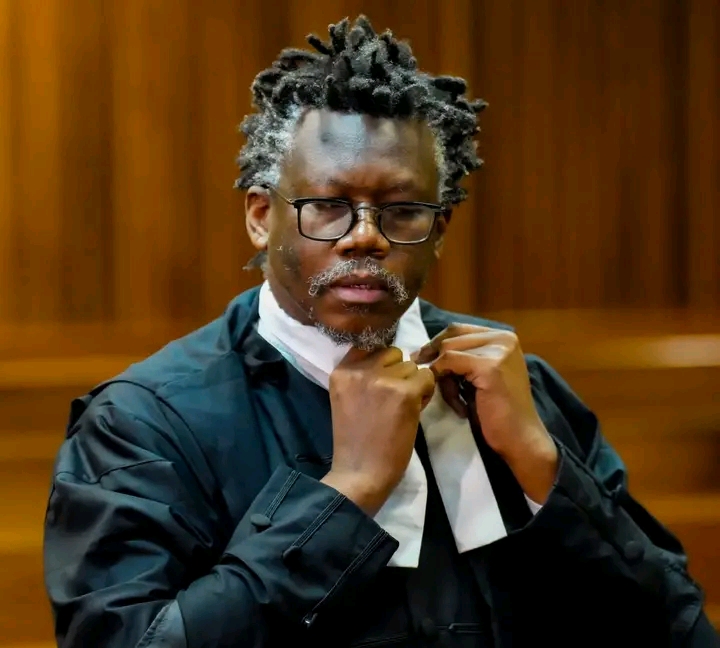

By Larry Mweetwa
The Case of the Constitutional Caper: When a Lawyer’s Word is as Good as Gold… Bars
The legal world, with its solemn robes and ancient traditions, is often seen as a bastion of truth and honor. But every now and then, a tale emerges that reminds us it’s also a high-stakes chess match where a well-timed “please, sir, may I have another day?” can be a strategic masterpiece. The recent courtroom drama involving the late ECL and his burial arrangements is one such story.
Last week, a lawyer—let’s call him the “Rasta man,” as our sources affectionately refer to him—approached the Supreme Court with an air of profound sincerity. He asked for an adjournment, humbly requesting until Monday to allow for “consultations and talks” between the government and the family of the beloved departed. It was a beautiful picture: two sides, coming together in a moment of grief and diplomacy, seeking a dignified resolution outside the courtroom. The government, bless its trusting heart, believed him. They “verily believed that the Rasta man meant well.”
As the famous quote goes, “Never underestimate a man who overestimates himself.” Or in this case, a lawyer who knows exactly what he’s doing. While the court was being distracted by a tale of impending peace talks, the Rasta man’s partners and juniors were back at the office, furiously typing. Not a peace treaty, mind you, but a 72-page application to the Constitutional Court.

This wasn’t a request for dialogue; it was a legal gambit of epic proportions. The goal? To question whether a previous High Court ruling violated the family’s constitutional rights to bury their loved one in South Africa. The adjournment wasn’t about talking; it was about buying time to finish that mountain of paperwork.
This, my friends, is what we call “sharp practice.” It’s a legal term for clever, albeit ethically dubious, tactics. He acted humble, he feigned interest in dialogue, and he sold himself as a peacemaker. But as one observer astutely noted, “He wants to show his skills and sell himself in a bigger court.” The Supreme Court was just the warm-up act.
The government, in its noble naivete, missed the warning signs. The family had just fired their “white lawyer” and brought in a new one. The message was as clear as a courtroom verdict: they weren’t interested in talking; they were interested in winning. Surely, someone should have asked the logical questions: “Where are these talks taking place?” and “Who from the government is even attending?” But they didn’t, and as a result, the Rasta man “clearly won this round by sharp practice.”
Now, the matter is no longer with the Supreme Court. On Monday, the court will likely declare that it awaits the Constitutional Court’s decision. This is the new battlefield, and it’s where the real fight will take place. The High Court will be nothing more than a spectator.

And this brings us to a more fundamental question: Why would a reasonable person want to bury a former president outside his own country? From a legal and historical perspective, it doesn’t make sense. The precedent set by the Kaunda family is a powerful one. When former President Kaunda passed away, his family and the nation came together to honor him in his home country. It was a moment of national unity, a final, poignant act that cemented his legacy as a leader of Zambia.
To bury a former president abroad seems to defy that logic. A head of state is a symbol of the nation, and their final resting place is often a sacred site that embodies national history and pride. It’s a place where future generations can visit and pay their respects. From a reasonable person’s perspective, burying a former president elsewhere would be like tearing a page out of the country’s history book.
So, are those negotiations still going on? Likely not. The only “negotiations” are the ones being typed up in legal briefs and filed in a different court.
The Rasta man played his hand, and now we wait to see if the Constitutional Court will fold or raise the stakes. As they say in the legal world, “The truth will out.” But sometimes, it takes a 72-page document to get there.
Approached the “Supreme Court “ you say??
But the court may also request for the feedback on the outcome of the negotiations since it was the only reason submitted to request for the postponement. If indeed this was a quick one on the court and Government, it may actually backfire on this rasta man. Im pretty sure the Government lawyers are ready and preparing to raise serious complaint if no negotiations were initiated. However, if there was some form of negotiations, and have not succeeded, no problem. On Monday, the high court will still sit as per court record to hear the outcome of the negotiations and st that point, we shall know whether there are negotiations or and status. Using tricks to mislead the court can be scoring your own goal.
Cleverness, never works, anyways, lets wait for the outcome
The case is now out of the compromised judges at the Pretoria High court… reduced to mere spectators.
Attorney General Kabesha has a mountain to climb now…
The destiny of Imingalato is embarrassment.
But the thing to understand is for the appeal to be allowed to the Supreme Court, the High Court must hear the reasons for the appeal and either accept as valid or disallow as invalid reasons.When the reasons for appeal are deemed invalid and lack merit the court stops the appeal from going ahead.
The new lawyer for the late former President of Zambia ECL could have lied to the High Court that there would be some talks out side court to resolve and would give the feed back to the High court.But what feedback will he give the High court concerning the outside court talks when he decided to rush to the Constitutional Court?
Will the Constitutional Court not uphold the judgement from the High court in Pretoria and start making constitutional interpretations while the repatriation of the remains of the late former President of Zambia is stopped immediately? The answer may be most likely.But the big question is will the Constitutional Court of South Africa start making Constitutional interpretations on the funeral of a late former President of a foreign country in this case Zambia, a sovereign country? I am fore seeing the Constitutional Court of South Africa sending back the case to the HIgh court in Pretoria to finish it’s business.And the body shall be repatriated to Zambia without wasting time.Thats exactly what I have seen.But we shall wait for the decisions of the courts.