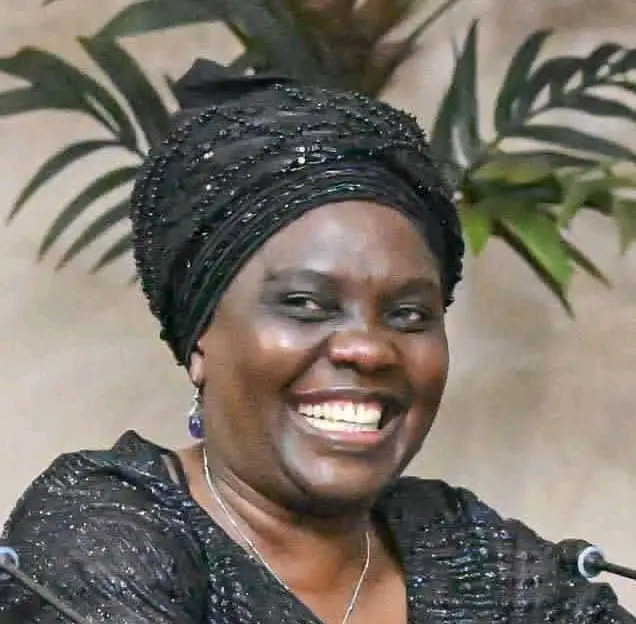

THE TRUTH AND MAIN REASON SOME PF CADERS DON’T WANT Bill 7 IS HERE- PLEASE READ TILL THE END
BY DR LARRY MWEETWA
It is both curious and instructive that certain political stakeholders, particularly some Patriotic Front (PF) cadres, appear averse to substantive engagement on Bill 7. Each time they are invited quite reasonably to identify the precise clauses to which they object and to propose alternative wording, a conspicuous silence follows. Instead, the default response is a procedural cliché: “We do not like the process because not all stakeholders were consulted.”
Yet the record speaks for itself. Traditional leaders were consulted. Public notices were disseminated through television and other media platforms. An online portal was established to facilitate nationwide submissions. When pressed to specify which stakeholders were allegedly excluded, the response invariably narrows to two civil society organisations: the Law Association of Zambia (LAZ) and the Non-Governmental Organisations’ Coordinating Council (NGOCC).
With respect, these two bodies, while important, do not constitute the entirety of civil society, nor do they monopolise the civic space. LAZ represents a segment of the legal profession; NGOCC advocates largely for women’s interests. Both were aware of the process and had every opportunity to make submissions. Their choice not to participate cannot, in law or logic, invalidate a national consultative process. As the law would put it: volenti non fit injuria one who chooses not to act cannot later claim to have been wronged.
The argument is then swiftly shifted: “The process has been rushed.” Rushed when compared to what benchmark? Zambia’s constitutional history offers useful context. President Kenneth Kaunda amended the Constitution in 1991 an election year. President Frederick Chiluba did the same in 1996 also an election year. President Edgar Chagwa Lungu amended the Constitution in January 2016, barely seven months before general elections. None of these processes were invalidated on the mere ground of timing. One is therefore entitled to ask, with some measured irony: since when did the calendar become a constitutional gatekeeper?
Strikingly, the same voices now opposing Bill 7 were silent when previous amendments were effected under arguably similar or even tighter timelines. The principle of equality before the law demands consistency. Selective outrage is not a constitutional doctrine.
Equally perplexing was a recent statement attributed to the Chairperson of the Oasis Forum, suggesting that a referendum be held to amend even the Bill of Rights. This demand is legally misplaced in the present context. The Bill of Rights is not under amendment in Bill 7. Even former President Lungu, during the 2016 process, did not reopen the Bill of Rights nor did he establish a fresh Law Reform Commission; he relied on existing commission reports. The sudden insistence on a referendum now, where none is constitutionally required, raises legitimate questions of motive rather than method.
The central legal question therefore remains unanswered: Why do some PF cadres and allied voices refuse to make formal submissions specifying which provisions of Bill 7 they oppose? In constitutional practice, objections must be clause-specific, evidence-based, and remedial in nature. Political slogans are no substitute for constitutional drafting.
It bears recalling that Bill 10 was allowed to proceed to Parliament, where it ultimately collapsed on procedural and numerical grounds. Democratic consistency demands that Bill 7 be accorded the same opportunity to rise or fall on the floor of Parliament, not in press conferences, clerical corridors, or NGO boardrooms. As one might quip in civic satire: “A constitution is not amended on Facebook; it is amended in Parliament.”

It is therefore unten_toggle_able that a nation of over 20 million citizens should be held hostage by the positions of two civil society organisations, two clerics, or a handful of political commentators. The constitutional architecture of Zambia vests the final amending authority in Parliament, subject to prescribed procedures not in veto by protest.
For the avoidance of doubt, many citizens have made their submissions in good faith and in accordance with the law. Those submissions are lawful, valid, and must be respected. No individual or group holds a monopoly over constitutional patriotism. As the old legal adage reminds us: “Equity aids the vigilant, not the indolent.”
In sum, if objections to Bill 7 exist, let them be articulated with legal precision, not political anxiety. Let the contest be one of ideas, not of obstruction. And above all, let Parliament do what the Constitution empowers it to do to deliberate, to amend, or to reject in open session, on behalf of the people of Zambia.
Zambia does not belong to Bantustans alone. This obsession by one tribe to cling on to power should be rejected. If previous regimes had done the same, Hakainde would never have been president. We do not want tribal politics in Zambia. If the people of Southern province have the best interest of our country, they should reject bill 7, and vote their son out of office. They are free to vote for another Tonga person if they are that tribal, but let them vote for one that is a unifier and not corrupt. There are so many capable Tonga people that can lead them, not this rotten one. The same goes for other regions. Let them present their best candidates, not rotten ones. In 2026, it will be tribal voting for sure, but let each tribe put their best foot forward so that whoever wins is the best person to unify and develop our country. That person should deal with tribalism and corruption, which is at an all time high.
VOTE FOR CHANGE IN 2026.
For the Bembas, we put forward our best tribal Candid: HaaIndigo Tyrol, with his Running Mate – Hundred Tiousand Kunku man. How about that?
Since you have brought back the same Article from Dr Mweetwa L, I also bring back my comment.
If the illegitimate and unconstitutional Bill 7 is allowed to become law, it will make effect the TOP SECRET ECZ Delimitation Report…The spread of 55 additional Constituency based Parliamentary seats tilted to 3.5 regions.
As a result the UPND will be assured of 95 constituency based Parliamentary seats in 3.5 provinces of Zambia, namely Southern, Western, Northwestern and part Central Province.( If my assumptions are denied let the distribution of the 55 Constituency based Parliamentary Seats be made public Now… together with the Delimitation Report)
No Opposition party will win any constituency based Parliamentary seat in Southern, Western and North Western Provinces of Zambia.This is a fact.
The major political party, the Patriotic Front is as of today not on the ballot..
This leaves the UPND to battle for the other 99 Constituency based Parliamentary seats with other small Parties..and your guess is as good as mine as to what will happen.
Assuming a 50% showing by the small Parties, UPND gets an additional 47 Seats resulting into 146 Constituency based seats.
Further assuming 50% showing of small Parties on the Proportional representation ballot, the UPND gets 11 more seats resulting into 157 Seats.
If Mr Hakainde wins the presidency, with 10 Nominated seats, the UPND will get a total of 167 seats in a 216 Member National Assembly.
And am even being generous to the small Parties.
This is what will happen come 14th August,2026.
With the Illegitimate and unconstitutional Bill 7 becoming law, and the major political party being excluded from the elections, expect more or less a single party, UPND , in Parliament.. with Power in 3 Regions and the President.
This is a case of Regional Hegemony.
Whoever holds the Legislature holds the Power in the country.
The majority in our National Assembly will have power to make and unmake the laws.
The 50+1, Running mate, 2 – 5 year Terms, Unitary state can easily be changed in Parliament.
Bill 7 ‘s full hegemonic effects will be seen after 2026, how Laws will start falling of.
Any attempts to change the Constitution by the rest of Zambia will be difficult since the legislative power will be in 3 Regions.. Only when the interests of the 3 Regions are taken care of will Laws be passed in that Parliament.
Zambia will be changed forever…
It’s like having a state within a state.
Let Mr Hakainde Hichilema make public the Delimitation Report.
Let him show us how he came up with 55 additional Parliamentary Seats.
Let him show us how the 55 Seats are distributed.
SIMPLE AND STRAIGHT FORWARD.
The Illegitimate and unconstitutional Bill 7 aims at Regional Hegemony.
Usurping the Power of the Legislature and concentrating it in 3 Regions.
Whoever controls the Legislature owns a Country.. with power to make and unmake laws.
When we cast our votes during election we submit that those elected into parliament will be the law markers. The are representing all the people of Zambia respectively.
When an illegitimate grouping appointed by their club members claims to have legitimate powers to stop a legal process empowered by our constitution to be administered by our parliament. It is a cause of concern and should be seen as a serious threat to our democracy.
The highest institution which is unbaised and authorized to speak for the people of Zambia is parliament. All other groupings can just offer their opinions period.
To stop the process is criminal has the constitution does not authorize them to make such judgements. Therefore asking unsuspecting individuals to rise against a legitimate legal process is very worrying.