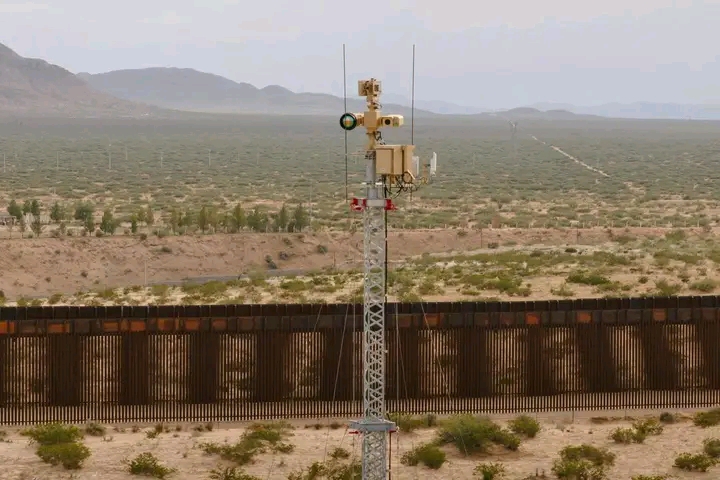

TRUMP DEPLOYS AI SURVEILLANCE TOWERS TO LOCK DOWN THE SOUTHERN BORDER
The United States is finally getting serious about the southern border. At least 350 AI-powered surveillance towers are already standing from California to Texas. They watch areas home to more than one million people on both sides of the line, including neighborhoods, schools, and playgrounds. These are not ordinary cameras.
Radar spots movement miles away. High-resolution optics zoom in. Artificial intelligence classifies what it sees—person, vehicle, or animal—and immediately alerts Border Patrol agents. No human has to sit staring at a screen all day.
The Trump administration has locked in more than $1 billion to add another 1,500 of these towers. The goal is complete coverage of the U.S.-Mexico border, with additional plans for the Canadian border, coastal zones, and Puerto Rico. Officials call it a “smart wall.”
It multiplies the reach of agents without requiring endless new hires. Cartels and smugglers who once crossed at will now face constant automated detection. After years of record illegal crossings, fentanyl floods, and strained border communities, this is the practical response.

Residents near the towers cannot opt out. One Texas woman reports that a tower across from her house monitors who comes and goes. Customs and Border Protection states the system improves safety. Effectiveness numbers have not been publicly released.
That gap invites skepticism, yet the alternative—years of minimal enforcement that allowed millions to enter illegally—produced clear results in overcrowded cities, overwhelmed shelters, and open drug routes. Border security has always required trade-offs. Technology that watches open desert and border towns is one of them.
The previous approach treated the border as optional. The current one treats it as a line that can be monitored in real time. Full coverage is not here yet. The direction is clear.
Sources: The New York Times investigation (October 22, 2026); Mario Nawfal summary (October 30, 2026); Customs and Border Protection statements referenced in reporting.