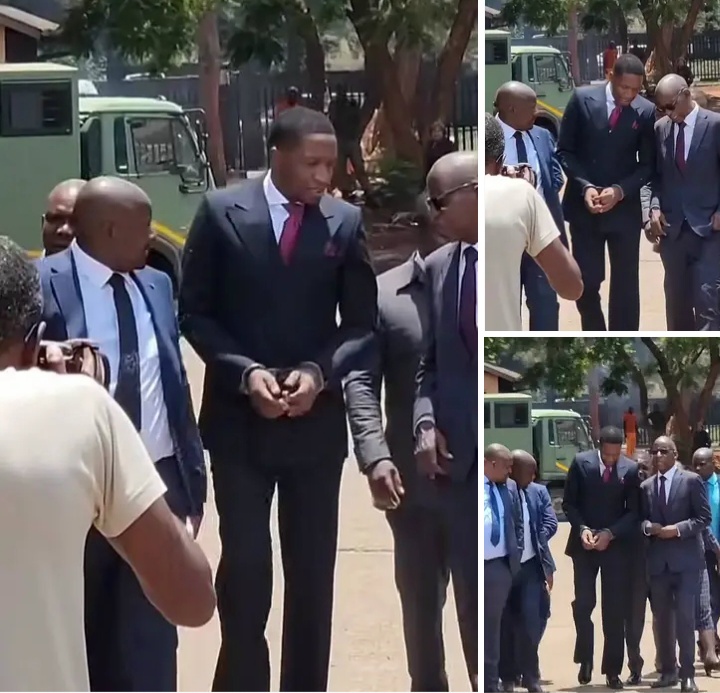

Uebert Angel : Dressed To The Nine, Handcuffed Like Everyone Else: Why Angel Arrived Handcuffed
By Fanuel Viriri
Flamboyant and towering Prophet Uebert Angel arrived at the Harare Magistrates Court Tuesday dressed to the nine, handcuffed, with his legal team in tow.
It was a scene made for the cameras. Suits, lawyers, flashing phones, and right in the middle of it all, a man used to commanding a stage now walking in steel bracelets.
The scene erupted before many media outlets covering the court appearance. Journalists jostled for a better angle. Congregants whispered. Onlookers pulled out their phones. And in newsrooms and WhatsApp groups across the country, one question kept coming up: why was he handcuffed at all?
Was it necessary? Was it humiliation? Was it a show of power? Or was it simply procedure?
To the ordinary person, being handcuffed is classified as humiliation and a fall from grace. It is the moment a man who once arrived in a convoy, in designer suits, with bodyguards clearing the way, is suddenly reduced to the same line as everyone else. No special entrance. No red carpet. Just metal on wrists.
But in Zimbabwe, that is exactly the point. Handcuffs are not about fashion, fame or fall from grace. They are about custody.
Here is the simple rule that explains almost everything you see outside Harare Magistrates Court: if you are coming from police cells or prison, you come in handcuffs. If you are coming from home on bail, you walk in freely.
Angel was arrested on Sunday, November 22, during a church service at the Spirit Embassy premises in Braeside, Harare. According to witnesses, around ten armed officers entered the Hippodrome, interrupted the service, and led him away in handcuffs. Police spokesperson Commissioner Paul Nyathi later confirmed the arrest on allegations of indecent assault and sodomy.
His lawyer, Professor Lovemore Madhuku, told journalists that Angel was being held at Highlands Police Station and that police had up to 48 hours to bring him before a court.
That detail matters. Because once you are in police custody, you are no longer a free man walking to court on your own terms. You are a person in custody. And in Zimbabwe, people in custody are transported in handcuffs.
It is not personal. It is not about whether the police like you, respect your title, or follow your ministry on YouTube. It is standard procedure.
Prison officers and police handcuff accused persons when transporting them to and from court for three very practical reasons: to prevent escape, to protect the officers escorting them, and to protect the public. Courts are crowded, chaotic places. People are emotional. Families are crying. Tempers flare. Handcuffs are the system’s blunt way of keeping control.

That is why a man who can afford the best lawyers in the country can still arrive looking like any other accused person. The law does not check your bank balance before it checks your wrists.
And yet, let us be honest, the image hits differently when it is Uebert Angel.
This is a man known for flamboyance, for luxury, for prophecy, for presidential envoy titles, for private jets and sharp suits. He is not the kind of man Zimbabweans expect to see in handcuffs. He is the kind of man people expect to see making an entrance.
So when he walked in dressed to the nine but chained, the contrast was the story. The suit said success. The handcuffs said suspect. And the cameras could not look away.
Some in the media asked if it was necessary. Others asked if it was fair. Supporters called it humiliation. Critics called it accountability. Advocate Thabani Mpofu, for his part, criticised the manner of the arrest during a church service, saying it was disrespectful not so much to Angel himself, but to his innocent congregants who had come to worship.
But the handcuffs themselves? That is not where the debate should be.
Handcuffs are not a verdict. They are not a sentence. They are not proof that someone is guilty. In Zimbabwe, as in every other legal system, a person is presumed innocent until proven guilty. Angel has not been convicted of any offence. He is facing allegations, and he has every right to answer them through the courts, as his church has said he is ready to do.
What handcuffs do show is status: custody versus bail.
If a person is granted bail, they start coming to court from home. No handcuffs. No police escort. Just an accused person walking in like any other court visitor. The moment bail is granted, the handcuffs come off, at least outside the courtroom.
If Angel is granted bail, expect the next picture to look very different. Same suit, same lawyers, no handcuffs. That is how the system works.
There are exceptions, of course. Sometimes even a person on bail can be handcuffed inside court if a magistrate orders it, if they are considered dangerous, if there is a risk of escape, or if they misbehave. Sometimes a person facing a very serious charge like murder or robbery will remain cuffed for longer. But for a routine first appearance, the rule is simple: custody equals cuffs.
So was Angel humiliated? In the eyes of the public, yes. A prophet in handcuffs is always going to look like a fall from grace. But in the eyes of the law, he was simply treated like any other accused person who spent the night in police cells.
And maybe that is the real banter here. In church, he is called Prophet. In court, he is called accused. In church, people stand when he enters. In court, he stands when the magistrate enters. In church, his word is final. In court, his lawyer does the talking.
The suit may have been expensive, but the handcuffs were free, standard issue, and given to everyone equally.
That is why suspects are handcuffed in Zimbabwe. Not to shame them. Not to punish them before trial. But to make sure they get to court, safely, and that everyone else gets home safely too.
Dressed to the nine or dressed in rags, the law has only one dress code for custody: steel.
This is a developing story…