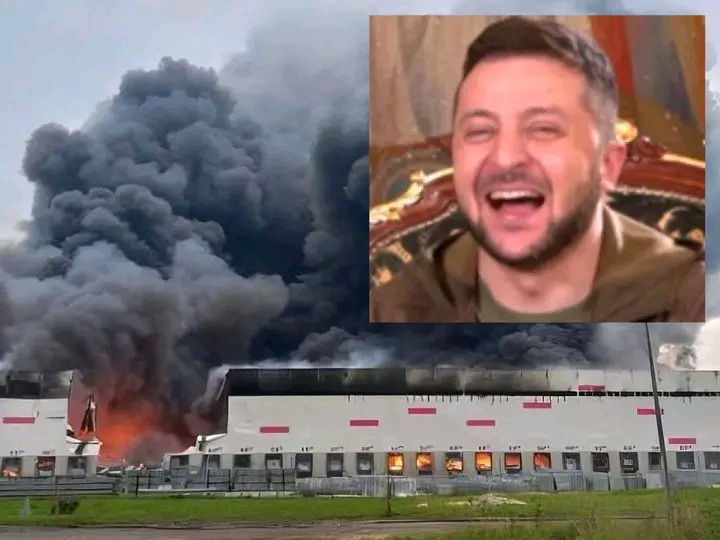

Ukraine’s Real Target Was Far More Devastating Than Silencing Online Trolls
Long-range Ukrainian drone strikes scored direct hits on three major data centers belonging to Russian technology conglomerate Yandex across the Ryazan, Kaluga, and Vladimir regions, igniting catastrophic fires and knocking out premier supercomputing clusters in Sasovo.
Hours after the strikes severed Russian ride-sharing apps, banking transactions, and critical commercial logistics, viral threads across social media erupted with premature celebration. Commentators proclaimed that Ukraine had eliminated the Kremlin’s foreign troll army with a single tactical blow, treating the physical destruction of enterprise infrastructure as an overnight wipeout of online disinformation.
That viral narrative grew out of a fundamental misreading of internet plumbing. Network monitoring dashboards, including Cloudflare, observed that automated web requests originating from Yandex’s corporate autonomous network plummeted from over 88 percent to near zero as server halls burned. Observers unfamiliar with network infrastructure mistook “automated bot traffic” for coordinated social media troll accounts. In reality, that metric measured commercial web spiders, site scrapers, and search engine indexers used to catalog pages across the global internet. When Yandex lost power, its internal search crawlers simply stopped visiting external websites.
Covert disinformation campaigns targeting Western discourse operate through entirely different technical architecture. Real-world influence networks run by entities like the Social Design Agency avoid using recognizable Russian corporate IP ranges because Western social platforms immediately geoblock and blacklist them. State-sponsored influence operators run their campaigns across decentralized residential proxies, compromised consumer routers, commercial VPNs, and offshore servers scattered worldwide. Setting fire to a commercial corporate facility outside Moscow leaves those distributed external pipes entirely untouched.
When everyday users noticed quieter notification feeds, they were experiencing routine platform maintenance combined with confirmation bias. Social media companies run unannounced automated spam purges every day that clean out thousands of engagement bots. Primed by viral headlines to expect empty comment sections, users immediately attributed normal algorithmic fluctuations and routine platform purges to physical drone explosions. The social media disinformation pipeline persisted through remote hosting while people were primed to notice standard platform churn for the very first time.
The reality of the strike struck directly at the Kremlin’s strategic technological capabilities. By hitting Sasovo and Vladimir, Ukraine attacked the foundation of Russia’s dual-use tech ecosystem, taking offline two of the country’s three premier supercomputers used to train frontier artificial intelligence.

These enterprise-grade server clusters provide essential computing power for satellite imagery processing, autonomous drone targeting, and domestic military-logistical planning. Social media bots represent cheap, disposable assets hosted on generic servers, whereas high-end GPU clusters, industrial cooling systems, and specialized network switches are virtually irreplaceable under strict Western tech embargoes.
Ukraine landed a crippling blow against Russia’s sovereign computing spine. Industry analysts estimate that replacing the incinerated enterprise hardware will take at least six months at exorbitant black-market markups, forcing Moscow to divert precious air defenses away from the front lines to shield commercial tech hubs deep inside its own territory.
Conflating search crawlers with political trolls turned a profound kinetic victory into cheap internet trivia, obscuring the fact that Ukraine landed a direct hit on the technological nervous system powering modern Russian warfare.
-Brent Molnar