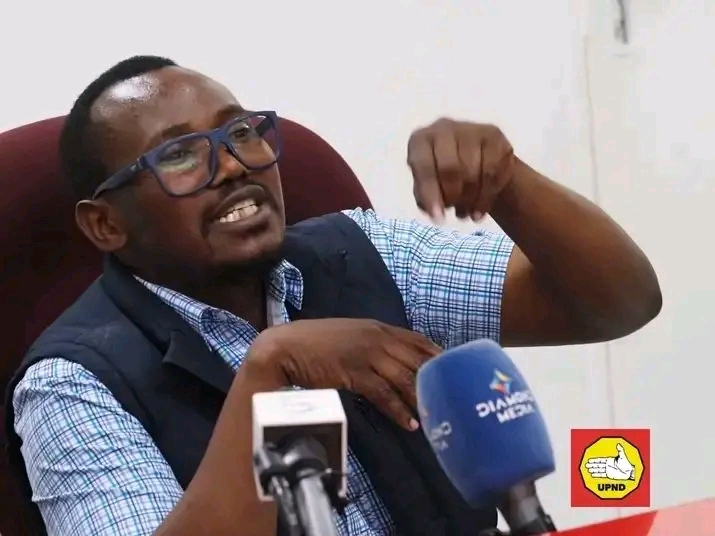

CONTEXT | UPND’s Communication Problem Amidst Crisis
UPND has a power problem. It also has a message problem. The Chingola incident exposed both. When stones flew toward the President in Chiwempala, the first instinct from party voices was not to wait for a consolidated security brief. It was to talk. Father Frank Bwalya issued a partisan statement that sat awkwardly beside the later, more detailed police report on riot and arson.
Media Director Mark Simuuwe also moved quickly with language that appeared to minimise the scale of the violence, even as videos and still images showed the presidential convoy being targeted and state property torched. The result was confusion. Citizens were left to choose between optics on their phones and fragmented narratives from people who sounded more political than professional.
This is not an isolated episode. UPND has carried into government the habits of a party that spent two decades in opposition. Many senior figures still behave as if they are activists trying to break through an unfriendly media ecosystem. They rush to social platforms, offer personal spin, and often pre-empt formal institutions.
Law enforcement agencies are now on the ground in Chingola, making arrests and reconstructing events. But parallel commentary from party officials and aligned tabloids continues to drip out, sometimes with partial facts, sometimes with speculation. That pattern undermines the credibility of investigators and erodes public trust in official outcomes.
The problem is structural. Almost everyone behaves like a spokesperson. Provincial leaders, constituency officials, presidential aides, and allied influencers all feel licensed to speak for the party and, by extension, for the state. There is no clear hierarchy of voice in moments of crisis. When Obvious Mwaliteta suggested that the party might provide its own security for the President, it raised a simple question in many minds. Is the state failing, or are politicians encroaching on the work of trained professionals. The line between party structures and national institutions starts to blur.
The energy crisis has made this communication gap even sharper. Load shedding linked to drought and reduced hydropower generation has crushed small businesses and reshaped the urban mood. Regional climate data and government statements point to a severe reduction in water levels at major reservoirs, including Kariba, with direct impact on power production. Yet the public conversation is dominated less by clear, repeated explanations and more by defensive talking points.

Citizens hear accusations that power is being exported while they receive only a few hours of electricity. Technical clarifications arrive late, or in language that feels remote from lived experience. In that vacuum, anger becomes the loudest interpreter.
Yesterday’s meeting between President Hichilema and Aliko Dangote at State House captured this dynamic. Dangote reportedly told the President that once electricity is available, there will be less need to talk during campaigns. The remark, whether intended as practical advice or blunt assessment, has been seized by the opposition as proof that even friendly investors think the government is failing.
Social media excerpts have been cut and shared without context. UPND media structures have not managed to frame the encounter as part of a broader push for energy investment and industrial policy. Instead, they are again reacting to narratives set by critics.
At the core is a simple failure to understand sequencing. In modern politics, whoever speaks first with clarity usually defines the story. In Chingola, the first coherent account that many people believed came from raw footage and opposition commentary, not from the state.
On the energy crisis, the most memorable lines are coming from frustrated entrepreneurs, opposition leaders, and viral posts, not from a disciplined government message that joins drought, reform, and future investment into one story. Even where facts favour government, the presentation often feels defensive, technical, or disjointed.
UPND can fix this, but not without discipline. It needs fewer public voices and clearer roles. Security incidents should be fronted by the police and relevant ministers, not by a chorus of party surrogates. Economic and energy updates should come from the President, the Finance Minister, and sector technocrats, supported by simple explainer material. Party-aligned tabloids and influencers will always exist, but they should echo a central line, not invent their own. The goal is not silence. It is coherence.
Until that shift happens, UPND will keep fighting the same battle on two fronts. On one side, structural problems such as drought, power shortages, and high prices. On the other, self-inflicted wounds from a communication culture that talks too fast, contradicts itself, and leaves space for opponents to set the mood.
The opposition understands narrative power. The ruling party still behaves like an opposition movement that has accidentally captured the state.
© The People’s Brief | Editors | 13/11/25