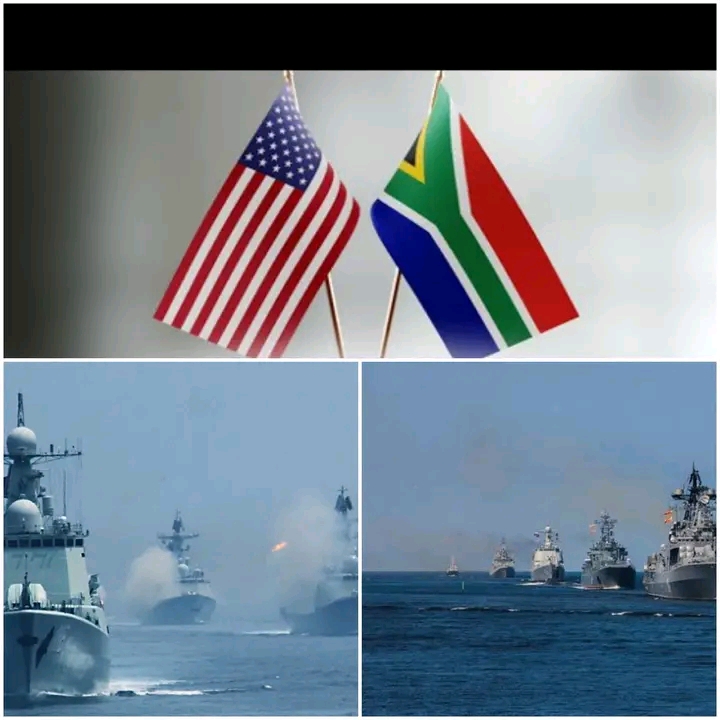

“WASHINGTON VS PRETORIA: US WARNS SOUTH AFRICA OVER IRAN NAVAL DRILLS – ‘THIS IS NOT NON-ALIGNMENT, IT IS TAKING SIDES WITH A REGIME ACCUSED OF TERROR AND REPRESSION’”
Tension between the United States and South Africa is rising after reports that Iran was allowed to take part in naval exercises involving the South African National Defence Force, allegedly in defiance of concerns raised within government structures.
From Washington’s point of view, Iran is not just another country. It is viewed as a major destabilising force in the Middle East, accused of sponsoring militant groups, threatening shipping lanes, and violently suppressing its own citizens who demand basic freedoms. Allowing Iranian military forces to operate alongside South African forces, or in South African waters, is therefore seen by the US as a direct contradiction to the values of democracy, human rights, and international security.
The anger is not only about warships. It is also about symbolism. At a time when Iranian security forces are accused of shooting protesters, imprisoning activists, and torturing political opponents, South Africa – a nation that fought a long and painful struggle for freedom – is perceived to be rolling out the red carpet to the very type of repression it once resisted.
To the Americans, this looks like hypocrisy:
How can South Africa speak loudly on justice, human rights, and international law, yet stand shoulder to shoulder with a government accused of crushing peaceful dissent?
How can it claim to be “non-aligned” while conducting military cooperation with a state that much of the Western world regards as a sponsor of terror?
This is why Washington argues that hosting or training with Iranian forces is not neutral diplomacy. In their view, it sends a message that Pretoria is drifting away from the Western democratic bloc and moving closer to countries openly challenging the US-led global order.

What could happen next?
• Diplomatic pressure: The US may formally protest, summon South African diplomats, and demand explanations at high level.
• Cooling of relations: Cooperation on security, intelligence, and defence could become more cautious.
• Economic implications: While not immediate, political tension can influence investor confidence, trade negotiations, and access to strategic partnerships.
• Global positioning: South Africa risks being increasingly grouped with Russia, China, and Iran in a new geopolitical bloc, rather than seen as a neutral bridge between East and West.
Supporters of the government will argue that South Africa has the sovereign right to choose its partners and that non-alignment means engaging with all sides. Critics, however, say there is a difference between diplomacy and military solidarity, and that inviting forces from a regime accused of brutal repression crosses a moral line.
The big question now is:
Is South Africa truly non-aligned, or is it quietly choosing a side in the growing global confrontation between the West and the emerging Eastern power bloc?