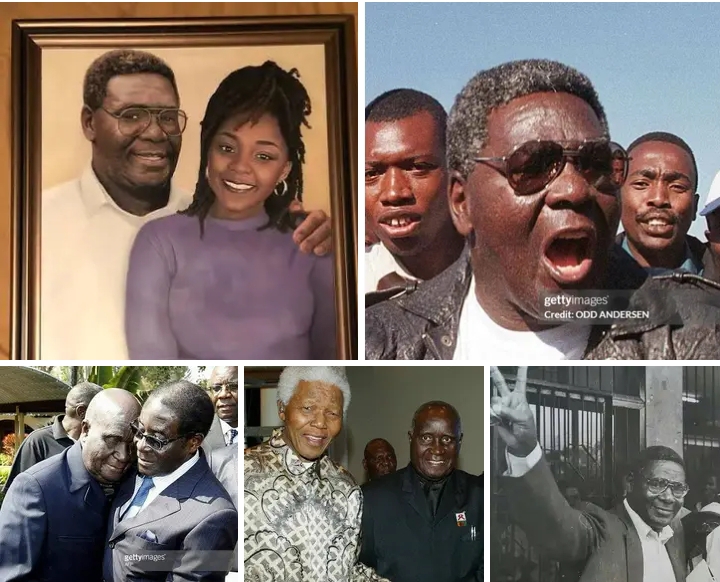

WEZI KAUNDA DIED IN THE SHADOW OF A THIRD TERM
To understand how Wezi Kaunda died, you must first understand what Frederick Chiluba wanted. Power was no longer enough; permanence was the goal. By the late 1990s, the third-term project was already alive, whispered in corridors, rehearsed in loyalty tests, enforced through fear. The constitution was an obstacle. Dissent was a threat. History itself had become inconvenient.
Kenneth Kaunda was not merely a former president. He was a living rebuke to Chiluba’s ambition. And Wezi Kaunda was the bridge between that past and a future Chiluba could not control.
WEZI KAUNDA WAS NOT JUST A MAN — HE WAS CONTINUITY
Wezi Kaunda carried something no police docket could erase: political inheritance. He was young, disciplined, and increasingly active in UNIP at a time when Chiluba’s government was tightening its grip on institutions. As the third-term debate loomed, figures who could mobilise resistance — especially those bearing historic legitimacy — became intolerable.
A third term does not coexist with strong opposition. It demands obedience or absence.
THE NIGHT HE WAS SHOT WAS NOT CHAOS — IT WAS ORDER
On 3 November 1999, Wezi Kaunda returned home. The gunmen were already there. They did not wander. They did not guess. They waited.
He and his wife, Didre, were driving home to a suburb of Lusaka in his Toyota Landcruiser when they were approached by a group of armed men, at the hate of his house. According to Didre, Kaunda told the gang:
‘I am Major Wezi Kaunda. Please take my car, take whatever you want. I am not resisting. Spare my life and my wife. Just take the car.’
The gang replied: ‘We know who you are. Do you think we don’t know? Shoot him.’
The men ordered Kaunda out of the car and shot him in the stomach, back and shoulder. He was rushed to hospital, where he died a few hours later. The car was found abandoned, but nothing had been stolen.
His wife survived. No valuables were taken. This was not panic. This was not hunger. This was not crime spiralling out of control.
This was selection.
The state later asked the nation to believe that common criminals executed the son of a former president at his gate and forgot to rob him. That explanation collapses under its own absurdity.
THE THIRD TERM CONTEXT MAKES THE LIE UNWORKABLE
By 1999, Chiluba’s third-term ambition was generating resistance within civil society, churches, the legal fraternity, and opposition parties. UNIP, despite years of harassment, still mattered. Kenneth Kaunda still mattered. His voice still carried moral weight.
Wezi Kaunda’s existence guaranteed that his father’s political shadow would not fade. His death removed that guarantee.
When power seeks extension beyond constitutional limits, it does not tolerate symbols. It erases them.
THE STATE’S RESPONSE WAS NOT JUST FAST — IT WAS DEFENSIVE
The police raced to reduce the killing to aggravated robbery. Suspects were paraded. Confessions were announced. Courts convicted. The political temperature was lowered by force of narrative.
There was no appetite for independent inquiry because independence is dangerous when truth is destabilising. The question was never who pulled the trigger. The question was who benefitted from the silence that followed.
The third-term project did not need public controversy. It needed calm. Wezi Kaunda’s death was neutralised as an issue before it could ignite.
CONFESSIONS WERE PRODUCED, BUT CLARITY NEVER WAS
A confession is the easiest thing to manufacture in a frightened system. What was never produced was motive that made sense. Why Wezi? Why his home? Why no theft? Why no political interrogation? Why did Kenneth Kaunda himself reject the robbery explanation?
Those questions were treated as subversive, because during a third-term push, even questions become enemies.
WHAT HIS DEATH ACCOMPLISHED SPEAKS LOUDER THAN ANY VERDICT
After Wezi Kaunda was killed, fear thickened. Opposition energy fractured. The political environment became quieter, more cautious, more obedient. The third-term debate advanced in a country already conditioned to understand the cost of resistance.
That is how power disciplines without issuing orders.
CONCLUSION: THE THIRD TERM CAST A LONG SHADOW
Wezi Kaunda was killed before Chiluba formally launched his third-term bid, but not before the machinery of that ambition was already in motion. His death must be read inside that context, not outside it.
You do not gun down the son of a founding president during a period of constitutional manipulation and call it coincidence. You do not erase political motive when power is overstaying its welcome. You do not silence a future and expect history to forget why.
Wezi Kaunda did not die because Zambia was unsafe.
He died because power wanted no witnesses, no heirs, and no tomorrow it could not control.
#tztpost 🇿🇲
The truth of the matter is that people must know that Chiluba was a coward who was so obsessed with power, that he went to the extent of murdering innocent people, and it wasn’t only Major Wezi. There were more. And because he also tried to assassinate the founding father, he decided to have him arrested for nothing.
That’s insane!!