
WHEN A RULING PARTY FORGETS THOSE WHO BUILT IT: THE UPND AND THE PERILS OF ORGANISATIONAL ESTRANGEMENT ️ THE PEOPLE’S POLITICAL SCIENCE
The acquisition of state power constitutes one of the most consequential transitions in the institutional evolution of a political organisation. Electoral triumph should consolidate ideological coherence, organisational sophistication, internal democracy and grassroots solidarity. When political ascendance produces an expanding estrangement between governing elites and the membership whose sacrifices made victory possible, the party begins experiencing an insidious deterioration of its institutional foundations.
My observations concerning the United Party for National Development (UPND) emanate from direct political experience and three solid decades of professional engagement in strategic planning, organisational engineering, institutional rehabilitation and resource mobilisation. I have worked with dysfunctional organisations, diagnosed their structural deficiencies and participated in restoring their operational efficacy. Such experience cultivates an ability to discern institutional pathologies through leadership systems, decision making processes, organisational culture and the functionality of established structures. I do not require several meetings to recognise the operational disposition of an institution. Frequently, the inaugural engagement reveals considerably more than its participants appreciate.
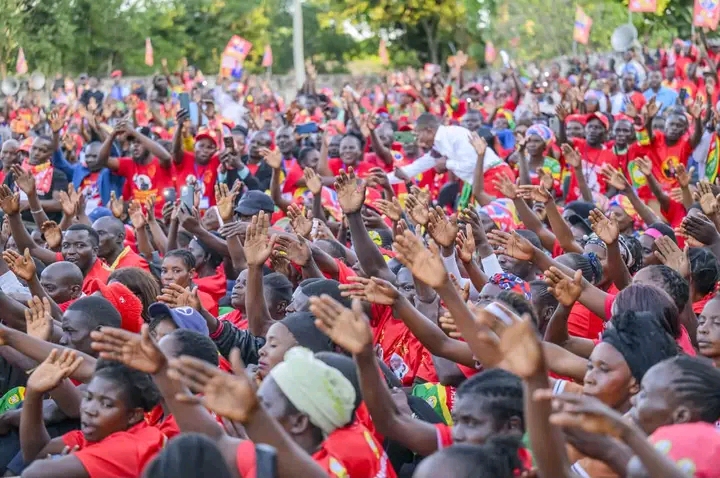
During our electoral mobilisation across the Northern Corridor, I encountered UPND members, particularly women and young people, whose sacrifices commanded immense admiration. Some were stranded, others financially exhausted, and many had become disenchanted by the apparent absence of adequate organisational support. When we intervened using our own resources, the gratitude was overwhelming. Ordinary acts of political solidarity appeared almost unfamiliar. Restoring their enthusiasm required personal engagement, practical assistance and reassurance. These experiences exposed deficiencies in grassroots coordination, membership welfare and the mobilisation infrastructure of an organisation that had spent approximately two decades in opposition.
The UPND possesses an invaluable reservoir of political experience accumulated from the founding leadership of Anderson Mazoka Z”L to the present generation. Some members have remained steadfast through successive electoral disappointments, intimidation, personal deprivation and prolonged opposition. Their institutional memory constitutes an indispensable political asset. It is therefore necessary to examine whether governmental appointments, including parliamentary nominations, adequately recognise this accumulated experience and the sacrifices of deserving UPND party members.
There are capable young people within the UPND who have spent years in the political trenches, organising communities, defending the party and sustaining its structures under adverse circumstances. The student movement also possesses an important place in Zambia’s political development, and participation in student leadership can provide valuable preparation for public office. Nevertheless, the elevation of individuals emerging from such movements should not eclipse deserving young party functionaries whose sustained political service has received little recognition. Academic distinction, technical proficiency and political apprenticeship are different attributes, each possessing institutional value. An effective appointment system must reconcile competence, integrity, organisational experience and public accountability.
A longstanding party functionary who has endured the privations of opposition may possess an intimate appreciation of the organisation’s historical struggles and political obligations. Such institutional consciousness deserves serious attention. In the exercise of constitutional appointing authority, there is considerable institutional value in maintaining an appropriate equilibrium between professional competence, generational inclusion, political experience and longstanding organisational commitment. Such an approach reinforces internal cohesion, preserves institutional memory and encourages successive generations of party members to appreciate the enduring value of political service. Public office remains a solemn responsibility entrusted to individuals on the basis of their capacity to serve the country, while sustained organisational dedication deserves recognition within the broader processes of political leadership development.
The lessons I acquired through my political association with Frederick Titus Jacob Chiluba Z”L and Michael Chilufya Sata Z”L reinforced the importance of maintaining an active political organisation after assuming government. The UPND National Management Committee should function as a vigorous institution of policy formulation, strategic deliberation and grassroots coordination. Its policy chairpersons should be adequately resourced to maintain continuous engagement with farmers, miners, entrepreneurs, workers and ordinary communities. Ministers exercise governmental authority through constitutional institutions, while party structures retain responsibility for ideological development, political communication and internal organisational vitality.
The 2021 electoral outcome also requires dispassionate political analysis. A substantial segment of the electorate was motivated by dissatisfaction with the Patriotic Front, particularly political cadreism, intimidation and deteriorating public confidence. Economic distress contributed to that electoral environment. The distinction between affirmative partisan allegiance and protest voting is indispensable to understanding the responsibilities that accompany electoral victory. Political authority acquired through widespread public dissatisfaction demands sustained responsiveness to the circumstances that precipitated the change of government.
Governmental appointments carry corresponding obligations of accessibility and service. Senior officials should function as the President’s eyes and ears throughout the country, maintaining direct contact with communities and communicating emerging grievances. Unanswered telephone calls, ignored correspondence and cultivated official aloofness corrode the relationship between political leadership and ordinary citizens. The President has repeatedly cautioned against this culture. The member struggling with unemployment, tuition fees, food prices and declining purchasing power experiences the same economic pressures as every other Zambian.
The UPND possesses formidable organisational capital, accumulated over two decades of opposition, which, if effectively harnessed, could substantially obviate dependence upon alliance partners. During our Northern Corridor mobilisation, we encountered disenchanted members determined to vote for the President while rejecting adopted parliamentary candidates because of leadership inaccessibility. We persuaded them that such electoral fragmentation could undermine the President himself. The paradox of alliance partners having to restore confidence within the governing party’s own membership exposed deficiencies in grassroots coordination and institutional responsiveness. The UPND possesses the political capacity to sustain itself. Its principal imperative is to overcome organisational insularity and reconnect its leadership with its grassroots foundations.
Equally indispensable is a rigorous post electoral institutional audit involving successful and unsuccessful candidates, party officials and grassroots mobilisers. Electoral performance, membership grievances, resource deployment and operational deficiencies must undergo systematic scrutiny, followed by measurable institutional reforms. Returning to routine administration without such a post mortem perpetuates organisational dysfunction and forfeits invaluable political intelligence. An organisation that neglects institutional introspection risks becoming a political hot air balloon, impressive in its elevation but dangerously disconnected from the ground that sustains it.
I have no difficulty acknowledging the UPND’s historical resilience, political accomplishments and capacity for further institutional development. My observations are offered in the spirit of independent political scholarship and professional institutional analysis. They constitute, in effect, three decades of organisational consultancy offered freely in the public interest. Anyone tempted to dismiss these observations as ordinary political commentary should appreciate the professional experience from which they arise. My independence permits me to examine institutional deficiencies without the encumbrances of political patronage or the pursuit of governmental appointment.

The political establishment should never confuse the privileges of incumbency with organisational permanence. Political institutions deteriorate when leadership becomes insulated from internal criticism, appointments generate perceptions of exclusion (particularly old UPND members), communication structures become dysfunctional and ordinary members lose meaningful access to decision making processes. These are recognisable manifestations of institutional atrophy, and their correction requires deliberate organisational intervention.
The greatest moral contradiction within a governing party arises when those who endured the hardships of opposition become strangers to those enjoying the privileges of government. The women, youths and longstanding members who walked immense distances, contributed their last resources, endured intimidation and sustained the organisation through adversity deserve recognition, accessibility and meaningful participation.
Political power is transient. Institutional memory is enduring. The dignity of UPND members whose sacrifices made political victory possible must never become expendable.
Yehudah Ben David
(Saviour Chishimba)
Jewish Scholar
Principal & Founder
THE PEOPLE’S ACADEMY
Mr. Savior Chishimba, you are a leader of a political party, a one man political party for that matter. No followers or members whatsoever, just you alone, one strongman. So, what are you talking about making silly observations on another political party which won elections?! You joined UPND Alliance hoping to be appointed above long serving loyal members. Just keep quiet, Sir.