
Why Has Iran Not Targeted a U.S. Aircraft Carrier Despite Its Military Capabilities?
A major meeting involving U.S. President Donald Trump, Chinese President Xi Jinping, and Russian President Vladimir Putin is reportedly expected to take place in China next Thursday.
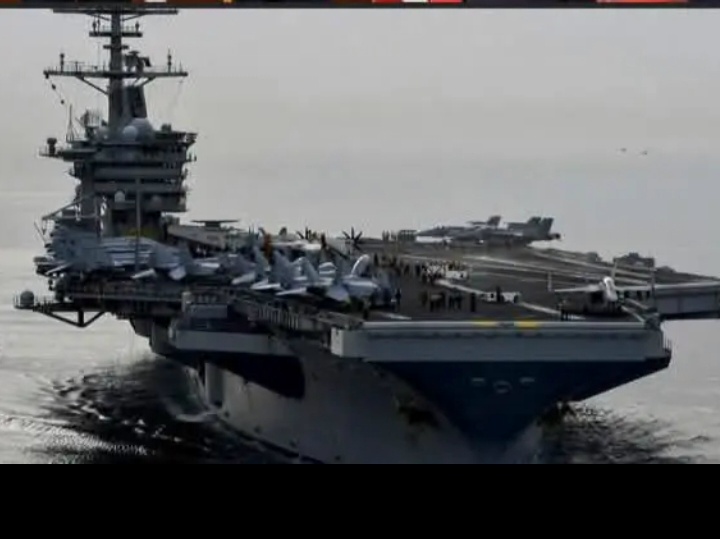
At the same time, the U.S. aircraft carrier USS Theodore Roosevelt has reportedly arrived in the U.S. Central Command (CENTCOM) area of operations, joining two other aircraft carriers. This would bring the number of U.S. carriers in the region to three, supported by dozens of fighter jets, warships, advanced air-defense systems, and approximately 20,000 Marines
Meanwhile, Iran has reportedly attacked facilities across the Gulf, targeted major oil tankers in the Strait of Hormuz, threatened Jordan, and announced attacks targeting Bahrain.
This raises an important question: Why has Iran not directly attacked a U.S. aircraft carrier, despite possessing missiles and drones potentially capable of threatening such vessels?
One possible explanation is the risk of uncontrollable escalation.
A successful attack on and destruction of an American aircraft carrier would represent a major escalation, potentially triggering a devastating U.S. military response. Aircraft carriers are not ordinary warships; they are powerful mobile military bases and symbols of American military dominance.
Such an attack could push the conflict into an entirely different level, with potentially catastrophic consequences for the entire region.
The argument raises two major questions:
First: Does Washington genuinely prioritize the security of its Gulf Arab allies, or are American strategic interests primarily focused on protecting Israel and maintaining its regional military position? Critics argue that Gulf countries are being left increasingly exposed to Iranian attacks, despite their security partnerships with Washington.

Second: Could there be behind-the-scenes strategic arrangements involving Iran, China, and Russia? Some observers believe Tehran’s position in the region is closely connected to the broader geopolitical competition between these major powers.
The argument also recalls the words attributed to Pakistani nuclear scientist Abdul Qadeer Khan, who argued that Pakistan needed a nuclear weapons programme to preserve its independence as a sovereign state. Iran’s pursuit of nuclear capabilities is sometimes discussed through a similar strategic-security perspective.
The biggest concern is the vulnerability of the Gulf states. Despite years of relying on the United States as their principal security partner, regional governments now face difficult questions about the reliability and limits of American protection.
So, what do you expect from the reported meeting between Trump, Xi, and Putin next Thursday? Could it reshape the balance of power in the Middle East, particularly around Iran and the Gulf?